


What are hypertension and pre-eclampsia in pregnancy? Risk factors, symptoms, monitoring and treatment, the postnatal period and questions for your doctor.
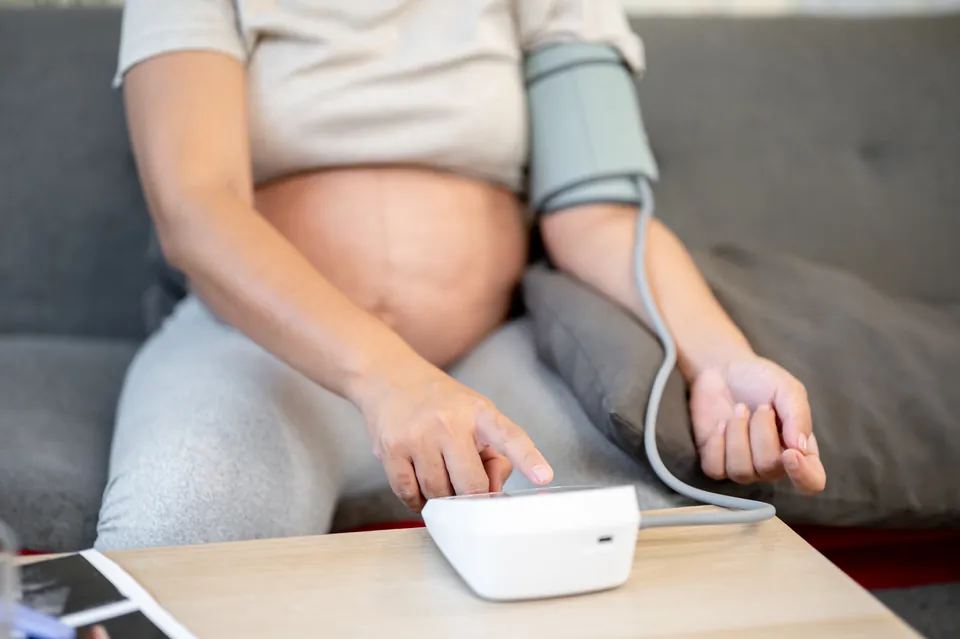
Hypertension in pregnancy means that blood pressure rises during pregnancy; pre-eclampsia is the best-known form and the one that needs the most attention in this group. Pre-eclampsia can begin without symptoms in many people. For this reason blood pressure and urine are checked at antenatal check-ups. For symptoms such as a headache that does not go away with painkillers, a change in vision or sudden swelling, you should seek care without waiting. The condition popularly called "pregnancy poisoning" is not a poisoning; it describes pre-eclampsia.
What are the types of high blood pressure in pregnancy?
High blood pressure can already be present before pregnancy; in this case it is called chronic hypertension. A raised blood pressure can also appear for the first time during pregnancy. The third group, pre-eclampsia, is the picture in which high blood pressure is accompanied by other findings. The doctor determines which type applies by assessing the measurements and tests.
What is pre-eclampsia?
Pre-eclampsia usually shows itself in the second half of pregnancy with high blood pressure and, often, protein in the urine. In some people the liver, kidneys or blood clotting can be affected even without protein in the urine. Most cases are mild; a small number are serious and can threaten the life of the mother and baby. When it comes with seizures, it is called eclampsia. Pre-eclampsia can also develop days or weeks after birth.
Who is more likely to get it?
High blood pressure before pregnancy or in a previous pregnancy, kidney disease, immune system diseases such as lupus, and diabetes are counted among the risk factors. A first pregnancy, older maternal age, a long gap between two pregnancies, high body weight, a family history of pre-eclampsia and a multiple pregnancy are also on the list. This list is not closed. Some of the factors are not under your control; having one of them does not mean pre-eclampsia will develop, and if it does develop it is not your fault.
Can pre-eclampsia begin without symptoms?
In many people no symptoms are seen; the condition is found at a routine check-up. Keeping up regular check-ups is important for this reason.
Which symptoms need medical help straight away?
The symptoms you should watch for are: a severe headache that does not go away with painkillers, blurred vision or flashing lights in the eyes, pain just under the ribs, heartburn that does not go away, sudden swelling of the face or hands, nausea or vomiting, and feeling very unwell. These symptoms can be serious; you need to get medical help straight away. Not every headache or swelling means pre-eclampsia, but these symptoms need assessment. If you have any of these symptoms and are not sure which group you fall into, treat it as urgent and seek care without delay. These symptoms can also appear in the days or weeks after birth.
How are your check-ups and tests planned?
Your care is tailored to you; the level of your blood pressure, how far the pregnancy has advanced and the condition of you and your baby affect the plan. Monitoring may include frequent blood pressure measurement, blood tests and an extra ultrasound to monitor the baby's growth. Depending on the situation, admission to hospital or frequent outpatient check-ups may be needed.
How are your treatment and birth plan determined?
When needed, medicines that lower blood pressure may be used. A medicine given through a vein may also be used to reduce the risk of a seizure. Your doctor determines the type and dose of the medicines according to the condition of you and your baby. The only way to remove the condition completely is birth; the treatments given until then aim to manage the symptoms. The timing and mode of birth (inducing labour or a planned caesarean) are planned by your doctor according to the condition of you and your baby; pre-eclampsia does not mean an early birth or a caesarean in every case.
Could preventive treatment be recommended for you?
For some people, such as those who had pre-eclampsia in their previous pregnancy, preventive treatment may be recommended in early pregnancy. Your doctor decides who can benefit from this treatment, and its start time and type. Do not start any medicine or supplement on your own.
What can it mean for the baby?
Pre-eclampsia can slow the baby's growth by affecting the placenta. In severe cases the baby can also be seriously affected; babies born early may need care in the newborn unit. These are likelihoods. Most cases are mild, and regular monitoring allows problems to be noticed early.
How does blood pressure monitoring continue after birth?
Pre-eclampsia mostly improves after birth, but because complications can develop in the first days, monitoring continues. After you are discharged, blood pressure checks are also made, and in some people blood pressure medicine is used for a time. If you are breastfeeding, whether the medicine is compatible with breastfeeding is reviewed. It is important that you go to the postnatal check-up and tell the health team about any anxiety or low mood.
How can you support yourself?
- Attend all antenatal check-ups at which blood pressure and urine are checked.
- Report new or changing symptoms to the health team without delay.
- Follow the medicine and monitoring instructions as given.
- Go to your appointment with your questions written down.
- Do not hide the worry or low mood you feel; you can ask for support.
What questions can you ask your doctor?
- Ask what type of raised blood pressure yours points to.
- Find out how and how often your check-ups will be done and which tests will be requested.
- Discuss whether preventive treatment is suitable for you.
- Ask which symptoms mean you should seek care without waiting for the appointment and whom you can contact outside working hours.
- Find out how the birth plan will be made and how blood pressure will be monitored after birth.
Frequently Asked Questions
My blood pressure came out high but I feel well; is it still important?
Yes. High blood pressure and protein in the urine, the early findings of pre-eclampsia, are not felt; they can be present while you feel well. So feeling well does not make the extra assessment recommended by the health professional who took the measurement unnecessary. Your doctor plans the next step, with extra tests if needed.
Does pre-eclampsia come back in the next pregnancy?
Pre-eclampsia can appear again in later pregnancies. So if you had pre-eclampsia in your previous pregnancy, tell the health team from the first consultation of a new pregnancy; your care plan can be made early and whether preventive treatment is suitable for you can be assessed.
Does pre-eclampsia affect my health later on?
In people who have had pre-eclampsia, the likelihood of high blood pressure, stroke and heart disease may be higher in later years. This is an increase in likelihood, not an inevitable outcome. It is recommended that you do not smoke, stay active, eat a balanced diet and keep a healthy weight; you can plan your long-term health checks with your doctor.
Can pre-eclampsia occur without protein in the urine?
Yes. In some people the liver, kidneys or blood clotting can be affected even without protein. The doctor assesses the diagnosis with measurements and tests.
Can pre-eclampsia also develop after birth?
Yes. It can also develop days or weeks after birth. Symptoms in this period should also be assessed without delay.
Is every headache or swelling pre-eclampsia?
No. However, symptoms such as a severe headache that does not go away with painkillers, a change in vision or sudden swelling need assessment. Get medical help straight away for these symptoms.
Does having a risk factor mean I will definitely have pre-eclampsia?
No. Risk factors relate to likelihood. Some are not under your control; developing pre-eclampsia is not your fault.
Does pre-eclampsia necessarily need an early birth or a caesarean?
No. The timing and mode of birth are planned according to the condition of you and your baby. It does not mean an early birth or a caesarean in every case.
Can I start preventive medicine or a supplement on my own?
No. Your doctor determines who will benefit from preventive treatment, and its start time and type. Do not start any medicine or supplement on your own.
Does blood pressure checking continue after birth?
Yes. Because complications can develop in the first days, monitoring continues. Blood pressure is also checked after discharge; some people use medicine for a time.
Can pre-eclampsia affect the baby's growth?
Yes. By affecting the placenta it can slow growth. These are likelihoods; most cases are mild, and regular monitoring allows problems to be noticed early.
Get Your Free Consultation
Fill out the form below and our team will contact you

