


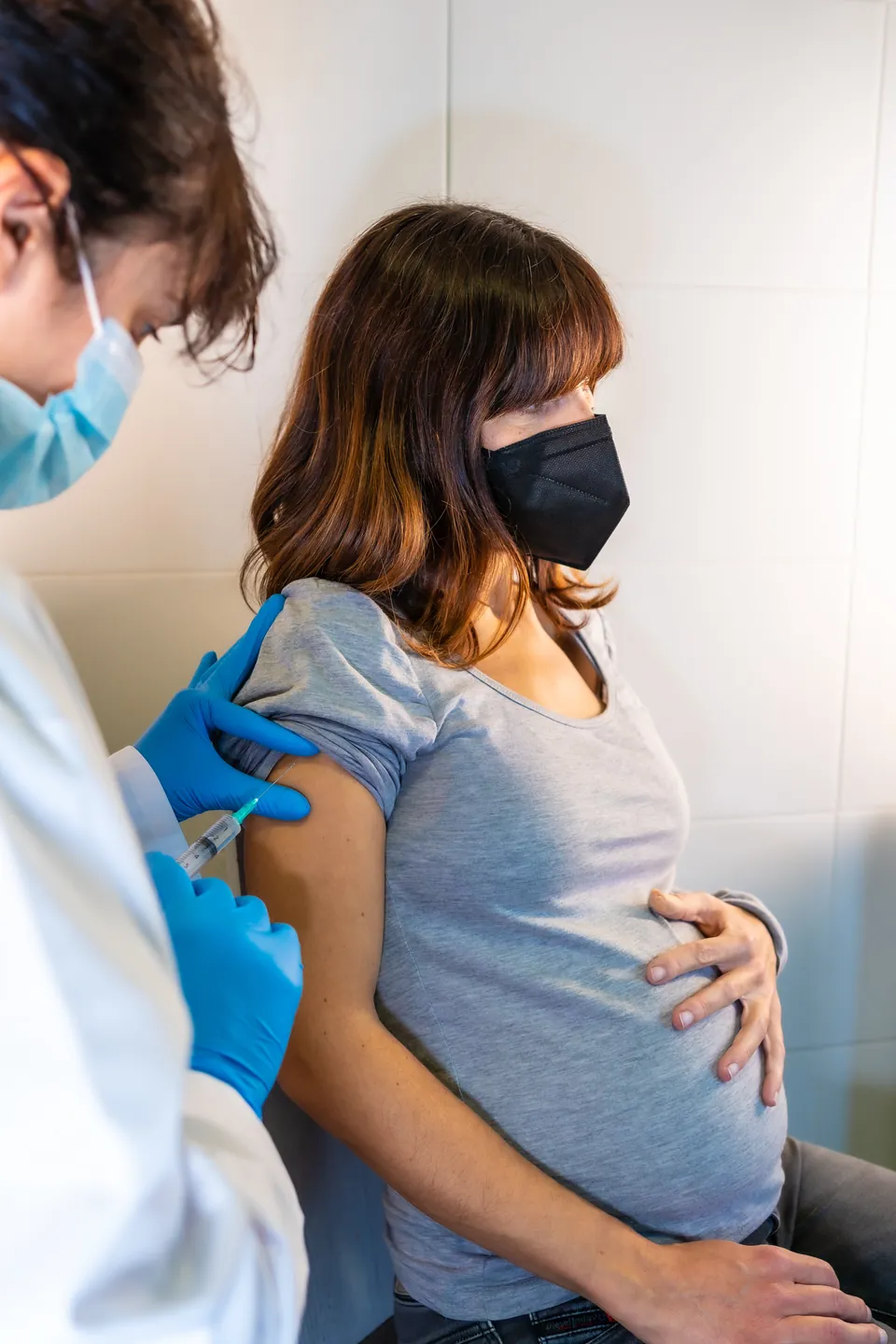
What vaccines are given in pregnancy? Whooping cough, flu and other vaccines, live vaccines usually not given, the vaccination card and questions to ask.
Vaccines in pregnancy are immunisation practices carried out on the advice of a doctor or health personnel in order to protect both the mother and, in the first months after birth, the baby from some infections. In the United States and the United Kingdom, whooping cough and seasonal influenza vaccines are recommended in pregnancy; live vaccines, on the other hand, are generally not given in pregnancy or are postponed. Which vaccine is given in which period varies according to sources and countries. In Turkey, the vaccination plan is determined according to your vaccination history by the doctor or health personnel who follows you; consult your doctor instead of deciding on your own about vaccines.
How do vaccines in pregnancy aim to protect you and your baby?
Vaccination in pregnancy has two aims: to protect the mother, and to protect the baby in the first months of life by allowing the antibodies the mother forms in response to the vaccine to pass to the baby through the placenta. Vaccination in pregnancy is generally considered for these two reasons. This approach is especially important in the early period when the baby cannot yet be vaccinated.
Are all vaccines treated in the same way in pregnancy?
The vaccines recommended in pregnancy and those not generally given are reported as separate lists. For this reason the statements "all vaccines are given in pregnancy" or "no vaccine is given in pregnancy" are not valid for all vaccines. Whether a vaccine is suitable for you is assessed together with your doctor according to the type of vaccine, the period of pregnancy and your state of health.
When is the whooping cough vaccine planned in pregnancy?
In the United States, the Tdap vaccine, which contains tetanus, diphtheria and whooping cough components, is recommended in pregnancy, and it is found appropriate for the vaccine to be given later in pregnancy, in the early part of this period. In the United Kingdom, it is stated that the whooping cough vaccine can be given from an earlier period. Because timing is defined differently according to sources, looking at a single piece of timing information on this subject can be misleading; in Turkey, the doctor or health personnel plans when the vaccine will be given. The vaccine is also referred to in Turkish sources as Tdab.
Does your tetanus protection need to be completed?
It is known that the tetanus vaccine can be given in pregnancy when needed. Your doctor decides, according to the state of your earlier vaccines, whether tetanus protection will be completed; for this reason bring your vaccination card or vaccination records with you.
Which flu vaccines are recommended in pregnancy?
The seasonal influenza vaccine that does not contain live virus (inactivated or recombinant) is recommended in pregnancy; this appears in the current recommendations in both the United States and the United Kingdom. The timing of the vaccine depends on the flu season; in Turkey, your doctor plans the timing of the practice and who it will be given to.
In which situations are RSV and hepatitis vaccines considered?
In some countries there is a vaccine given in pregnancy to protect the baby from RSV. In the United States a particular RSV vaccine is recommended in pregnancy; in the United Kingdom too, the RSV vaccine is counted among the vaccines recommended in pregnancy. The situation in Turkey is discussed with the doctor. In addition, the hepatitis B vaccine is considered for pregnant women who have not previously been vaccinated, and the hepatitis A vaccine in certain risk situations. Your doctor makes an assessment for these vaccines according to your immunity and risk situation.
Are live vaccines given in pregnancy?
Live vaccines are generally not given in pregnancy. Counted in this group are the live flu vaccine in the form of a nasal spray, the measles-mumps-rubella (MMR) and chickenpox vaccines; it is stated that BCG, oral typhoid and yellow fever vaccines are also generally postponed. A live vaccine can be given only if the risk of infection is greater than the risk of the vaccine, and by talking with the doctor.
Reviewing your vaccination status before becoming pregnant makes it easier to plan live vaccines before pregnancy. While going over your vaccination history, you can also discuss the other vaccines with the doctor.
What is done if your vaccination card is missing?
If you do not have a vaccination card or records, or they are incomplete, find out your vaccination history by applying to your family doctor, the family health centre (ASM) or the doctor who follows you. Which vaccines are needed is decided on the basis of your vaccination history. If a vaccine is missing, the doctor decides whether it will be completed and whether this will be done during pregnancy or after birth.
What can happen after a vaccine?
The reactions that can be seen after a vaccine vary with the vaccine; get information from the health personnel who vaccinate you about which symptoms are expected. Do not simply wait after attributing these symptoms to the vaccine.
How can you prepare for the vaccine consultation?
- Bring your vaccination card or vaccination records.
- Ask which vaccines are recommended in this pregnancy and why.
- Find out in which period each vaccine can be given and how the timing is determined.
- Tell them the type and date of any vaccines you have had recently.
- Tell them if you have had an allergic reaction to a vaccine before.
Frequently Asked Questions
Is the whooping cough vaccine given again in every pregnancy?
Yes. The Tdap vaccine is recommended in every pregnancy. That is, its having been given in earlier pregnancies does not prevent it from being considered again in a later pregnancy. Telling your doctor your earlier vaccination dates makes planning easier.
I recently had a live vaccine and became pregnant; what should I do?
There is no evidence showing that live vaccines cause birth defects. Even so, tell your doctor the date you were vaccinated, the type of vaccine and that you are pregnant; your doctor will make the next vaccination plan.
If a vaccine is given in pregnancy, are the baby's own vaccines not needed?
They are needed. A vaccine given in pregnancy does not remove the baby's own vaccination schedule; the baby's vaccines are given separately after birth. The healthcare institution that follows the baby will tell you the schedule and the times.
Can no vaccine be given in pregnancy?
No. The vaccines recommended in pregnancy and those not generally given are different. Suitability is assessed according to the type of vaccine, the period of pregnancy and your state of health.
Do vaccines aim to protect only the mother?
No. Besides protecting the mother, the aim is also for the antibodies she forms to pass to the baby through the placenta and provide protection in the first months of life.
Can any type of flu vaccine be used in pregnancy?
No. Seasonal flu vaccines that do not contain live virus are recommended; the live flu vaccine in the form of a nasal spray is generally not given in pregnancy.
Is the timing of the whooping cough vaccine the same in every country?
No. Timing is defined differently according to sources and countries. In Turkey, your doctor or health personnel plans the suitable period.
Are my earlier vaccine records important for tetanus?
Yes. Whether your protection needs to be completed is assessed according to your earlier vaccines. Bring your vaccination card or records.
Are live vaccines given routinely in pregnancy?
No. Live vaccines are generally not given or are postponed. They can be given only by talking with the doctor if the risk of infection is greater than the risk of the vaccine.
If I do not have a vaccination card, can I plan vaccines on my own?
No. Assess your vaccination history with your family doctor, the family health centre or the doctor who follows you. The doctor determines when missing vaccines will be completed.
Should I ask separately about how the RSV vaccine is applied in Turkey?
Yes. The RSV vaccine is recommended in pregnancy in some countries; you should talk with your doctor about the situation in Turkey.
If I have had an allergy to a vaccine before, should I say so?
Yes. Tell the health personnel about your earlier allergic reaction and the type and date of vaccines given recently.
Get Your Free Consultation
Fill out the form below and our team will contact you

