


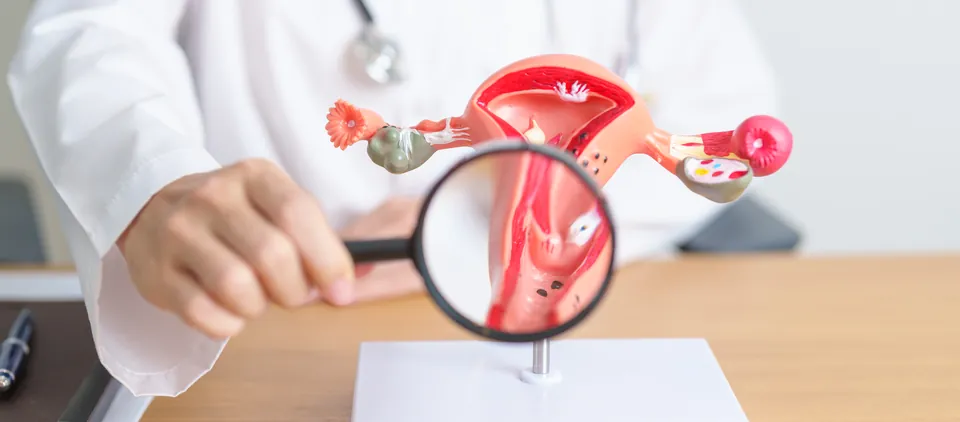
Asherman syndrome is intrauterine adhesions causing irregular periods, pain or difficulty conceiving. Learn about causes, diagnosis and treatment options.
Asherman syndrome is when adhesions that form on the inner surface of the uterus cause symptoms such as irregular periods, pain or difficulty conceiving. The terms intrauterine adhesions and Asherman syndrome are often used interchangeably. Hysteroscopy is the mainstay of diagnosis, and treatment usually involves dividing the adhesions under hysteroscopic guidance. The information below provides a general framework; it does not replace an individual diagnosis or treatment recommendation.
What is Asherman syndrome?
The uterine cavity normally consists of two surfaces that do not stick together. If scar tissue develops on these surfaces, the walls can adhere to each other, and the cavity may become partly or completely closed. These adhesions are medically termed intrauterine adhesions. Adhesions that cause symptoms are termed Asherman syndrome. Current medical guidance holds that symptoms (pain, menstrual disturbance and/or fertility problems) are required to speak of Asherman syndrome; the clinical significance of adhesions without symptoms is debated.
What causes Asherman's syndrome, and what are its risk factors?
The main cause is surgical trauma to the inside of the uterus. This trauma most often develops after pregnancy-related procedures: interventions such as aspiration or curettage after a miscarriage or childbirth can injure the surfaces of the uterine cavity. Other causes include other intrauterine operations, embolisation of the uterine blood vessels, and compression sutures placed to control bleeding. Infection alone has been suggested as a cause, but this has been reported as unproven.
What symptoms occur with Asherman's syndrome?
The main symptoms are:
- Lighter, much reduced or absent periods
- Groin pain during periods
- Difficulty conceiving
- Recurrent pregnancy loss
In some people, blood can collect inside the uterus because the menstrual outflow is blocked (haematometra); this can cause recurrent groin pain at the expected time of a period. If the adhesions are mild, the menstrual pattern may be preserved, and the adhesions may only be noticed during a fertility assessment. The severity of symptoms varies with how extensive the adhesions are; the evidence links outcomes to the severity of the adhesions. No single standard classification system has been adopted for grading adhesions, so the definition of severity may be expressed differently between reports.
How is Asherman's syndrome diagnosed?
Why is hysteroscopy preferred for diagnosis?
Current medical guidance holds that hysteroscopy is the most accurate diagnostic method and is the preferred examination when available. A thin camera allows direct viewing of the uterine cavity, so the extent and structure of the adhesions can be assessed.
Which investigations are used if hysteroscopy is not possible?
When hysteroscopy is not possible, a hysterosalpingogram (HSG) and saline infusion sonography, in which fluid is instilled into the uterus, are reasonable alternatives. MRI is not recommended for diagnosis outside research settings. Which of these tests is chosen depends on the individual's situation and what is available.
How is Asherman's syndrome treated?
How are adhesions divided?
Only adhesions that cause symptoms are treated; recurrent pregnancy loss can also prompt treatment. Adhesions without symptoms usually do not require a procedure. Dividing the adhesions under direct hysteroscopic vision is the recommended treatment; the evidence does not support blind probing or blind curettage. Dense or extensive adhesions need to be managed by an experienced hysteroscopist. Procedural risks such as perforation, bleeding and infection, and the possibility that adhesions will re-form, are discussed with the doctor.
How is recurrence prevented after surgery?
There is a chance that adhesions will re-form after they are divided, so this stage is an important part of treatment. Physical or gel barriers placed in the uterine cavity, and approaches supported with oestrogen, may be used to reduce re-adhesion. Which method is used, for how long, and the medication protocol vary by doctor. Re-assessment of the uterine cavity after surgery is usually carried out after several menstrual cycles, preferably by hysteroscopy. Recurrence may be more common in extensive cases than in mild ones.
Is pregnancy possible after treatment?
Pregnancy outcomes after treatment vary between individuals; outcomes depend on the severity and cause of the adhesions and the condition of the uterine tissue. No definite prediction can be made about the pregnancy outcome after treatment. Pregnancies with adhesions following curettage are known to have potentially higher risks of placental implantation problems, preterm birth and miscarriage; pregnancy is therefore monitored closely with the doctor.
Can Asherman's syndrome be prevented?
The risk of adhesions with intrauterine procedures varies by procedure. The risk is lower with procedures confined to the endometrium and higher with procedures that extend into the uterine muscle or affect opposing surfaces. Blind aspiration or curettage after childbirth or miscarriage can increase the risk. Where intrauterine surgery is needed, measures to reduce the formation of adhesions are assessed by the doctor.
Frequently Asked Questions
Are Asherman's syndrome and intrauterine adhesions the same?
Not exactly. The terms are often used interchangeably, but Asherman's syndrome requires symptoms such as pain, menstrual disturbance and/or fertility problems.
What is the commonest cause of Asherman's syndrome?
Surgical trauma inside the uterus is commonest, usually after pregnancy-related procedures such as aspiration or curettage following miscarriage or birth.
Can infection cause Asherman's syndrome?
Infection alone has been suggested as a cause, but this has not been proven.
Could I have Asherman's syndrome despite regular periods?
Yes. Mild adhesions may leave periods regular and be discovered only during fertility assessment.
Which diagnostic method is most reliable?
Current medical guidance identifies hysteroscopy as the most accurate method and the preferred investigation when possible.
Can MRI diagnose Asherman's syndrome?
No. MRI is not recommended for diagnosis outside research. HSG or saline infusion sonography are reasonable alternatives when hysteroscopy is not possible.
Does everyone with adhesions need surgery?
No. Only symptomatic adhesions are treated; those without symptoms generally do not require a procedure.
Can blind curettage divide adhesions?
No. Division under direct hysteroscopic vision is recommended; evidence does not support blind probing or curettage.
Can adhesions recur after surgery?
Yes. They may reform after division, more frequently with extensive than mild adhesions.
Is pregnancy certain after treatment?
No definitive prediction can be made. Outcomes vary with severity, cause and the uterine tissue's condition. Pregnancies with adhesions after curettage are known to have potentially higher risks of placental implantation problems, preterm birth and miscarriage.
Does everyone who has a curettage develop Asherman syndrome?
No. The risk of adhesions depends on the procedure, the timing of the procedure, and how much the uterine tissue is affected; many people do not develop adhesions after a procedure. A marked reduction in periods, or periods not returning at all, after a procedure is a reason for assessment.
Is an IUD or balloon placed inside the uterus after surgery?
To reduce re-adhesion after surgery, methods such as temporarily placing an intrauterine device or a balloon/catheter inside the uterus can be used. These methods may reduce re-adhesion in the short term; data on their effect on pregnancy outcomes are limited. The doctor decides which method is used and for how long.
Is antibiotic use needed after surgery?
According to current medical guidance, there is no evidence either supporting or opposing antibiotic use after surgery. The decision to use antibiotics is made by the doctor according to the individual's situation.
Get Your Free Consultation
Fill out the form below and our team will contact you

