


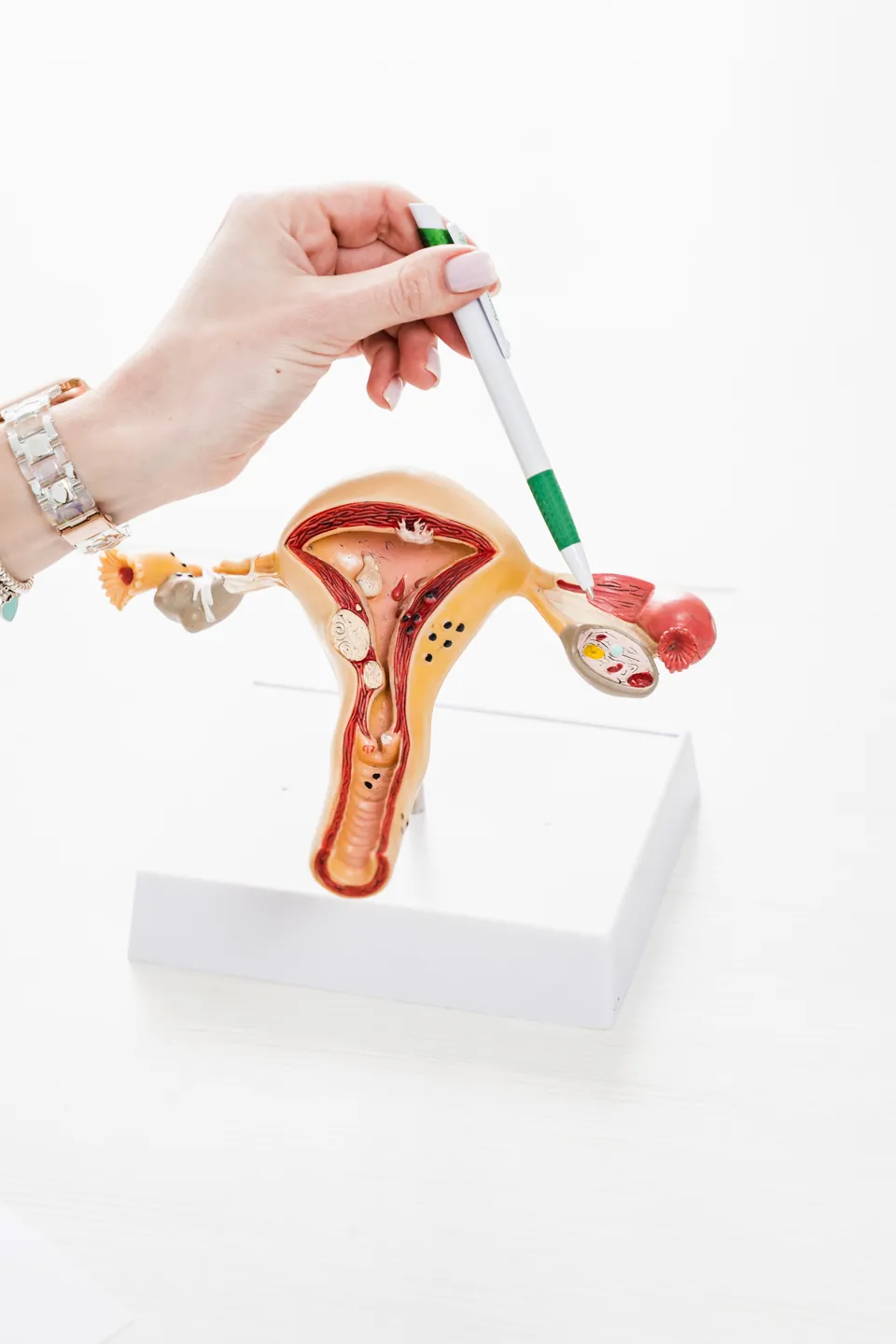
Learn about dermoid and functional ovarian cysts, symptoms, ultrasound diagnosis, monitoring, surgery decisions and when to see your doctor.
Dermoid and functional ovarian cysts are among the commonest benign ovarian masses in women of reproductive age. Most ovarian cysts are benign; functional cysts often regress with monitoring, while dermoid cysts are unrelated to the menstrual cycle and more often prompt consideration of surgery. This information is general, not individual diagnostic or treatment advice.
What is an ovarian cyst?
An ovarian cyst is a sac containing fluid or other material that develops within or on the surface of an ovary. The word cyst on an ultrasound report is not a disease name in itself. The type, internal structure and size are assessed together. Two main groups are considered here: functional cysts related to the menstrual cycle, and dermoid cysts developing from cells of embryonic origin. Their monitoring and need for surgery differ.
How do functional cysts form, and how do they relate to the menstrual cycle?
Functional cysts arise as part of the ovary's monthly cycle. A follicular or corpus luteum cyst may develop when the follicle carrying the egg does not develop sufficiently and release it, or when the structure formed after ovulation fills with fluid. Most of these cysts are benign and can be monitored. They cause no symptoms in most people and are found incidentally on ultrasound for another reason.
Can functional cysts regress spontaneously during monitoring?
Yes, many do. Small, thin-walled cysts with simple internal features often regress with monitoring, usually over a few menstrual cycles. Sources differ on the size, duration and intervals for monitoring, so your doctor plans follow-up individually. Monitoring does not mean doing nothing; it checks growth or structural changes.
What is a dermoid cyst (mature cystic teratoma), and how does ultrasound identify it?
A dermoid cyst, medically called a mature cystic teratoma, is a benign ovarian germ-cell tumour and is the most common type in this group. It may contain several tissue types, giving ultrasound features that distinguish it from functional cysts. Diagnosis is made by a doctor familiar with these features; conclusions rely on the whole image rather than a single word.
How does a dermoid cyst differ from functional cysts?
Unlike a functional cyst, a dermoid cyst is unrelated to the menstrual cycle and generally is not expected to resolve with the cycle. Even if it remains stable during monitoring, the doctor may therefore consider surgery according to its size, imaging features and symptoms.
What symptoms can ovarian cysts cause?
Many ovarian cysts cause no symptoms. Symptoms may include lower abdominal or groin pressure, fullness, changes in menstrual pattern or pain during sex. Cyst size and location affect symptom severity.
What are cyst rupture and ovarian torsion?
Two situations are more significant:
- Cyst rupture: The cyst's contents spill into the abdominal cavity, potentially causing sudden pain and sometimes bleeding.
- Ovarian torsion: The ovary twists on its axis, restricting blood flow. In adolescents, the typical presentation is sudden abdominal or groin pain that may be intermittent and does not radiate, often with nausea and vomiting.
Severe or sudden one-sided pain with nausea or vomiting is not a symptom to wait with. Current medical guidance bases torsion diagnosis on clinical suspicion. Normal blood flow on ultrasound or Doppler does not rule it out, and timely intervention in adolescents matters for preserving ovarian function. Adults are assessed individually by the doctor.
How is an ovarian cyst diagnosed?
Transvaginal ultrasound is the most effective imaging method for initial assessment of an ovarian mass. The doctor examines size, wall structure, contents, whether it affects one or both sides, and its relationship to surrounding tissues. Assessment has three aims: distinguishing the possibility of malignancy, identifying conditions requiring emergency surgery, and planning any non-emergency surgery needed.
Blood tests or other investigations may be added if necessary. Which tests are requested depends on the cyst's appearance, age and symptoms; not every cyst receives the same tests. Results are interpreted with ultrasound and examination findings rather than alone.
Monitoring or surgery: how is the decision made?
Monitoring is the main approach to functional cysts. Surgery is considered if a cyst does not resolve, grows or symptoms persist. Surgery is discussed more frequently for dermoid cysts, which are generally not expected to resolve spontaneously and may involve complications such as torsion or rupture. Decisions depend on ultrasound features, size, tendency to grow, symptoms, age and fertility plans.
Which method is used if surgery is needed?
Laparoscopy is generally the preferred approach for surgical management of benign ovarian masses. The aim is to remove the cyst while preserving as much healthy ovarian tissue as possible. Benefits, risks, possible recurrence and effects on ovarian tissue are discussed with the doctor.
How can ovarian cysts affect fertility and pregnancy?
Effects on fertility depend on cyst type and its effect on ovarian tissue. As functional cysts are part of the menstrual cycle, they are mostly managed with monitoring. Decisions about dermoid cysts consider both healthy ovarian tissue preservation and pregnancy plans. If a cyst is found during pregnancy, the doctor determines monitoring and the timing of any surgery according to gestational age and cyst features. Every situation is assessed separately.
Frequently Asked Questions
Can an ovarian cyst be discovered without symptoms?
Yes. Many cause no symptoms and are found incidentally during ultrasound for another reason.
Can simple functional cysts regress by themselves?
Yes. Many small, thin-walled cysts with simple internal features regress with monitoring, usually over a few menstrual cycles.
Does a dermoid cyst shrink by itself?
No. It is not related to the menstrual cycle and generally is not expected to regress with it. A persistent cyst may prompt consideration of surgery according to size, imaging and symptoms.
Is sudden severe one-sided abdominal pain with nausea or vomiting normal?
No. Severe or sudden one-sided pain with nausea or vomiting is not an expected symptom.
Does normal blood flow on ultrasound rule out ovarian torsion?
No. Current guidance bases diagnosis on clinical suspicion; normal blood flow on ultrasound or Doppler does not exclude torsion.
Does every ovarian cyst need surgery?
No. Monitoring is the main approach for functional cysts; surgery is considered for non-regression, growth or persistent symptoms.
Which operation is preferred for a cyst?
Laparoscopy is generally preferred for surgical management of benign ovarian masses, aiming to remove the cyst and preserve as much healthy ovarian tissue as possible.
What happens if an ovarian cyst is found during pregnancy?
Your doctor decides monitoring and any surgery timing according to pregnancy stage and cyst features; each situation is assessed separately.
Is a dermoid cyst cancer?
The great majority are benign. However, suspicious ultrasound features prompt further investigation and referral to a gynaecological oncologist if needed. Every dermoid cyst should therefore be assessed by a doctor alongside its imaging findings.
Is a CT or MRI scan needed for a cyst?
Transvaginal ultrasound generally provides sufficient information for initial assessment of an ovarian mass. Current medical guidance does not recommend CT, MRI or PET as first-line tests. The doctor considers them in selected cases when ultrasound is insufficient.
Are chocolate cysts and dermoid cysts the same?
No. A chocolate cyst is an endometrioma related to endometriosis and has different structure, symptoms and monitoring. Dermoid and functional cysts are unrelated to endometriosis. Ultrasound and clinical findings determine the group a cyst belongs to.
Get Your Free Consultation
Fill out the form below and our team will contact you

