


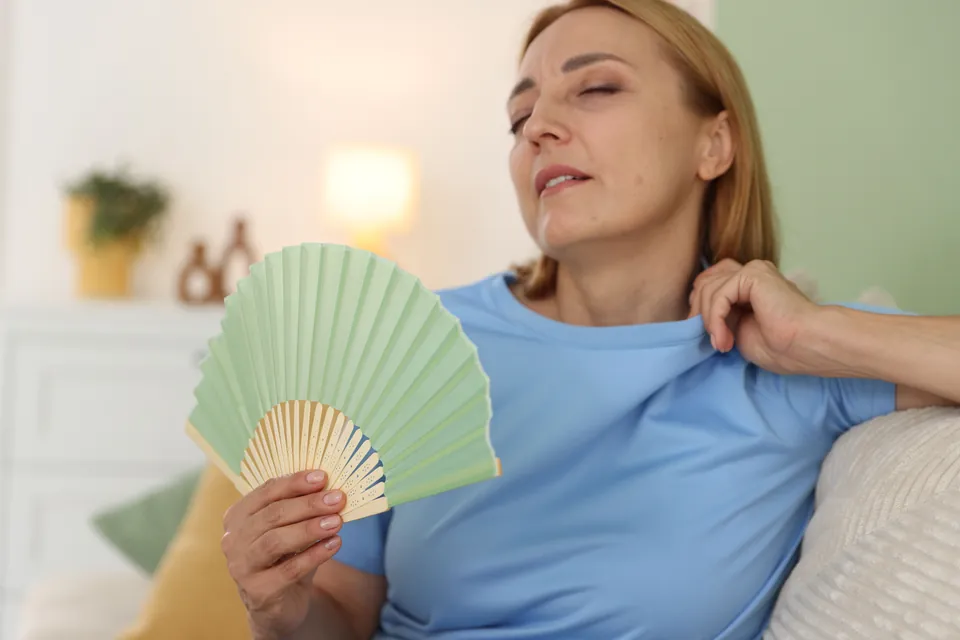
Perimenopause is the transition to menopause. Period changes, assessing irregular bleeding, pregnancy and contraception, and options for managing symptoms.
Perimenopause is the transition period to menopause; a stage in which the menstrual pattern changes and complaints such as hot flushes and sleep problems can begin, but pregnancy is still possible. Periods becoming irregular during this time is often an expected change; however, not every irregular or heavy bleeding should be attributed to perimenopause, and it should be assessed when needed. The information below provides a general framework; it does not replace an individual diagnosis or treatment recommendation.
What is perimenopause, and how does it differ from menopause?
Perimenopause usually begins with changes in the menstrual pattern and continues until one year after the final period. Menopause is the point defined by 12 consecutive months without a period. In other words, perimenopause is a transition period, and menopause is the threshold reached at the end of this transition.
When does perimenopause start, and how long does it last?
The age of onset and duration vary from person to person; this period can last several years. The same pattern is not seen in every woman: in some, the intervals between periods clearly lengthen or shorten, while in others the final period can come without a marked change in the menstrual pattern. It is not possible to know in advance when this period will start or end.
Because the course of perimenopause differs from person to person, two people of the same age can present very differently. For this reason, someone else's experience should not be used as a benchmark for assessing your own process; the effect of your symptoms on daily life and any change in your menstrual pattern should be discussed with the doctor.
How do periods change during perimenopause?
In the early stage of the transition to menopause, the intervals between periods begin to vary. In a later stage, periods may not occur for a long time. Ovulation can still occur even at this stage; a period being delayed or missed does not mean that menopause has arrived.
Should every irregular or heavy bleed in perimenopause be assessed?
Yes. Irregular or heavy bleeding can be a symptom of perimenopause. However, polyps, fibroids, thyroid disorders, pregnancy, infection and thickening of the uterine lining can cause similar changes. You should therefore not label every bleed as "perimenopause" and simply monitor it. Heavy, prolonged bleeding can cause anaemia. Even if bleeding happens only once, it is appropriate to ask for an assessment; a previous normal smear or HPV result does not make assessment unnecessary.
What perimenopause symptoms can affect daily life?
Symptoms include hot flushes, night sweats, irregular periods, vaginal dryness, pain during sex, urinary incontinence, insomnia, and mood changes such as depression or anxiety. Severity varies greatly from person to person; in some women, symptoms may be mild or absent. These symptoms can affect physical, emotional and social well-being. Vaginal symptoms may require separate assessment, and local treatment options are available.
Are tests needed to diagnose perimenopause?
In a healthy older woman with symptoms, perimenopause is recognised clinically from symptoms and changes in the menstrual pattern; laboratory testing is not needed. Your doctor asks about your menstrual pattern, the amount of bleeding, how symptoms affect daily life and the medicines you use. Noting recent period dates, bleeding days and symptoms before your appointment makes assessment easier.
Hormone tests are considered for diagnosis only in specific situations, for example when menopause is suspected at a younger age. If a hormonal contraceptive method is being used, an FSH measurement may not be reliable; during this time, absence of periods while using a hormonal method does not mean menopause. If bleeding is irregular or heavy, a pregnancy test, thyroid assessment, ultrasound and, if needed, examination of the uterine lining may be considered at the doctor's decision.
Is pregnancy possible during perimenopause, and how long should contraception continue?
Yes, pregnancy is possible during perimenopause. Continuing contraception until you have had no periods for 12 consecutive months is recommended. If you use a hormonal method, it affects your menstrual pattern, so you should decide with your doctor when to stop contraception. You and your doctor decide which method suits you.
How are perimenopause symptoms managed?
Both hormonal and non-hormonal options may reduce symptoms. Regular sleep, physical activity and general health measures may also help. Hormone therapy is considered one of the effective options for symptoms such as hot flushes; the benefit–risk balance is assessed for your circumstances. Non-hormonal options include cognitive behavioural therapy, clinical hypnosis and some prescription medicine groups; evidence that herbal products and supplements are effective is insufficient. Suitability depends on your symptoms and any accompanying conditions.
When should you see a doctor during perimenopause?
An examination is appropriate when the menstrual pattern changes markedly, when bleeding is unusually heavy or prolonged, even if the bleeding happens only once, when bleeding after sex or spotting between periods is noticed, when symptoms affect daily life and sleep, or if pregnancy is possible.
Frequently Asked Questions
Does hormone therapy prevent pregnancy?
No. Hormone therapy used for menopausal symptoms does not provide contraception. If pregnancy is not wanted during perimenopause, a separate, effective contraceptive method is needed; this method is chosen together with the doctor.
Can the contraceptive pill be used in perimenopause?
Age alone is not the determining factor. Factors such as vascular disease, stroke or migraine with aura, smoking and blood pressure affect the suitability of combined hormonal methods. If these factors are present, the doctor may recommend a different method; the choice of method is individual.
Can AMH or FSH tell me when I will reach menopause?
These tests alone do not show the timing of menopause. AMH is not used for diagnosis in a symptomatic woman over 45. AMH measurement is also not recommended to predict premature ovarian insufficiency in advance. FSH levels can also fluctuate; tests are interpreted by the doctor's decision, in appropriate situations, together with other findings.
What should I do if I am planning a pregnancy during perimenopause?
Fertility declines with age, and this decline varies from person to person; irregular periods do not mean that pregnancy is not possible. Even with irregular periods, seeing a doctor early if planning a pregnancy allows an individual assessment of age and ovarian function; the question of assisted reproduction is addressed within this assessment. A general likelihood cannot be stated.
Does perimenopause cause depression, or is it confused with PMS/PMDD?
The relationship between psychological symptoms during perimenopause and depression or PMS/PMDD is complex. How your symptoms relate to your menstrual cycle, their duration and severity matter in assessment.
My periods have become irregular; does this definitely mean perimenopause?
No. Polyps, fibroids, thyroid disorders, pregnancy, infection and thickening of the uterine lining can cause similar changes. You should therefore not label every bleed as "perimenopause" and simply monitor it; asking for an assessment is appropriate.
Does a delayed or missed period mean I have reached menopause?
No. Ovulation can occur even in later perimenopause; a delayed or missed period does not mean menopause has arrived.
Does having no periods while using hormonal contraception mean I have reached menopause?
No. Having no periods while using a hormonal method during this time does not mean menopause; FSH measurement may also be unreliable in this situation.
Does bleeding still need assessment if it happens only once?
Yes. Even if bleeding happens only once, asking for an assessment is appropriate; a previous normal smear or HPV result does not make this unnecessary.
Are perimenopause symptoms equally severe for everyone?
No. Severity varies greatly between people; some women have mild symptoms or none at all.
Do herbal products and supplements help perimenopause symptoms?
No, evidence that they are effective is insufficient.
Get Your Free Consultation
Fill out the form below and our team will contact you

