


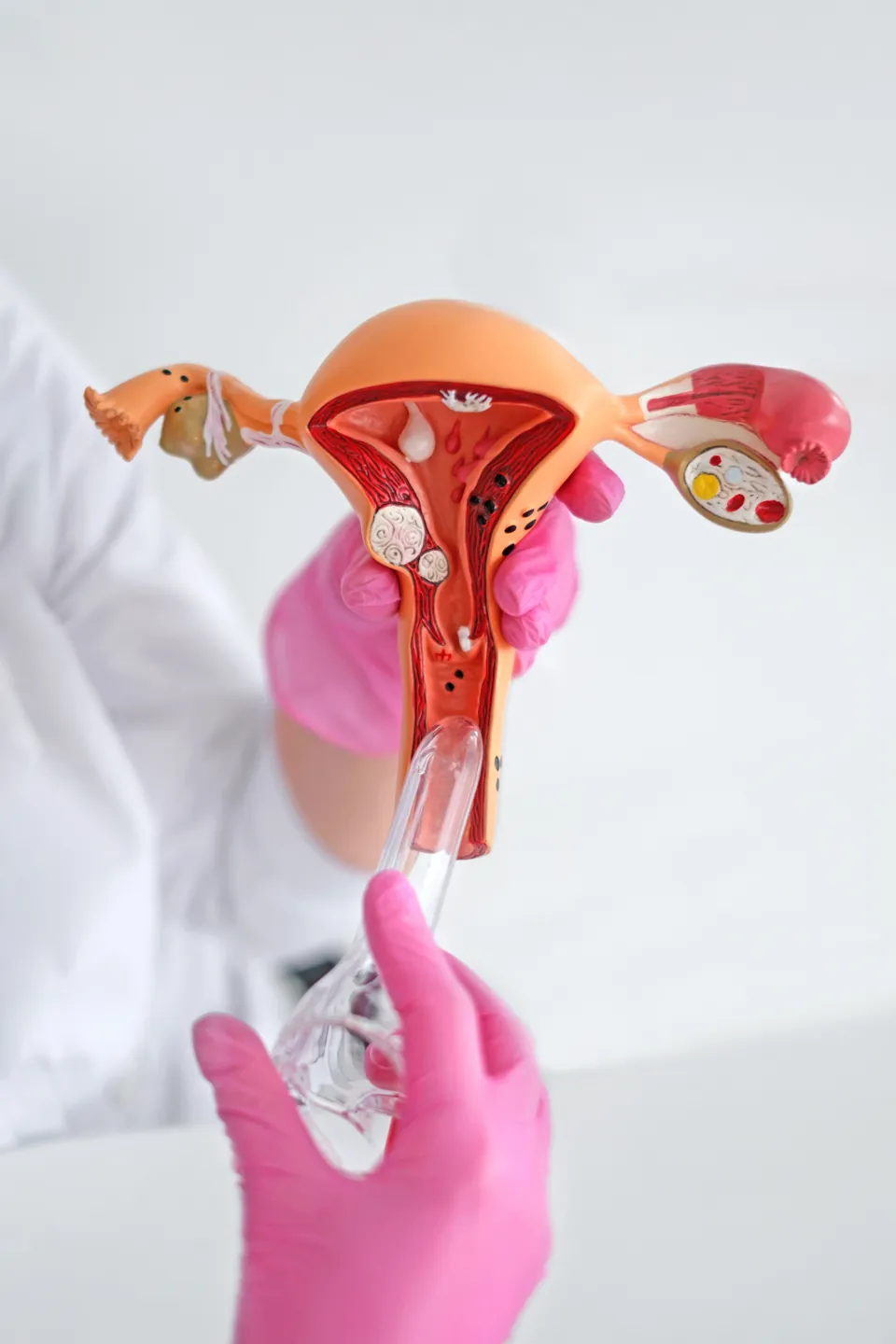
Learn about Bartholin cysts and abscesses, their symptoms, diagnosis, monitoring and drainage options, and when to seek medical care without delay.
A Bartholin's cyst is a fluid-filled sac caused by blockage of a duct in one of the Bartholin's glands beside the vaginal opening. Infection may turn it into a painful, pus-filled abscess. Small painless cysts are often monitored without treatment, while a painful abscess generally needs drainage. This information is general and does not replace individual diagnosis or treatment advice.
What are the Bartholin glands, and how do cysts and abscesses form?
Bartholin's glands are small glands on either side of the vaginal opening that release lubricating fluid during sexual arousal. A blocked duct allows fluid to collect and a cyst to develop. The cyst may remain the same size without harming you for a long time, or grow slowly.
An abscess forms if the cyst becomes infected. Abscesses are usually associated with bacteria normally found on the skin and in the bowel. Organisms responsible for sexually transmitted infections may also be identified in some cases, but these are not the majority. The cyst itself is not a sexually transmitted infection. Bartholin cysts and abscesses are among the vulval problems women may experience during their lifetime.
How do the symptoms of a Bartholin's cyst and abscess differ?
With a cyst, the swelling is usually on one side and is painless or causes mild discomfort. As it grows, it may cause discomfort when sitting, walking or having sex.
With an abscess, the swelling grows more quickly, is markedly painful and tender to touch, and may be red. Fever, chills and weakness may occur as well. The pain can sometimes make sitting and walking difficult.
In either case, the swelling may open and drain on its own. Although this can provide temporary relief, the cyst or abscess may return.
When should a Bartholin's cyst be examined?
An examination is recommended if you notice a new swelling at the vaginal opening, have pain, or the swelling grows or does not go away over time. Even a small, painless cyst should be shown to a doctor to confirm the diagnosis.
When is a biopsy considered?
Most lumps in the Bartholin area are benign. However, in women approaching or past menopause, a biopsy may be considered to rule out a rare malignancy if a new lump is hard, irregular or ulcerated, or if a lump persists and recurs despite treatment. This is a precaution that explains why a medical assessment is needed, rather than a reason for alarm.
How are a Bartholin's cyst and abscess diagnosed?
Diagnosis is usually made through a gynaecological examination. The doctor assesses the location, size, consistency and tenderness of the swelling. Other lumps in the vulval area, such as skin cysts, boils and other vulval or groin swellings, are considered as alternative diagnoses. If needed, the doctor may take a sample of the discharge for culture or testing for sexually transmitted infections. This decision depends on the individual situation.
How is a small painless cyst monitored, and what may relieve discomfort at home?
Small, painless cysts without symptoms can often be monitored. Sitting in warm water several times daily may provide relief, but evidence is limited and it cannot be said to remove the cyst. Do not open the swelling with a needle or knife yourself; this risks infection, bleeding and spread.
How is an abscess treated, and what are drainage and catheter treatment?
The main treatment for an abscess is to release the accumulated pus (drainage). Simply making an incision and draining it may carry a high risk of recurrence. A small temporary catheter (Word catheter) may therefore be placed during drainage to keep the opening open for a while. The method and type of anaesthesia (local or general) depend on the doctor's assessment and the centre's practice.
When are marsupialisation or gland removal considered for recurrence?
In recurrent cases, options may include stitching the edges of the sac to create a lasting opening (marsupialisation), or removing the gland. These procedures generally require a surgical approach. Neither a catheter nor marsupialisation can be said to have a clear advantage over the other. The choice depends on the doctor's assessment and the person's situation.
When are antibiotics needed?
Antibiotics alone are not a solution for an abscess; drainage is the main treatment. A doctor considers antibiotics in selected situations, such as infection of the surrounding tissue (cellulitis), a suppressed immune system, diabetes or a suspected sexually transmitted infection.
Can a Bartholin's cyst or abscess recur?
Yes. Recurrence after treatment varies between people and methods. Discuss long-term options if swelling repeatedly returns in the same area. General procedural risks include bleeding, wound infection, recurrence and discomfort during intercourse for a time. Discuss details and aftercare with your doctor.
What should you do if a Bartholin's cyst is noticed during pregnancy?
Tell your doctor about vulval swelling and pain during pregnancy; monitoring and procedures are adapted accordingly. Do not wait for an appointment if swelling is accompanied by bleeding or abdominal pain during pregnancy.
What should you do about a new vulval lump after menopause?
Every new vulval lump after menopause should be assessed by a doctor. Most are benign, but caution is needed at this stage to rule out rare malignant causes.
When is an appointment for assessment recommended?
Arrange assessment for small painless cysts, persistent or recurrent swelling, or a new lump around or after menopause.
Frequently Asked Questions
Can a Bartholin cyst affect sex?
When a cyst grows or becomes painful, it may cause discomfort, pain or tenderness during sex. The cyst itself cannot be passed to a partner. If you have pain, it is appropriate to pause sexual activity and see a doctor.
Which department should I attend?
You can attend an obstetrics and gynaecology outpatient clinic for vulval swelling and pain.
What should I watch for if a catheter was placed after drainage?
The doctor provides individual instructions on how long the catheter should stay in place and how to care for it. Follow these instructions. Seek care again if pain increases, you develop fever or spreading redness, or the catheter comes out.
What is useful to note before an examination?
It helps the doctor to know when the swelling began, how quickly it has grown, the level of pain, whether you have fever, whether you have had similar swelling before, whether you have diabetes or a condition that suppresses the immune system, and which medicines you take.
Is a Bartholin's cyst painful?
A cyst is usually painless or mildly uncomfortable; a larger one may cause discomfort when sitting, walking or having intercourse. An abscess is more painful and may be tender and red.
Is the problem resolved if the swelling bursts by itself?
No. Spontaneous drainage may provide temporary relief, but the cyst or abscess can recur.
Can I open the swelling with a needle or knife myself?
No. Do not attempt this; it risks infection, bleeding and spread.
Is a catheter better than marsupialisation?
Neither can be said to be clearly superior; the choice depends on your circumstances and the doctor.
Could a Bartholin's cyst or abscess be cancerous?
Most lumps in this area are benign. However, biopsy may be considered to rule out a rare malignancy for a new, hard, irregular or ulcerated lump around or after menopause, or a persistent or recurrent lump despite treatment.
Is a Bartholin's cyst a sexually transmitted infection?
No. The cyst itself is not sexually transmitted. Sexually transmitted organisms may be found in some abscesses, but this is not the majority.
What are the risks of drainage or marsupialisation?
General risks include bleeding, wound infection, recurrence and discomfort during intercourse for a time.
Get Your Free Consultation
Fill out the form below and our team will contact you

