


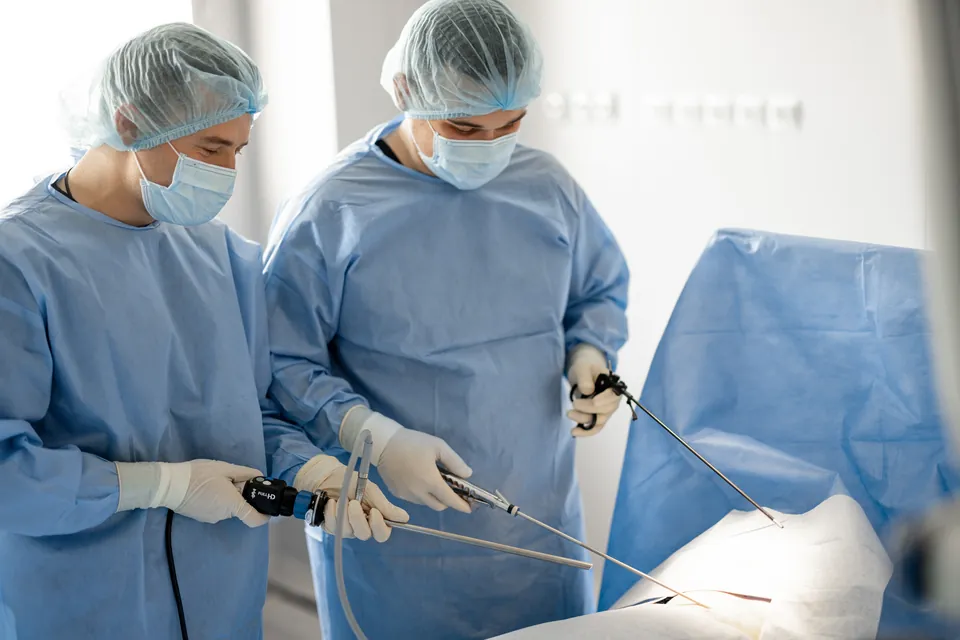
What is laparoscopic endometriosis surgery, when is it needed, and how is it done? Endometrioma surgery, ovarian reserve, risks and recovery.
Laparoscopic endometriosis surgery aims to remove or destroy endometriosis lesions in the abdomen and, if needed, an ovarian chocolate cyst (endometrioma) through small abdominal incisions. The decision is individual, based on pain severity, cyst characteristics, age and pregnancy plans. Surgery may not eliminate endometriosis completely; postoperative treatment planning is also part of the process. This provides a general framework and does not replace your individual assessment.
What is laparoscopic endometriosis surgery?
In endometriosis, tissue resembling the lining of the uterus settles inside the abdomen, on surfaces outside the uterus, or in the ovary. In laparoscopy, several small incisions are made in the abdominal wall; a camera and fine surgical instruments are placed through these incisions, and the abdominal cavity is expanded with gas. During the operation, the peritoneum, ovaries, tubes and neighbouring surfaces are seen directly. Deposits that are seen can be removed or ablated, adhesions can be released, and a cyst in the ovary can be addressed. Which procedures will be carried out is discussed at the pre-operative consent consultation.
When might surgery be recommended for you?
Surgery is considered when pain continues despite medicines, the cyst's structure needs further investigation or your doctor identifies other reasons. Removing or destroying peritoneal endometriosis lesions may reduce pain, but evidence remains limited. How much surgery reduces pain therefore varies between people.
How is surgery assessed if you plan pregnancy?
If you plan pregnancy, the benefit of surgery and its possible effect on the ovary are assessed together. If IVF is planned, removing the cyst is not considered necessary in itself. Routine endometrioma (chocolate cyst) surgery solely to increase the chance of birth is not recommended. However, surgery may be considered for pain or if the cyst makes egg collection difficult.
What preparation takes place before surgery?
Before surgery, ultrasound and, if needed, magnetic resonance imaging (MRI) assess the extent of the cyst and possible deep lesions. Blood tests, anaesthetic assessment, medicines and previous abdominal operations are reviewed. Routine pre-operative hormone therapy aimed at improving the outcome of surgery for pain is not recommended. The surgical team decides details such as bowel preparation.
How are lesions and adhesions treated during surgery?
The type of anaesthesia is determined by the surgical team. Surface deposits can be removed or ablated using an energy method. Adhesions are released so that the organs can regain their normal position. The scope of the procedures varies according to findings during the operation. The operation is performed by Assoc. Prof. Dr. Nurettin Türktekin at Memorial Şişli Hospital.
How is a chocolate cyst (endometrioma) removed?
For a chocolate cyst, separating and removing the cyst wall from the surrounding ovarian tissue is preferred to only draining the contents and ablating the cyst surface; this gives more favourable results for cyst recurrence and pain. Healthy ovarian tissue is preserved as far as possible when separating the cyst wall, but some of it may be affected.
Why can deep endometriosis surgery be more complex?
Deep endometriosis extending into organs such as the bowel, bladder or ureter makes the operation more complex. In this situation, the involvement of a team made up of more than one specialty may be needed, and additional complications can arise. If such a possibility exists, it is identified with imaging before the operation, and planning is carried out accordingly.
How does surgery affect ovarian reserve?
Both the chocolate cyst itself and surgery can affect ovarian reserve. Removing the cyst wall may also affect healthy ovarian tissue, so reserve may fall after cystectomy. How much this affects pregnancy chances is uncertain and varies between people; if you plan pregnancy, discuss expectations with your doctor beforehand.
What are the risks and complications of surgery?
The main risks are:
- Risks related to anaesthesia
- Bleeding
- Infection
- Formation of adhesions inside the abdomen
- Injury during entry into the abdomen and to neighbouring organs such as the bowel, bladder, ureter or a blood vessel
- In deep disease, additional complications such as leakage and fistula related to bowel or bladder repair
- Reduction in ovarian reserve
- Recurrence of the endometriosis and the cyst
- Conversion to open surgery
- Formation of a blood clot in the leg veins
The frequency of these risks varies according to the extent of the disease and the scope of the operation. It is helpful to discuss which of these apply to you with your doctor at the pre-operative consultation.
How do recovery and postoperative treatment planning proceed?
Abdominal bloating, incision pain and shoulder-tip pain may occur afterwards. Light spotting, mild cramps and temporary gas-related shoulder-tip pain are common and considered normal during this time. Hospital stay and when to return to work, sport and sex depend on the extent of surgery; the operating team gives instructions. Recovery may take longer after deep endometriosis surgery. Symptoms are assessed at follow-up and postoperative medicines are planned.
Can endometriosis recur?
Endometriosis may recur after surgery; how often depends on the time period and how disease is defined. Long-term hormonal suppression after surgery is recommended to reduce recurrence in people who are not planning pregnancy right away. Your doctor tailors medicine choice and duration to you; the plan changes when you want pregnancy.
Frequently Asked Questions
Does endometriosis surgery lead to pregnancy?
Surgery does not guarantee pregnancy on its own. Difficulty conceiving can have more than one cause; ovarian reserve, the condition of the tubes, and partner factors are all assessed together. Surgery can address the problem created by the cyst or adhesions; its benefit varies according to the extent of the disease and other factors. For this reason, the timing and necessity of surgery for those with a pregnancy goal are discussed separately.
Is chocolate cyst surgery recommended solely to increase the chance of birth?
No. If IVF is planned, removing the cyst is not considered necessary in itself; routine endometrioma surgery solely to increase the chance of birth is not recommended. However, surgery may be considered for pain or if the cyst makes egg collection difficult.
Is hormone treatment given before surgery?
No. Routine hormone treatment before surgery to improve the outcome of surgery for pain is not recommended.
Can the operation be converted to open surgery?
Yes. Conversion to open surgery is a known risk of laparoscopic endometriosis surgery. The decision may depend on findings during surgery.
Might deep endometriosis surgery need support from other specialties?
Yes. Deep endometriosis involving the bowel, bladder or ureter may complicate surgery; a team from several specialties may be needed and additional complication risks may arise.
Can removing the cyst wall affect your ovary?
Yes. Healthy ovarian tissue is preserved as far as possible when separating the cyst wall, but some may be affected; ovarian reserve may fall after cystectomy.
Are bloating and shoulder-tip pain normal after surgery?
Yes. Abdominal bloating, incision pain and shoulder-tip pain may occur. Light spotting, mild cramps and temporary gas-related shoulder-tip pain are common and considered normal during this time.
When can I return to work or sport after surgery?
This depends on the extent of surgery. Hospital stay and when to return to work, sport and sex depend on your circumstances and the extent of surgery; the operating team gives instructions.
What is assessed at follow-up?
How symptoms are developing is assessed and postoperative medicines are planned. The possibility of longer recovery after deep endometriosis surgery can also be discussed.
Is adenomyosis treated with the same operation?
No. Adenomyosis is a disease separate from endometriosis and is located within the muscle of the uterus. Removing endometriosis deposits does not eliminate adenomyosis. Because the two can occur together, assessment and the surgical plan are made accordingly.
What should I do if my pain does not go away after the operation?
Pain may continue or return over time in some people. A new lesion, adhesions or an unrelated condition may be responsible. Describe the location and severity of pain at follow-up; medicines and imaging are reassessed if needed.
Get Your Free Consultation
Fill out the form below and our team will contact you

