


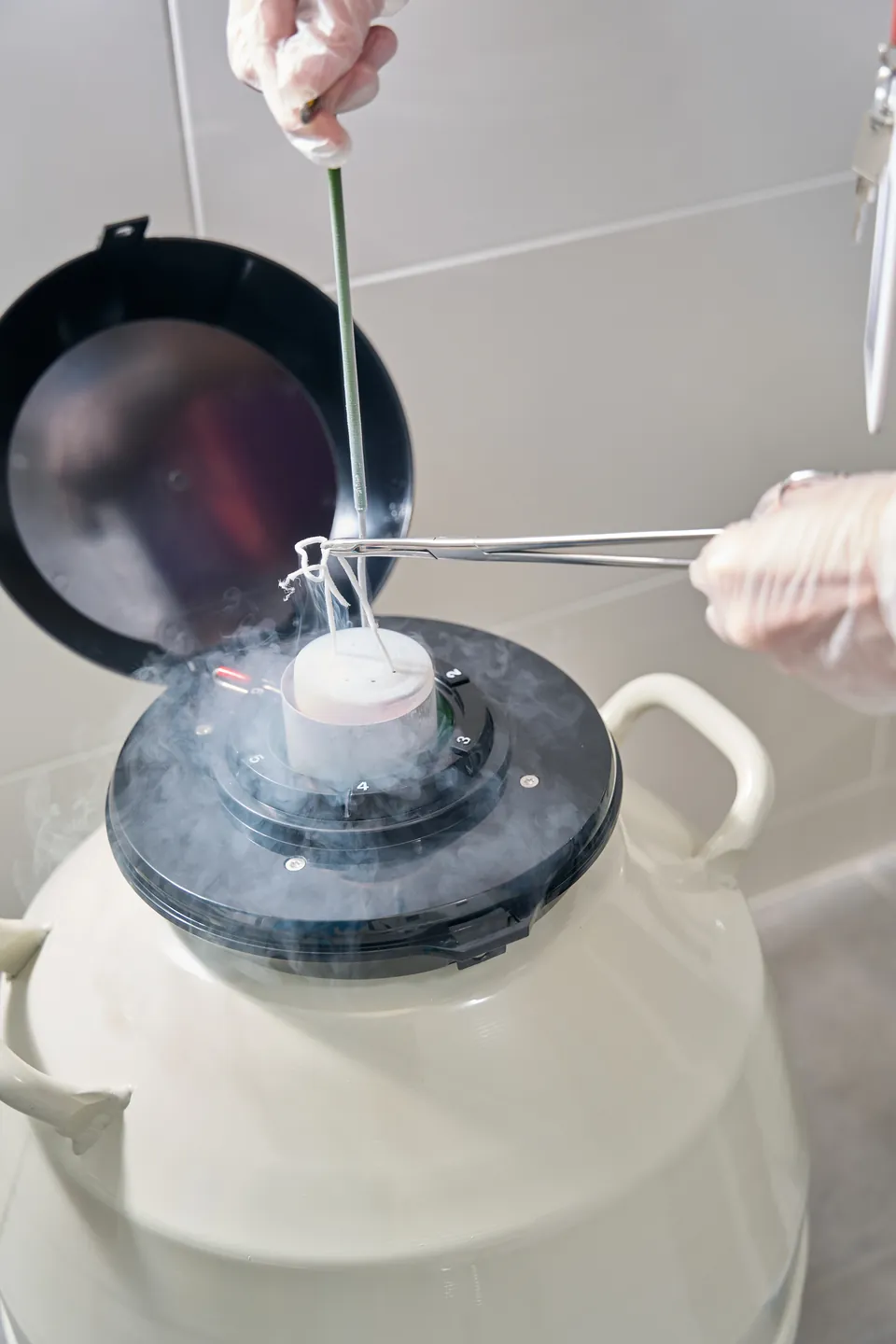
What is embryo freezing and when is it done in IVF? Vitrification, the place of freezing all embryos (freeze-all), risks and urgent warning signs.
Embryo freezing is the storing of the embryos formed in an IVF cycle by a rapid-freezing method so that they can be used in a later transfer. Embryos are frozen for a later transfer or when there are surplus embryos. The conditions of use depend on legislation and the doctor's assessment. The information below draws a general framework; it does not replace a diagnosis or treatment recommendation specific to you.
What is embryo freezing?
The embryos formed in your IVF cycle can be transferred in the same cycle or frozen. If there are surplus embryos, they can be frozen with your consent and in accordance with legislation. IVF treatment is carried out within Ota Jinemed and Liv Hospital Ulus, with the laboratory and embryology teams of these hospitals.
What is vitrification?
Vitrification is the rapid-freezing technique widely used today in embryo freezing. The embryo is frozen by being cooled very rapidly.
What is the difference between freezing embryos, eggs and sperm?
Embryo freezing stores the fertilised egg. Egg and sperm freezing, on the other hand, is the storing of unfertilised cells. These three procedures are considered for different purposes and under different conditions.
In which situations are embryos frozen?
Is the transfer postponed if there is a risk of OHSS?
Yes. When your ovaries respond excessively to stimulation, the risk of ovarian hyperstimulation syndrome (OHSS) increases. In this case the embryos can be frozen and the transfer postponed until the situation settles. In current approaches this method is counted among the strategies that reduce the risk.
Are embryos frozen while waiting for a genetic test result?
Yes, when necessary. If genetic testing is to be done on the embryos, the embryos can be frozen and stored until the result is ready; the transfer is planned after the result is obtained.
What happens when the conditions of the uterus are not suitable, or when there are surplus embryos?
Embryos can be frozen in situations where the lining of your uterus is not suitable for transfer in that cycle. Embryos left over after a transfer can also be stored for future attempts. Which reason applies to you varies from person to person.
Is freezing all embryos (freeze-all) necessary for everyone?
No. Current assessments do not recommend freezing in every cycle as a routine. The clearest place for freezing is in cycles where the risk of OHSS is high. It is a good idea to talk with your doctor about the reasoning for the recommended approach.
What should be paid attention to during freezing and storage?
Does every thawed embryo survive?
No. Not every embryo may survive thawing; the likelihood of survival varies from person to person and from embryo to embryo. Freezing does not remove the main factors that determine the outcome, such as your age and embryo quality.
Does frozen embryo transfer affect the baby's health?
In pregnancies in which frozen embryos are transferred, some signals of difference have been seen in average birth weight and in problems with high blood pressure; these findings are not definite and are taken into account in your pregnancy follow-up.
What do the storage and use of embryos depend on?
The storage and use of embryos depend on legislation and the consent form you have signed. You need to confirm the current situation with your doctor or the centre.
When is the frozen embryo used?
The frozen embryo can be thawed and transferred to your uterus in a suitable cycle planned by your doctor. The timing of the transfer and the way your uterus is prepared are determined according to the treatment plan.
Frequently Asked Questions
Should embryos or eggs be frozen?
To freeze an embryo, the egg has to be fertilised with sperm; that is, sperm is needed as well. Egg freezing, on the other hand, stores an unfertilised egg. Your treatment plan and your situation determine this choice. You make the choice together with your doctor.
Is the embryo freezing procedure painful?
Because the embryo is frozen in the laboratory, no additional procedure is needed for you. The stage that may require pain relief or sedation is the egg collection needed for the embryos to form; this is part of the cycle independently of the decision to freeze.
Are all the embryos that form necessarily frozen?
No. The embryos formed in your IVF cycle can be transferred in the same cycle; freezing is considered when there are surplus embryos or when a later transfer is planned.
Why are my embryos frozen if there is a risk of OHSS?
When your ovaries respond excessively to stimulation, the risk of OHSS increases. In this case the embryos can be frozen and the transfer postponed until your condition settles; this approach is counted among the strategies that reduce the risk.
Can the transfer be done while waiting for the genetic test result?
No. If genetic testing is to be done on the embryos, the transfer is planned after the result is obtained; during this process the embryos are frozen and stored.
Is a frozen embryo always usable when thawed?
No. Not every embryo may survive thawing; this likelihood varies from person to person and from embryo to embryo. Freezing does not remove the factors that determine the outcome, such as your age and embryo quality.
What is known about the baby's health in a pregnancy formed with frozen embryo transfer?
In these pregnancies some signals of difference have been seen in average birth weight and in problems with high blood pressure; the findings are not definite and are taken into account separately in your pregnancy follow-up.
Can I use my frozen embryo whenever I wish?
No. Storage and use depend on legislation and the consent form you have signed; the transfer is also done in a suitable cycle planned by your doctor. You need to confirm the current situation with your doctor or the centre.
Does freezing all embryos and transferring them later (freeze-all) increase the chance of live birth?
Compared with fresh transfer, it is likely that there is little or no difference in live birth. It has not yet been settled that this approach increases the chance of live birth, nor is there any finding that it reduces it.
Can the embryos be frozen if the lining of my uterus is not suitable for transfer?
Yes. If the lining of the uterus is not suitable for transfer in that cycle, the embryos can be frozen. The timing of the transfer and the preparation of the uterus are determined according to your doctor's treatment plan.
Get Your Free Consultation
Fill out the form below and our team will contact you

