


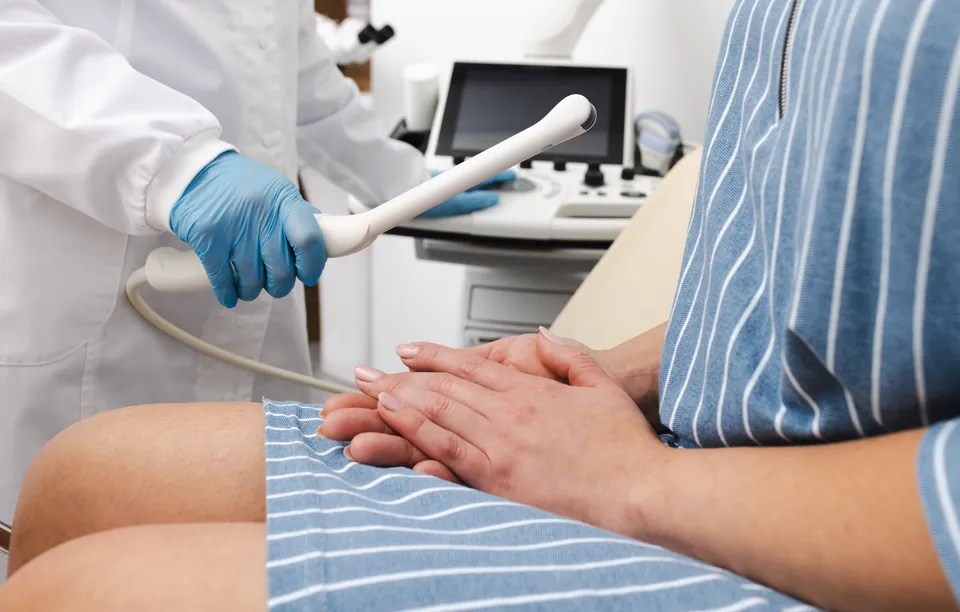
What do low AMH and reduced ovarian reserve mean? They do not decide the chance of pregnancy alone; the role of age, causes and what to consider next.
A low AMH is a blood test result suggesting that the pool of eggs remaining in the ovaries may be small for your age. This result alone does not determine your chance of pregnancy and is not regarded as grounds for refusing IVF treatment. It is understandable to feel anxious when you receive the result; however, no definite verdict about the future can be drawn from a single value. The information below offers a general framework and does not replace a diagnosis or treatment recommendation specific to you.
What are low AMH and reduced ovarian reserve?
Ovarian reserve is a concept describing the pool of eggs currently in the ovaries that have potential to develop. This pool only decreases from birth and shrinks with age. "Reduced ovarian reserve" means that the pool is smaller than expected for the person's age. This is more an interpretation that gives a clue about the response of the ovaries to stimulation than the name of a disease.
AMH is measured from the blood as an indirect indicator of the pool; the number of small follicles counted on ultrasound (AFC) is also used for a similar purpose. In making sense of the result, the real question is what the low value tells you and what can be done from here.
What does a low result show, and what does it not show?
Are the number of eggs and the chance of pregnancy the same thing?
A low AMH suggests that the response you give to stimulation, that is, the number of eggs that can be obtained, may be small. Its relationship with egg quality and live birth, however, is weak. Therefore a low result raises the possibility of "few eggs may be obtained"; it does not mean that "your eggs are of poor quality" or that "pregnancy will not happen". A very low AMH should likewise not be used on its own to refuse IVF treatment.
Is age more decisive than the reserve tests?
In predicting reproductive success, age is a more weighty factor than the reserve tests. Current guidelines recommend that the diagnosis of low reserve be based on age rather than on the tests. For this reason the same AMH value can carry a different meaning for two people of different ages, and the result should not be read like a "score" independent of age.
What causes low ovarian reserve?
The most marked cause is age. Apart from age, operations on the ovaries, endometrioma (chocolate cyst) and surgery for these cysts, chemotherapy, pelvic radiotherapy, certain genetic conditions and familial characteristics can reduce your reserve. According to current guidelines, surgery for an endometrioma before IVF is not recommended routinely to increase live birth, because the operation can also affect ovarian reserve. The same guidelines also state that surgery may be considered separately for other reasons, such as pain; for this reason the decision is made together with your doctor, who knows the cyst and your complaints. In many people no marked cause can be found. Looking for a cause is meaningful if you have a history that could change the interpretation. If low reserve is found at a very young age, it is appropriate to be assessed with your doctor for premature ovarian insufficiency; because in such cases age alone is not a guide.
How is the result interpreted?
The same value may not be reported in the same way in every laboratory; for this reason the result should be taken to the doctor together with the information of the laboratory it came from. The following are taken into account in the interpretation:
- Age and history: Your age, your pregnancy history, your menstrual pattern, and the operations or treatments you have had.
- More than one piece of information: The follicle count on ultrasound together with AMH and, if necessary, FSH. Because the variability between FSH measurements is high, relying on a single FSH value is limited.
- Medicines used: If you are using a hormonal contraceptive method, tell the doctor that the result may come out low.
- Pregnancy plan: How long you have been trying and whether your partner's assessment has been done.
That a reserve test is not necessary to look for the cause or to predict unassisted pregnancy in the coming months if your periods are regular also appears in current guidelines. A low AMH result does not show on its own that natural pregnancy is not possible.
If a low AMH is found, what is the next step?
A low result is not in itself an emergency and is information for planning.
The next step is mostly a holistic assessment with the doctor: age, pregnancy history, the time tried, the state of the tubes and uterus, and the partner's results are considered together. At the end of this, continuing to try unassisted, or options such as insemination or IVF, can be discussed; which is suitable varies with the person. Because low reserve can affect the response of the ovaries to stimulation in IVF, the medicine plan is built accordingly; the details belong to the doctor.
Timing varies with the person: for some people it may be useful to talk about the result early with a reproductive health doctor, but you do not need to make a hurried decision. Reserve tests should not be used to encourage planned egg freezing; whether to consider freezing eggs or embryos is a decision made according to age, plan and personal circumstances, and a single test result is not regarded as grounds for it.
Are the supplements and methods claimed to increase reserve reliable?
Supplements, medicines and add-on procedures claimed to increase reserve are often offered. Keep in mind that the evidence for the benefit of many of them may be limited and that each may have its own risks; talk with your doctor before using them. Herbal mixtures of unclear origin and over-the-counter supplements in particular need caution.
What should be paid attention to in the face of the result?
Misunderstanding the result can create problems in two directions: saying "you have no chance" by looking at a single AMH value, or regarding fertility as guaranteed by saying "AMH came out reasonable", are both unfounded.
This process can bring an emotional burden. If you feel anxiety, sadness or helplessness, you can share this with your doctor and, if necessary, get psychological support.
Frequently Asked Questions
What information should I prepare when taking the result to the doctor?
It makes interpretation easier if you note down your previous AMH, FSH and ultrasound results, your menstrual pattern, the operations and treatments you have had, the medicines you use (including hormonal contraception) and how long you have been trying for pregnancy. Having the name of the laboratory and the method it used on the result sheet is also useful when making comparisons.
If pregnancy is not happening, is the cause only low AMH?
Not necessarily. In the assessment of failure to conceive, ovulation, the tubes, the uterus and the partner's results are also examined; low reserve may be only one of these or may accompany the picture. For this reason the assessment is expected not to be limited to a single test.
If a centre has said "treatment is not possible" because of low AMH, can a second opinion be obtained?
Yes, getting a second opinion is a normal right. You can ask what data the decision rests on, and whether only AMH was looked at or age, history and the other findings too; a very low AMH should not be used on its own to refuse treatment.
Which doctor should be seen about this?
Usually an obstetrics and gynaecology specialist, and if necessary a doctor working in reproductive health and infertility. Which specialist is suitable varies with your complaint and history.
Is reduced ovarian reserve a disease?
No. It is more an interpretation that gives a clue about the response of the ovaries to stimulation than the name of a disease.
Does the same AMH value mean the same thing for everyone?
No. In predicting reproductive success, age is a more weighty factor than the reserve tests; for this reason the same AMH value can carry a different meaning for two people of different ages.
Can the cause of low ovarian reserve always be found?
No. The most marked cause is age; operations on the ovaries, endometrioma surgery, chemotherapy, pelvic radiotherapy, certain genetic conditions and familial characteristics can also play a part. However, in many people no marked cause can be found.
Is chocolate cyst (endometrioma) surgery always recommended?
No. According to current guidelines, surgery for an endometrioma before IVF is not recommended routinely to increase live birth, because the operation can also affect ovarian reserve. Surgery may be considered separately for other reasons, such as pain; the decision is made together with your doctor, who knows the cyst and your complaints.
What should be done if low reserve is found at a very young age?
If low reserve is found at a very young age, it is appropriate to be assessed with your doctor for premature ovarian insufficiency; because in such cases age alone is not a guide.
If my periods are regular, do I need a reserve test?
No. That a reserve test is not necessary, if your periods are regular, to look for the cause or to predict unassisted pregnancy in the coming months also appears in current guidelines.
When a low AMH is found, is it necessary to start treatment straight away?
No. A low result is not in itself an emergency and is information for planning. You do not need to make a hurried decision; the next step is a holistic assessment to be carried out with your doctor.
Are all the supplements claimed to increase reserve safe?
No. The evidence for the benefit of many of these supplements may be limited and each may have its own risks; it is important to talk with your doctor before using them.
Is it normal to feel anxious about a low AMH result?
Yes. It is understandable to feel anxious when you receive the result. If you feel anxiety, sadness or helplessness, you can share this with your doctor and, if necessary, get psychological support.
Get Your Free Consultation
Fill out the form below and our team will contact you

