


What is laparoscopic adhesiolysis, when is it considered, and how is it done? Limits of the evidence for pain and fertility, risks and recovery.
Laparoscopic adhesion release (adhesiolysis) separates bands connecting abdominal or pelvic organs to each other or the abdominal wall, using a camera and fine instruments inserted through small abdominal incisions. Not every adhesion causes symptoms or needs surgical release. Even for people with pain or difficulty conceiving, evidence of surgical benefit is limited. This provides a general framework and does not replace your individual assessment.
What is an intra-abdominal (pelvic) adhesion?
An adhesion is fibrous tissue, formed during healing, that causes organ surfaces that would normally move independently of one another to stick together. It can occur between the bowel, uterus, tube, ovary and abdominal wall. Intrauterine adhesions are a different condition, located in a different organ and addressed with different methods.
What causes adhesions?
Adhesions most often form after previous abdominal or gynaecological operations. Inflammatory processes such as pelvic infections and endometriosis can also lead to adhesions; endometriosis can be associated with dense adhesions. Of two people who have had the same operation, one may develop adhesions while the other does not.
What symptoms do adhesions cause, and how are they diagnosed?
Adhesions most often cause no complaints at all. When there are complaints, chronic pelvic or abdominal pain, bowel-function complaints, or difficulty conceiving can occur; however, these complaints have many other causes. Ultrasound and MRI may not reliably show adhesions; for this reason, the diagnosis is usually made during an operation, when the organs are seen directly.
What is laparoscopic adhesiolysis?
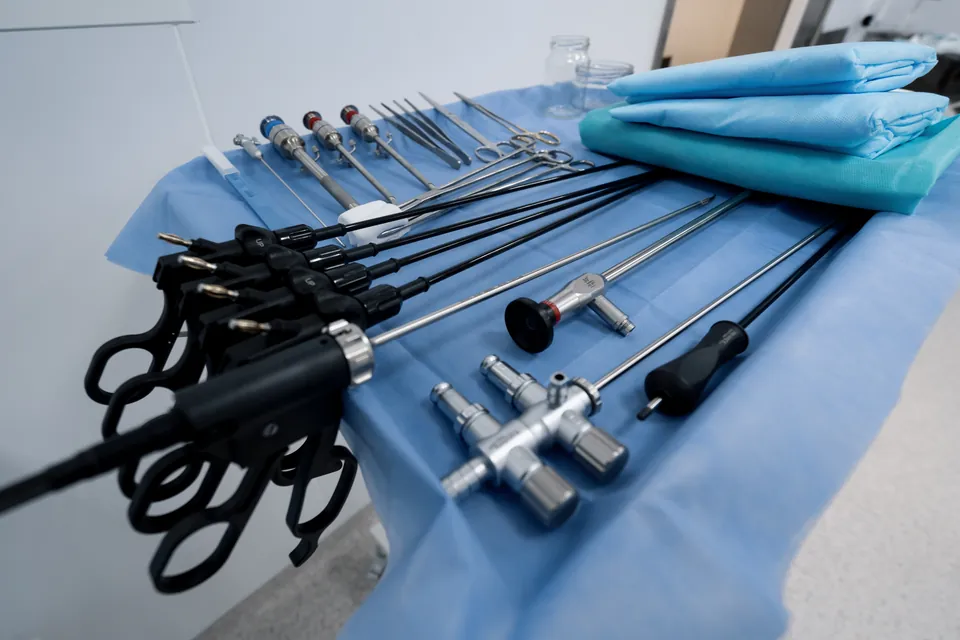
Adhesiolysis is the cutting and separation of adhesion bands without damaging the surrounding organs. In laparoscopy, a camera and fine instruments enter through small incisions in the abdominal wall; the abdominal cavity is expanded with gas, and the adhesions are addressed using a magnified image on a screen. The duration and difficulty of the procedure vary according to the extent and location of the adhesions.
In which situations is it considered?
Adhesiolysis is recommended in selected situations where the adhesions are suspected to be the cause of the complaint and other causes have been assessed. Sometimes, during a laparoscopy performed for another reason (such as endometriosis, cyst or tubal surgery), adhesiolysis is required as a step of the operation; this possibility should be discussed in advance at the consent consultation.
How strong is the evidence of surgical benefit for pain and infertility?
The results of studies comparing adhesiolysis with diagnostic laparoscopy alone for chronic pelvic pain are conflicting. Overall, a clear additional benefit has not been shown, although it has been suggested that there may be a benefit in selected people with dense, vascular adhesions. The absence of evidence for benefit does not mean there is no harm; for this reason, the decision is made by weighing the possible benefits and risks together.
Adhesions are thought to possibly reduce fertility by disrupting the relationship between the tube and ovary. However, the association seen in observational studies is not considered evidence of cause and effect, and it has not been shown that surgically dividing adhesions increases the chance of pregnancy. It cannot be said that the operation will relieve pain or result in pregnancy.
How is the procedure performed?
The operation is usually performed under general anaesthesia. Several small incisions are made in the abdominal wall, the abdominal cavity is expanded with gas, and the organs are examined. The adhesions are carefully separated from neighbouring structures such as the bowel, bladder and blood vessels. The method of entry and its details are the surgeon's decision. In very difficult adhesions, the procedure may not be completed, or conversion to open surgery may occur. Instructions on preparation, fasting and stopping medicines are given by the surgical team. The operation is performed by Assoc. Prof. Dr. Nurettin Türktekin at Memorial Şişli Hospital.
Can adhesions recur, and can they be prevented?
Divided adhesions can re-form in the same location; adhesiolysis does not eliminate the formation of new adhesions. Some barrier agents (membrane- or gel-like substances that separate surfaces) can be used to reduce adhesions after surgery. The evidence on this is still limited: low-quality evidence suggests that a collagen membrane (containing polyethylene glycol and glycerol) and oxidised regenerated cellulose used in laparotomy may reduce post-operative adhesion formation; evidence is insufficient regarding the relative effectiveness of the agents compared with each other, and no data exist from studies on their effect on pain or live birth. Whether to use one is the decision of the operating doctor.
What are the risks and complications?
Like any surgical procedure, laparoscopic adhesiolysis carries risk. In the presence of adhesions, the likelihood of injury to neighbouring organs may be higher. The main risks are:
- Risks related to anaesthesia
- Bleeding
- Infection
- Injury to the bowel, bladder or a blood vessel during entry into the abdomen
- Injury to the bowel or bladder while dividing adhesions (sometimes not noticed during the operation and only becoming apparent days later through symptoms)
- Recurrence of the adhesions
- Formation of a blood clot in the leg veins
- Laparoscopy not being completed, requiring conversion to open surgery
Previous operations and extensive adhesions can increase the risk of injury; these factors are discussed with the doctor before the operation. Serious complications are rare, but the risk is not zero.
What can you expect during recovery?
Abdominal bloating, incision pain and nausea may occur afterwards. Light spotting, mild cramps and temporary gas-related shoulder-tip pain are considered normal during this time. Symptoms of bowel or bladder injury—increasing pain, fever, nausea or vomiting preventing fluid intake—can also appear in the days after surgery. Hospital stay and when to return to work, daily life, sport and sex depend on the extent of surgery and your circumstances; the operating team gives instructions. If a tissue sample was taken, results are shared at follow-up.
Frequently Asked Questions
Does everyone with adhesions need surgery?
No. Adhesions most often cause no symptoms, and symptomless adhesions do not need treatment. They are sometimes found incidentally on imaging or during an operation carried out for another reason. Surgery is discussed in people where the adhesions are suspected of causing the complaint and other causes have been assessed.
Can all adhesions be divided during the operation?
Sometimes not. In dense adhesions, because of the risk of damaging organs such as the bowel or bladder, only the parts that can be safely separated are divided. This possibility should be discussed in advance at the pre-operative consultation, and you should ask the doctor afterwards what was done.
I have had a previous abdominal operation — can laparoscopy still be done?
A previous operation is not on its own a barrier to laparoscopy; however, it can increase the risk of injury during entry into the abdomen. All previous operations should be reported to the doctor. The surgeon plans the method of entry, and open surgery if needed, based on this information.
If surgery is being planned because of infertility, what should be discussed?
Whether the adhesions are the only cause, the patency of the tubes, ovarian reserve, and assessment of the partner should all be considered together. Because the contribution of the operation to the chance of pregnancy has not been shown, it is helpful for the decision to be made together with a reproductive medicine specialist, within the context of the overall fertility process.
Why do adhesions develop?
They most often follow abdominal or gynaecological operations. Inflammatory processes such as pelvic infection and endometriosis may also cause them. Of two people having the same operation, one may develop adhesions while the other does not.
Can ultrasound or MRI identify adhesions definitively?
No. Ultrasound and MRI do not always show adhesions reliably. Diagnosis is therefore usually made during surgery, when organs are seen directly.
Does adhesion release definitely relieve pain?
No, this cannot be said with certainty. Adhesion release has not been shown to provide a clear additional benefit for chronic pelvic pain; benefit has been suggested only for selected people with dense, vascular adhesions.
Does adhesion release increase pregnancy chances?
Although adhesions are thought to reduce fertility, surgical adhesion release has not been shown to increase pregnancy chances.
Can adhesions return after surgery?
Yes, released adhesions can recur in the same place; surgery does not completely prevent new adhesions. Some barrier materials may help reduce adhesions; the operating doctor decides whether to use them.
Is there a risk of injury to nearby organs during surgery?
Yes, the risk of injury to nearby structures such as the bowel, bladder or blood vessels may be higher, especially with adhesions. Some injuries may go unnoticed during surgery and cause symptoms days later.
Which symptoms are considered normal after surgery?
Abdominal bloating, incision pain, nausea, light spotting, mild cramps and temporary gas-related shoulder-tip pain are considered normal during this time.
Who performs the operation, and where?
The operation is performed by Assoc. Prof. Dr. Nurettin Türktekin at Memorial Şişli Hospital.
Get Your Free Consultation
Fill out the form below and our team will contact you

