


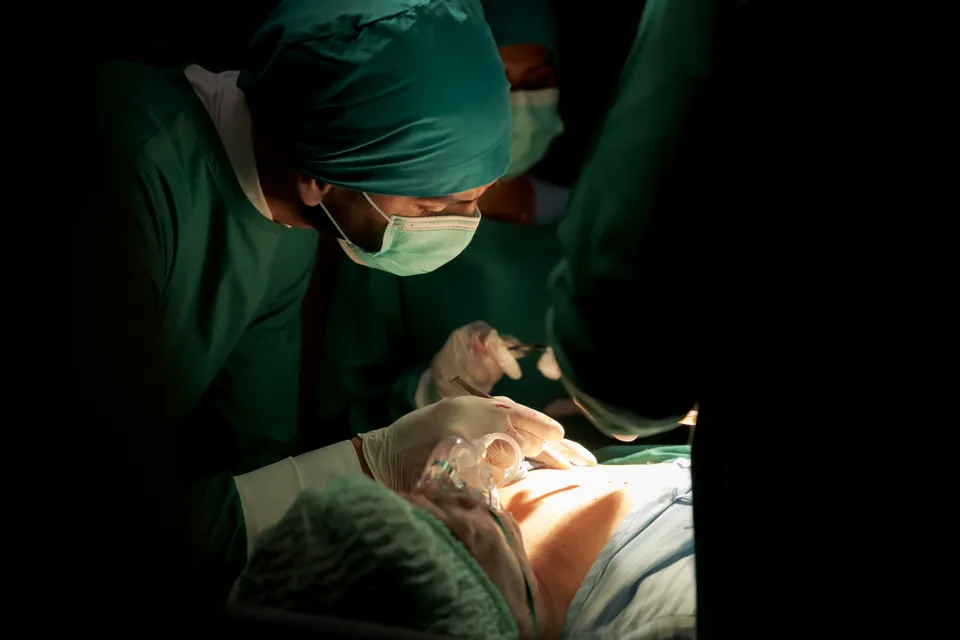
What is open myomectomy, and when is it considered? Information on the incision, risks, recovery, a future pregnancy and mode of delivery after it.
Open myomectomy is an operation in which fibroids are removed through an incision made in the abdomen while the uterus is preserved. It can be considered for large, numerous or hard-to-reach fibroids; the method is decided together, based on the characteristics of the fibroid, your symptoms and your personal preferences. Here you will find a general framework; this information does not replace the individual assessment made for you.
What is open myomectomy?
A fibroid is a benign lump that develops from the muscle of the uterus. Myomectomy is the general name for an operation in which fibroids are removed from the wall of the uterus and the uterus is left in place. In the open method, the abdominal wall is opened with an incision, the uterus is reached directly, the fibroids are removed and the wall of the uterus is stitched. The removed tissue is sent to pathology.
What is the difference between myomectomy and hysterectomy?
In myomectomy only the fibroids are removed; the uterus and the possibility of pregnancy are preserved. In hysterectomy the uterus itself is removed; menstrual bleeding stops and pregnancy is no longer possible. For people who do not wish to have children, hysterectomy can also be discussed as an option. If medicines are not enough or are not accepted by a person with fibroids, it is recommended that myomectomy and hysterectomy are considered together.
In which situations is the open route considered?
Myomectomy through the abdomen is an alternative to hysterectomy for a person who wants to keep the uterus and has a fibroid that causes symptoms; the open or closed route is chosen according to the size, number and location of the fibroid, the surgeon's experience and your preference. The open route may come to the fore in the following situations:
- If the fibroid is large or there are many fibroids
- If the fibroid is in a hard-to-reach place, such as the cervix or the broad ligament that holds the uterus
- If marked adhesions are expected in the abdomen
- If the open route is considered more suitable according to the surgeon's assessment and the facilities available
Some fibroids that grow towards the uterine cavity can instead be removed through the cervix, without an abdominal incision. Which route is suitable is decided from examination and imaging findings.
What is done before the operation?
Before the operation, how many fibroids you have, how large they are and where they lie in the uterus are determined by ultrasound and, if necessary, magnetic resonance imaging (MRI). Because heavy menstrual bleeding can lead to anaemia, your blood values are checked; if you have anaemia, the aim is for it to be treated before the operation and, if necessary, for blood to be prepared. An anaesthetic assessment is also made; you need to tell your doctor about the medicines you take regularly, your allergies and any abdominal operations you have had. The surgical team will give you the instructions on fasting and stopping medicines.
How is the operation performed?
The type of anaesthetic is decided by the surgical and anaesthetic team. The incision is usually made low in the abdomen, close to the bikini line, and horizontally; this incision can be used even for large uteruses. If the uterus extends up to the upper abdomen, if marked adhesions are expected or if access to the abdominal wall is difficult, a vertical (midline) incision in the middle may be needed.
The fibroid is removed through an incision made in the wall of the uterus. The space where the fibroid lay is stitched in more than one layer, according to its depth, so that no empty space is left; stitching that passes through the inner cavity of the uterus and burning the tissue more than necessary are avoided. Various methods can be used to reduce bleeding; how effective they are varies with the method, and the surgical team makes the choice. The inside of the abdomen is washed. The use of anti-adhesion materials may be considered, but there are not enough data on how useful they are; what matters most is handling the tissue gently and controlling bleeding meticulously. The operation is performed by Assoc. Prof. Dr. Nurettin Türktekin at Memorial Şişli Hospital.
Can another method be chosen instead of the open method?
Fibroids can be dealt with through the abdomen, by the open or closed route, and those that extend into the uterus can be dealt with by a method without an incision. There is no single method that suits every fibroid; nor can a general ranking of superiority be made between the methods. In the choice, the characteristics of the fibroid, your symptoms, your wish for pregnancy, the surgeon's experience and your preference are considered together. In the open route the incision is larger and recovery generally takes longer; wound problems are also among the risks associated with this method.
What are the risks of open myomectomy?
The main risks are as follows:
- Risks related to the anaesthetic
- Bleeding and the need for a blood transfusion
- Infection (at the incision site, in the urinary tract, in the pelvis)
- Formation of adhesions inside the abdomen after the operation
- Injury to neighbouring organs (bowel, bladder, urinary tract) or to blood vessels
- Opening of the inner cavity of the uterus and adhesions related to this
- Wound-healing problems at the incision site and hernia
- Clot formation in the leg veins
- Fibroids appearing again
- Rarely, the need for an additional unplanned procedure
- Rarely, an unexpected pathology result
- Rupture of the uterus in a later pregnancy, or situations needing extra monitoring in pregnancy (rare)
How often the risks occur varies with the person, the characteristics of the fibroid and the extent of the operation. It is a good idea to ask your doctor at the pre-operative consultation which of them apply to you.
How does the recovery process go?
In open surgery, because of the incision made in the abdominal wall, recovery generally takes longer than with the closed method. Some studies have found that the closed method leads to less pain after the operation and a shorter hospital stay than the open method; however, these data are old. This difference is taken into account when choosing the method. Your length of hospital stay, wound care, and when you return to work, sport and sexual intercourse vary with the extent of the operation and with you; the team that performs the operation will give you the instructions.
Pain and tenderness at the incision site, light vaginal spotting and tiredness are among the usual symptoms after the operation. Your pathology result is shared with you at the follow-up examination.
What about pregnancy, mode of delivery and fibroids coming back after the operation?
When you can try for pregnancy after the operation varies with the depth of the fibroid and the extent of the uterine stitching; your doctor will tell you this period. Rupture of the uterus in a pregnancy after myomectomy is rare, and in most reports it occurred before labour; however, there is no definite threshold, and the quality of the observational data on this is limited. Your mode and timing of delivery are decided by your obstetrician according to the depth of the operation and whether the uterine cavity was opened; for this reason it is important to tell the obstetrician who monitors your pregnancy about your surgical history.
Myomectomy removes only the existing fibroids; it does not prevent new fibroids from forming. Because the uterus is preserved, new fibroids can develop; this possibility does not exist with hysterectomy. For this reason, regular check-ups are also recommended after the operation.
Frequently Asked Questions
If the fibroid is large, is the uterus always removed?
No. Size alone does not determine the decision for hysterectomy; your symptoms, your wish for pregnancy, and the number and location of the fibroids are considered together. Myomectomy can be considered even for a large fibroid or many fibroids, but this can increase the difficulty and risk of the operation.
What is the difference between open and closed myomectomy?
In the open method your abdominal wall is opened with an incision; in the closed (laparoscopic) method the abdomen is entered through a few small holes. Which method is chosen is decided according to the characteristics of the fibroid, your wish for pregnancy, the surgeon's experience and your preference; no method has a general superiority for every fibroid. In the open method the incision is larger, recovery generally takes longer, and wound problems are among the risks associated with this method.
How are fibroids that grow towards the inside of the uterus removed?
Some fibroids that grow towards the uterine cavity can be removed through the cervix, without an abdominal incision. Which route suits you is decided from examination and imaging findings.
What examinations are done before the operation?
How many fibroids you have, how large they are and where they lie in the uterus are determined by ultrasound and, if necessary, MRI. Because heavy menstrual bleeding can lead to anaemia, your blood values are checked; if you have anaemia, the aim is for it to be treated before the operation. An anaesthetic assessment is also made; you need to tell your doctor about the medicines you take regularly, your allergies and any abdominal operations you have had.
Is a blood transfusion needed during the operation?
This is difficult to predict before the operation. In a limited number of retrospective studies, the need for blood transfusion has been reported to be higher with the open route than with the closed method; a large uterus, many fibroids and a midline (vertical) incision have also been linked with more complications. These data do not give a definitive result. For this reason, it is important that your anaemia is treated before the operation and that blood is prepared in advance if necessary.
Might the uterus need to be removed during the operation?
Rarely, for example when bleeding cannot be brought under control, removal of the uterus can be considered. This possibility should be discussed with you at the pre-operative consent consultation; your preference on this should be known in advance.
What does an unexpected pathology result mean?
The removed fibroid tissue is examined. Rarely, a different result can be found in tissue that was expected to be benign. In such a situation, your doctor decides, looking at the pathology report, whether further assessment and treatment are needed.
How long does recovery take after open surgery?
In open surgery, because of the incision made in the abdominal wall, recovery generally takes longer than with the closed method. Your length of hospital stay, wound care, and when you return to work, sport and sexual intercourse vary with the extent of the operation and with you; the team that performs the operation will give you the instructions.
When can I start trying for pregnancy after the operation?
This period varies with the depth of the fibroid and the extent of the uterine stitching; your doctor will tell you. It is important that you do not start trying earlier on your own decision.
How is the mode of delivery decided after myomectomy?
Your mode and timing of delivery are decided by your obstetrician according to the depth of the operation and whether the uterine cavity was opened; for this reason it is important to tell the obstetrician who monitors your pregnancy about your surgical history.
Can fibroids form again after myomectomy?
Yes, they can. Myomectomy removes only the existing fibroids; it does not prevent new fibroids from forming. Because the uterus is preserved, new fibroids can develop; this possibility does not exist with hysterectomy. For this reason, regular check-ups are also recommended after the operation.
Get Your Free Consultation
Fill out the form below and our team will contact you

