


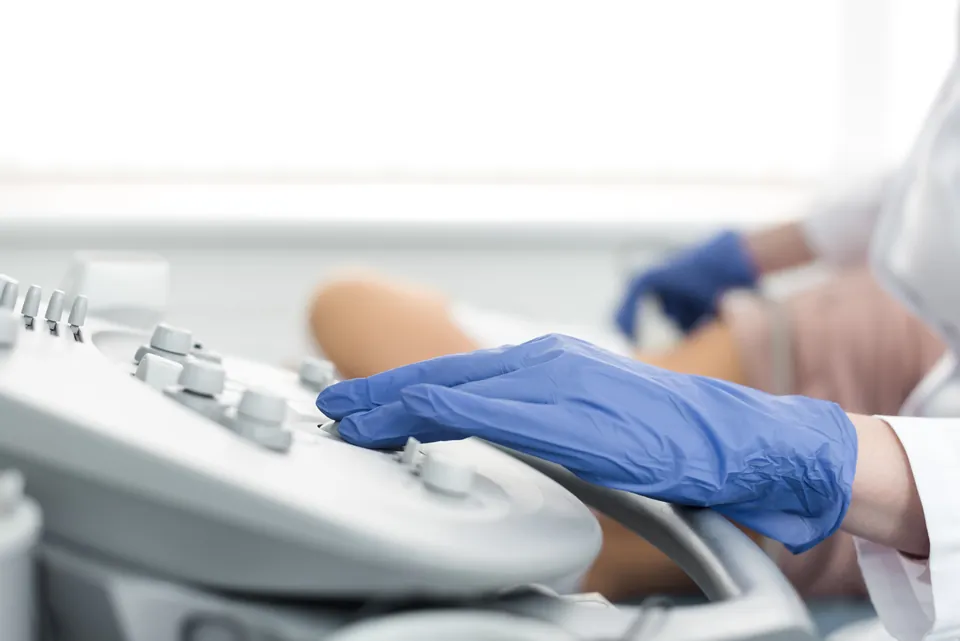
What is egg collection (OPU), and when and how is it done? General information on usual symptoms afterwards, possible risks and frequently asked questions.
Egg collection (OPU) is a short procedure in IVF treatment in which the mature eggs you have developed with medicines are collected from the ovaries. It is performed through the vagina under ultrasound guidance, with no incision in the abdomen; it is carried out under sedation or anaesthesia. The information below draws a general framework; it does not replace a diagnosis or treatment recommendation specific to you.
What is egg collection (OPU)?
OPU is the removal of the eggs inside the follicles developing in your ovaries. An aspiration needle passed through the vaginal wall is guided to the follicles while being watched on ultrasound; the follicular fluid is drawn up together with the eggs and sent to the laboratory. The eggs are examined there.
When is egg collection performed?
When your eggs have reached sufficient size, a trigger injection is given so that they complete their maturation. The procedure is done at a time planned after this trigger, before ovulation happens by itself. Your doctor determines the day and time according to the ultrasound and blood test results.
In which treatments is egg collection performed?
In IVF treatment, where eggs are fertilised outside the body, egg collection is needed both in the conventional method and in microinjection. OPU is not performed in applications such as ovulation induction and insemination, where fertilisation inside the body is the aim. IVF treatment is carried out within Ota Jinemed and Liv Hospital Ulus, with the laboratory and embryology teams of these hospitals.
What is done before the procedure?
Your doctor gives the instructions about the day of the procedure beforehand: which medicines you will use, from when you will stop eating and drinking, and how you will get to the procedure are included in these instructions. You need to tell your doctor about the medicines you use, your allergies and your previous experience of anaesthesia. The timings and details vary with the centre and the anaesthetic practice.
How is the procedure performed?
The ultrasound probe is placed in your vagina and the path of the needle is watched on the screen. The follicles in both of your ovaries are emptied in turn. The fluid taken is searched for eggs; an egg may not come out of every follicle. The number of eggs collected depends on the response you gave to the stimulation.
Sedation or anaesthesia is given to reduce the pain you will feel. Your doctor decides which method will be used according to your situation and the centre's practice. The level of pain varies from person to person; it is not possible to say beforehand that you will feel no pain at all.
After the procedure you rest for a time and are kept under observation. Your doctor will tell you the time of discharge and the instructions for the first days.
Which symptoms are expected after the procedure?
After the procedure it is normal to have light vaginal spotting, mild cramp-like pain, a feeling of fullness in the abdomen and short-lived drowsiness due to the effect of the sedation. Because your ovaries have grown with the stimulation, you may also have a feeling of heaviness in your abdomen. You decide when you will return to daily life, exercise and sexual intercourse according to your doctor's instructions.
What are the risks and complications of egg collection?
During the procedure, light vaginal bleeding may be seen where the needle passes. More rarely, bleeding into the abdomen or infection in the pelvis can develop. Dizziness, fainting or abdominal pain that gets progressively worse may be signs of bleeding inside the abdomen.
Injury to neighbouring organs such as the bowel, bladder or ureter, and problems related to the anaesthetic, have been reported, although rarely. Performing it under ultrasound guidance helps to keep this risk low. You can ask your doctor before the procedure how these risks are reduced and whether there is anything additional in your own case.
In ovaries that respond excessively to stimulation, ovarian hyperstimulation syndrome (OHSS) can develop in the days after the trigger injection and egg collection, and, if a pregnancy forms, at a later stage too. Rapid weight gain, swelling of the abdomen, being unable to take in fluid because of nausea and vomiting, a decrease in the amount of urine and shortness of breath are among its symptoms. In overstimulation, clots can also be seen in the leg veins. Your doctor chooses the methods aimed at reducing the risk.
A stimulated, enlarged ovary can twist around its own axis (ovarian torsion). This is seen rarely and can appear in the days after the procedure or later. It shows itself with sudden, severe abdominal pain, mostly on one side, and nausea.
What happens to the collected eggs?
The eggs are fertilised in the laboratory by being placed alongside sperm or by microinjection. Not every egg is expected to fertilise or to become an embryo. Embryo transfer is a separate stage.
Frequently Asked Questions
Is egg collection (OPU) painful?
Sedation or anaesthesia is given to reduce the pain you will feel. The level of pain varies from person to person; it is not possible to say beforehand that you will feel no pain at all.
Are sedation or anaesthesia used during egg collection?
Your doctor decides which method will be used according to your situation and the centre's practice.
Do I need someone with me on the day of the procedure?
If you have had sedation or anaesthesia, your doctor will tell you whether you can go home on your own straight after the procedure. It is a good idea to ask beforehand whether a companion is needed, whether you can move around on your own and what to pay attention to in the first hours.
Is there a risk of bleeding or infection during or after the procedure?
Yes, but it is not common. Light vaginal bleeding may be seen where the needle passes; more rarely, bleeding into the abdomen or infection in the pelvis can develop. Dizziness, fainting or abdominal pain that gets progressively worse may be signs of bleeding inside the abdomen.
Is there a risk of damage to neighbouring organs (bowel, bladder, ureter)?
These injuries and problems related to the anaesthetic have been reported, although rarely. Performing the procedure under ultrasound guidance helps to keep this risk low.
What is OHSS, and what symptoms does it show?
It is a condition that can appear in ovaries that respond excessively to stimulation, in the days after the trigger injection and egg collection. Rapid weight gain, swelling of the abdomen, being unable to take in fluid because of nausea and vomiting, a decrease in the amount of urine and shortness of breath are among its symptoms.
What is ovarian torsion, and how is it noticed?
It is the twisting of a stimulated, enlarged ovary around its own axis. It is seen rarely. It shows itself with sudden, severe abdominal pain, mostly on one side, and nausea.
What happens if the number of eggs collected is low?
The number of eggs collected varies with age, ovarian reserve and your response to the medicine. A low number means the number of fertilised eggs and embryos may also be low, but it does not decide the outcome by itself. Collecting many eggs is not a goal in itself either, because an excessive response increases the risk of OHSS. You assess the result together with your doctor in terms of whether the medicine plan will change for the next cycle.
Does every egg collected become an embryo?
No. The eggs are fertilised in the laboratory by being placed alongside sperm or by microinjection, but not every egg is expected to fertilise or to become an embryo.
When is the pregnancy test done after egg collection?
Egg collection is not a procedure that produces a pregnancy; fertilisation takes place in the laboratory. You take the pregnancy test on the day your doctor states after the embryo transfer. Home tests done straight after the procedure give no information about pregnancy.
Are the stimulation medicines stopped after the procedure?
Which medicines are stopped after collection, and which are started or continued, varies with the plan for the embryo transfer and the response you gave. In this matter only the medicine plan your doctor gives applies; do not stop the medicines on your own or add new ones.
Get Your Free Consultation
Fill out the form below and our team will contact you

