


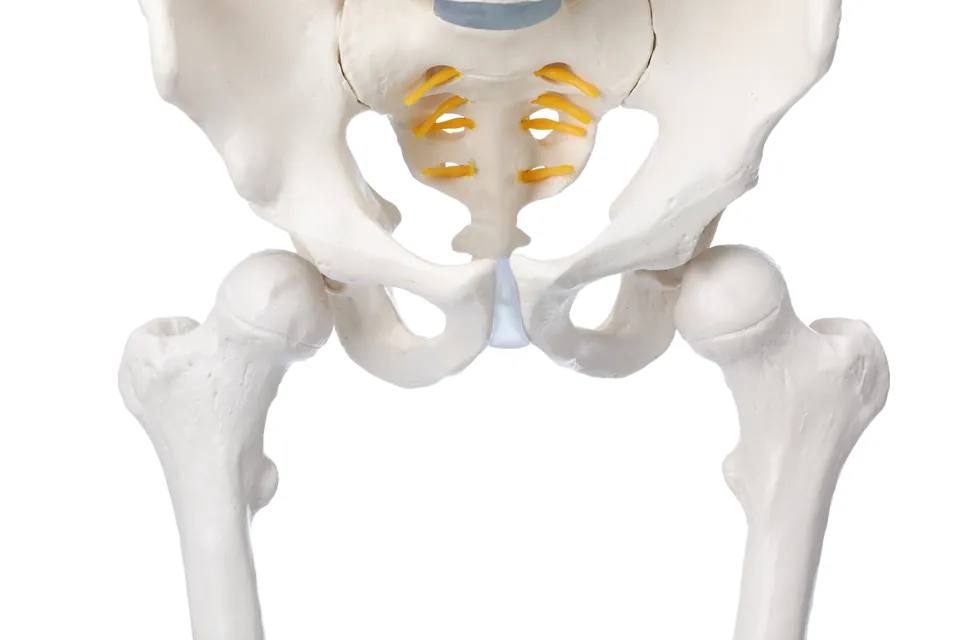
Learn about pelvic floor disorders, incontinence, prolapse and emptying problems, assessment, treatment steps and when to see a doctor for assessment.
Pelvic floor disorders are a broad group of conditions involving urinary incontinence, leakage of wind or stool, pelvic organ prolapse and emptying problems caused by weakness or damage to the muscles and connective tissue supporting the pelvis from below. These disorders are common in adult women and become more frequent with age. Being common does not mean they are normal: they can be assessed and managed through a stepped treatment approach in many cases. The information below offers a general overview and does not replace an individual diagnosis or treatment advice.
What is the pelvic floor, and what does a disorder mean?
The pelvic floor is a network of muscles, ligaments and connective tissue that supports the bladder, womb and rectum from below and helps control urine and stool. Its function may be disrupted when it becomes weak or excessively tense through factors such as birth, age, hormonal changes or persistently increased pressure inside the abdomen. Pelvic floor disorder is an umbrella term for several related conditions rather than a single disease. The first step is therefore to clarify which symptoms are most prominent for the individual.
What is urinary incontinence, and what types are there?
Urinary incontinence is involuntary leakage of urine. Leakage with coughing, sneezing, laughing or exertion is the stress type. Leakage accompanied by a sudden, strong need to pass urine is the urgency type. Both can occur together, called mixed incontinence. Identifying the type matters when choosing treatment.
What is leakage of wind or stool (anal incontinence)?
Anal incontinence means being unable to control wind or stool voluntarily. It is often not discussed because of embarrassment, yet it is a symptom that can be assessed and has treatment options.
What is pelvic organ prolapse?
Pelvic organ prolapse means the bladder, womb or rectum descending towards the vagina. Symptoms may include vaginal fullness, a feeling of something coming down, pulling in the lower back or groin, and difficulty emptying. Not every prolapse causes symptoms, and monitoring alone may be sufficient for mild cases without symptoms.
What causes emptying difficulties and pelvic pressure?
Incomplete bladder or bowel emptying, straining to empty, or a feeling of pelvic pressure also fall into this group. Sometimes these symptoms may be due to muscle tension alone. Excessive tension, as well as weakness, in the pelvic floor can cause symptoms, so treatment is not reduced to one method.
Can pelvic floor muscle tension cause pain or sexual difficulties?
Yes. Excessively tense pelvic floor muscles may cause pelvic pain, painful intercourse or emptying difficulties in some people. Pelvic pain and sexual symptoms are assessed separately; muscle tension may contribute.
How can pelvic floor symptoms affect daily life?
Pelvic floor symptoms often affect social life, exercise, work and sex. Worry about smell, leakage or prolapse may lead someone to stay away from home or hide symptoms. These understandable reactions may delay seeking help. Sharing symptoms with a doctor is the first step in identifying the type of disorder. Simple, non-surgical approaches can ease symptoms in many cases.
Who develops pelvic floor disorders, and why?
Known risk factors for urinary incontinence and prolapse include pregnancy, vaginal birth, menopause, older age, constipation and straining, chronic cough and excess weight. High body mass index, number of births and previous hysterectomy are also known to be associated with these risks.
Symptoms such as vaginal dryness, painful sex and urinary incontinence may occur at menopause. Thinning of the vaginal wall may make the tissue more fragile. Discussing these symptoms with a healthcare professional is recommended.
Risk factors do not mean a disorder will necessarily develop; disorders can also occur in people without any risk factors. More than one can occur together, such as urinary incontinence and prolapse. Assessment therefore looks at the pelvic region as a whole rather than a single symptom, aiming to identify the main problem.
How are history and bladder or bowel diaries used in assessment?
The doctor asks about the type of symptom, when it occurs, its effect on daily life, birth history and medicines. A bladder or bowel diary is a tool for recording daily fluid intake, how often you pass urine and episodes of leakage. It may help identify the type and triggers.
What is assessed during a pelvic examination?
A pelvic examination assesses vaginal tissue, the presence of prolapse, leakage with coughing, and pelvic floor muscle strength and ability to relax. Before starting pelvic floor muscle training, it is important to confirm through examination that the muscles contract correctly, as some people may not contract them correctly.
What further tests may be needed?
Urinalysis, ultrasound and tests such as urodynamics may be requested in selected situations if considered necessary. The doctor decides which test is needed for whom; not every patient has every test. Findings such as blood in the urine, recurrent infection or emptying problems make further investigation more likely. Results are interpreted with the history and examination rather than alone.
Does treatment start with lifestyle changes?
Yes. Urinary incontinence and pelvic organ prolapse in women are managed step by step, usually starting with lifestyle changes and exercise. Reducing constipation and straining, managing weight, adjusting fluid intake and bladder training form the basis of treatment. Bladder training is among the first approaches for urgency or mixed incontinence.
How are pelvic floor muscle training and physiotherapy provided?
Supervised pelvic floor muscle training is first-line treatment for stress or mixed urinary incontinence. Guidance from a healthcare professional matters to ensure correct muscle contraction, as exercises performed alone may work the wrong muscle group. Electrical stimulation or biofeedback may be considered for people unable to contract the muscles actively. Not every exercise suits everyone with excessive tension or pain; the approach is individualised.
When are pessaries and medicines used?
For symptomatic pelvic organ prolapse, a pessary (a support device placed in the vagina) and pelvic floor muscle training are first-line options. Pessary use may cause discharge, bleeding and tissue irritation. Medication for urinary incontinence is planned after medical assessment; side effects and suitability vary between individuals.
When is surgery considered?
Surgery is considered when symptoms significantly affect daily life and stepped treatments have not provided sufficient benefit, or when it is preferred. Not all prolapses require an operation. Surgical benefits, risks and the chance of recurrence differ between individuals, and outcomes cannot be predicted with certainty. Choosing a method requires detailed assessment and discussion with the doctor. Pelvic floor muscle training and lifestyle measures may continue after surgery on medical advice.
How is the pelvic floor assessed after birth and during menopause?
Pregnancy and birth are important factors affecting the pelvic floor. The evidence suggests that structured pelvic floor muscle training during pregnancy could prevent the onset of urinary incontinence during pregnancy and after birth. Benefit was not demonstrated in people who already had incontinence, and there was no clear evidence for faecal incontinence. The timing of examination for persistent or new symptoms after birth is discussed with the doctor. It is appropriate to assess persistent symptoms or those affecting daily life without delay.
Tissue support and hormonal status change at menopause. Vaginal dryness and urinary symptoms are assessed separately. Vaginal bleeding after menopause should be investigated rather than attributed to incontinence symptoms.
Frequently Asked Questions
How long do Kegel exercises take to help?
The time to benefit varies with the person and type of symptom. Once a healthcare professional has confirmed correct muscle contraction, a regular, supervised programme is planned. Expecting rapid results may be unrealistic.
Can prolapse improve on its own?
This varies between individuals and is determined through examination. Monitoring may be sufficient for mild prolapse without symptoms. If symptoms are present, the treatment approach is chosen with the doctor.
What might be the first signs of a pelvic floor disorder?
Urinary leakage, leakage of wind or stool, vaginal fullness or a feeling of something coming down, difficulty emptying, and pain during sex are the main signs. Any one is sufficient reason to seek care.
Does vaginal birth always cause a disorder?
No. Vaginal birth is a risk factor, but not everyone develops a disorder. The mode of birth is not the only determining factor. Assessment is appropriate for anyone with symptoms.
Which doctor should I see?
The first step is usually a gynaecologist or urologist. A pelvic floor physiotherapist and other specialties may become involved if needed.
Should I discuss leakage of wind or stool with my doctor?
Yes. Embarrassment often prevents discussion, but it is a symptom that can be assessed and has treatment options.
Is pelvic floor weakness or excessive tension always responsible?
No. Both weakness and excessive tension may cause emptying difficulties and pelvic pressure, so treatment is not limited to one method.
Are Kegel exercises I do myself enough?
Not always. Examination should confirm that you contract the muscles correctly; some people do not. Electrical stimulation or biofeedback may be considered if you cannot actively contract them.
Can a pessary cause side effects?
Yes. Discharge, bleeding and tissue irritation may occur.
Does every prolapse require surgery?
No. Mild prolapse without symptoms may need monitoring alone. Surgery is considered when stepwise treatment has not helped sufficiently or you prefer it.
Is pelvic floor muscle training needed during pregnancy?
Structured training during pregnancy is known to prevent the onset of urinary incontinence during pregnancy and after birth. Benefit has not been shown for existing leakage, and evidence for faecal incontinence is unclear.
Are vaginal dryness and urinary symptoms considered together during menopause?
Yes. Tissue support and hormonal circumstances change; vaginal dryness and urinary symptoms are also assessed separately.
Can bleeding after menopause be attributed to incontinence?
No. Vaginal bleeding after menopause should be investigated rather than attributed to incontinence.
Get Your Free Consultation
Fill out the form below and our team will contact you

