


What is laparoscopic adenomyosis surgery, and what uterus-sparing options exist? Focal vs diffuse disease, the limits of evidence, pregnancy and risks.
Laparoscopic adenomyosis surgery attempts to remove or reduce adenomyosis tissue within the uterine muscle through small abdominal incisions while preserving the uterus. Evidence for this uterus-preserving surgery mainly comes from case series and observational studies; methods and outcome measurement vary between studies. This provides a general framework and does not replace your individual assessment.
When is adenomyosis surgery considered?
Adenomyosis is tissue resembling the uterine lining within the uterine muscle and may cause heavy or painful periods. Medicines are usually the first option. Surgery is considered when medicines have not helped enough, symptoms significantly affect your life and particularly when you want to preserve your uterus.
What is done during uterus-preserving surgery?
In this approach, called adenomyomectomy or partial excision, the affected part of the uterine muscle is removed and the wall repaired. The aim is to ease symptoms and preserve the uterus if you want pregnancy. Removing all disease is usually impossible, so surgery mainly reduces the disease burden. Other non-surgical uterus-preserving options exist and their role is assessed separately. Medicines may be added before or after surgery, but evidence of their benefit is limited.
How does hysterectomy differ from uterus-preserving surgery?
Hysterectomy removes the uterus and permanently eliminates symptoms, but also removes the possibility of pregnancy, so the decision is individual. It is usually considered for people who do not want pregnancy and have not responded to medicines. Pregnancy may be possible after uterus-preserving surgery, but symptoms may return.
Why does surgery differ between focal and diffuse disease?
Focal adenomyosis affects a limited area of the uterine muscle; in this situation, removal of the diseased area can be considered — pregnancy outcomes have been reported in case series, but comparative evidence is limited. Diffuse adenomyosis, on the other hand, spreads through a large part of the uterine muscle; because the boundary between diseased and healthy tissue is unclear, outcomes have been reported to be weaker, and the place of surgery is debated. Which type is present is assessed together with imaging and findings during the operation. If there are pregnancy plans, this process is planned together with reproductive medicine.
Does this operation increase pregnancy chances?
No, it would be wrong to say so with certainty. There are no strong comparative studies of the effects of this uterus-preserving surgery on pregnancy, symptom reduction and recurrence. It is therefore wrong to say surgery will relieve symptoms, increase pregnancy chances or cure the disease completely.
Are there additional risks in pregnancy after surgery?
Yes, there may be. Uterine rupture and abnormal placental attachment (placenta accreta spectrum) are possible risks in pregnancy after surgery; disease type, location and uterine wall condition affect them. Pregnancy after surgery should be monitored closely as your doctor advises; share your surgical details with the doctor managing pregnancy. Birth is also planned with your doctor.
How is laparoscopic surgery performed?
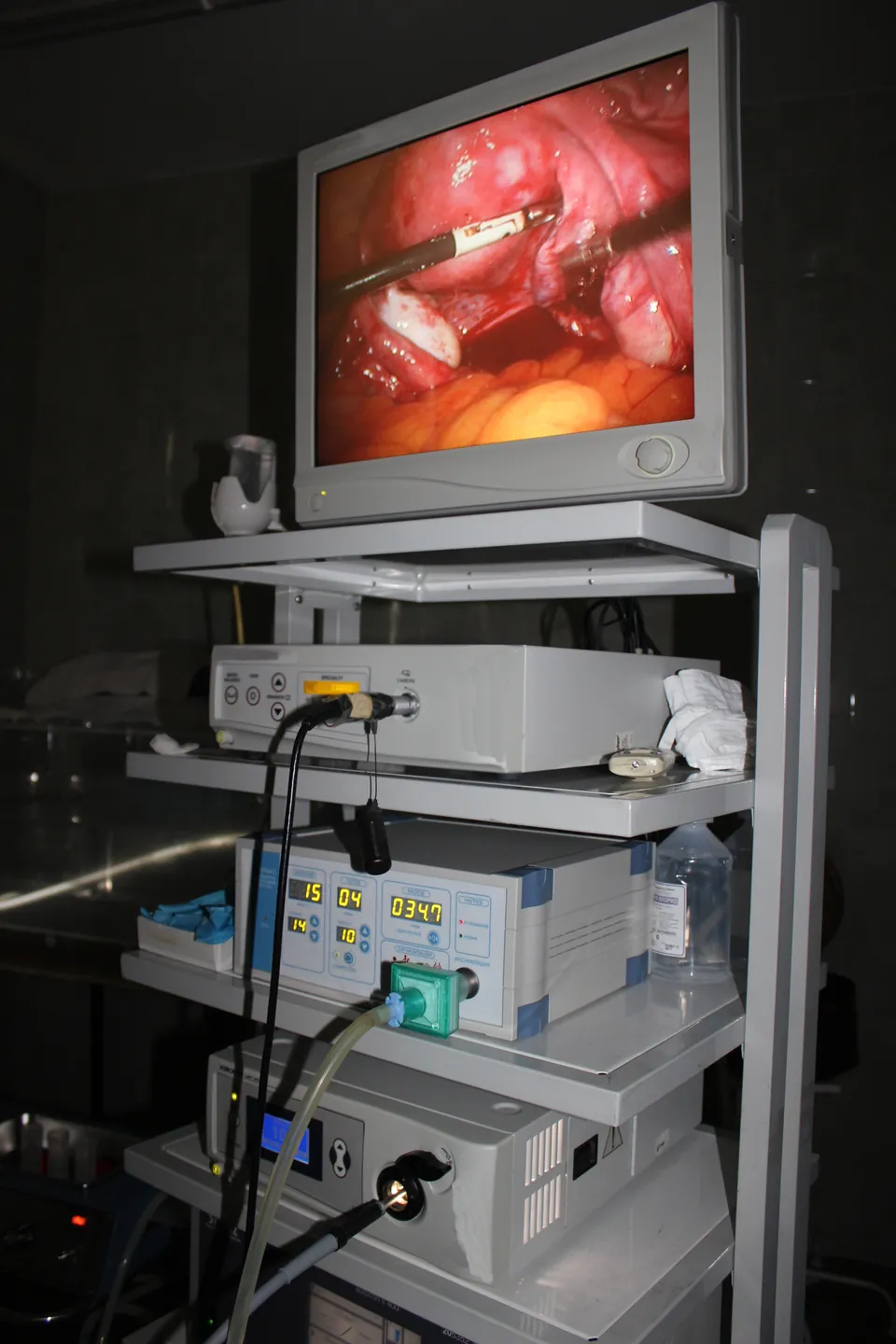
The operation is performed under general anaesthesia. Several small abdominal incisions are made and gas inflates the abdomen; a camera and fine instruments are used to treat the affected uterine area. The uterine wall is repaired. Laparoscopic adenomyomectomy has been described particularly for focal disease; strong comparative evidence against open surgery or mini-laparotomy is limited. Your surgeon decides the approach according to disease location and extent; conversion to open surgery may be needed. The team gives preparation, fasting and medicine-stopping instructions. Coexisting endometriosis may need additional procedures, discussed during consent. The operation is performed by Assoc. Prof. Dr. Nurettin Türktekin at Memorial Şişli Hospital.
What are the risks of surgery?
Like any surgical procedure, laparoscopic adenomyosis surgery carries risk. The main risks are:
- Risks related to anaesthesia
- Bleeding
- Infection
- Injury to the bowel, bladder or a blood vessel during entry into the abdomen (most often occurring at the initial entry stage, and sometimes not noticed during the operation, only becoming apparent afterwards through symptoms)
- Problems related to repair of the uterine wall
- The disease not being completely removed, and complaints continuing or returning
- Uterine rupture and abnormal placental implantation in a subsequent pregnancy
- Formation of a blood clot in the leg veins
- Laparoscopy not being completed, requiring conversion to open surgery
Serious complications are rare, but the risk is not zero.
What is recovery like after surgery?
Abdominal bloating, incision pain and nausea may occur afterwards. Light spotting, mild cramps and temporary gas-related shoulder-tip pain are considered normal during this time. Hospital stay and when to return to work, daily life, sport and sex depend on the extent of surgery and your circumstances; the operating team gives instructions. Your doctor decides how long to wait before pregnancy. Pathology results are reviewed at follow-up.
Frequently Asked Questions
Is adenomyosis surgery recommended for everyone?
No. Medicines are usually the first option. Surgery is considered when medicines have not helped enough, symptoms significantly affect life and particularly when preserving the uterus is desired.
Can uterus-preserving surgery remove all disease?
Usually not. Removing all disease is generally impossible, so surgery mainly reduces disease burden. Symptoms may therefore continue or return over time.
How is the choice made between hysterectomy and uterus-preserving surgery?
This largely depends on pregnancy wishes. Hysterectomy may be considered if you do not want pregnancy and have not responded to medicines; uterus-preserving surgery may be preferred if you want pregnancy, but symptoms may return.
Does adenomyosis come back after the operation?
It can come back. Particularly in diffuse disease, because all of the diseased tissue may not be removable, complaints can continue or reappear over time. Medical treatment and follow-up examinations may be considered in post-operative monitoring; the plan is determined by the doctor.
Is adenomyosis surgery the same as fibroid surgery?
No, these are different diseases. A fibroid usually forms a mass that can be separated from the surrounding tissue, whereas adenomyosis spreads within the uterine muscle, so its boundary is unclear. For this reason, the surgical approach and expected outcomes differ.
Is this operation always completed laparoscopically?
No, this cannot be guaranteed. Your surgeon decides the approach according to disease location and extent; conversion to open surgery may be needed.
When can I start trying for pregnancy after surgery?
There is no fixed interval suitable for everyone; your doctor decides how long you should wait according to your circumstances.
How soon can I return to daily life after surgery?
This depends on the extent of surgery and your circumstances. The operating team advises on hospital stay and when to return to work, sport and sex.
Are there options other than uterus-sparing surgery?
Yes. Apart from medicines, some non-surgical uterus-preserving methods exist, such as focused ultrasound energy, radiofrequency ablation and uterine artery embolisation. Evidence for these is low quality and limited to selected people; your doctor decides which suits you.
Should I share surgical details with the doctor managing my next pregnancy?
Yes. Because risks such as uterine rupture and abnormal placental attachment are assessed in pregnancy after surgery, share your surgical details with the doctor managing it. Follow-up and birth are planned with your doctor.
Get Your Free Consultation
Fill out the form below and our team will contact you

