


What do AMH, AFC, FSH, LH and oestradiol tests measure? They predict egg yield but do not decide the chance of pregnancy alone; limits and interpretation.
Ovarian reserve tests cover AMH, the antral follicle count (AFC), FSH and oestradiol; LH is looked at together with these tests when assessing ovulation and hormone balance. Reserve tests give indirect information about the state of your ovaries and the pool of eggs remaining. This information guides treatment planning, but it cannot by itself be used to say "you will become pregnant" or "you will not". The information here draws a general framework; it does not replace a diagnosis or treatment recommendation specific to you.
Why are these tests requested?
These tests are most often requested in three situations: in the assessment done because of failure to conceive, when IVF or ovarian stimulation is being planned, and when menstrual irregularity or premature ovarian insufficiency is suspected. In IVF planning, the main aim is to predict beforehand how your ovaries will respond to stimulation and to build the medicine plan accordingly. If your periods are regular, according to current guidelines a reserve test is not necessary either to look for the cause of infertility or to predict spontaneous pregnancy in the coming months.
What does each test measure?
AMH
AMH is a hormone secreted by the small follicles in the ovary that are at an early stage of development, and it is measured in the blood. It reflects the remaining follicle pool and falls with age. Because it is independent of gonadotropins, it is relatively consistent within a cycle and between cycles; it can be measured on any day of the cycle. AMH is more sensitive than FSH and falls before FSH rises; for this reason it has largely replaced the basal FSH and oestradiol test.
Antral follicle count (AFC)
AFC is the total of the small follicles seen in both ovaries on transvaginal ultrasound in the early part of the period. AMH and AFC give similar information in many studies.
FSH and oestradiol
FSH is secreted from the pituitary and is a hormone that stimulates the ovaries. A high value is a specific but insensitive indicator for reduced reserve. Because the variability between measurements is high, the reliability of a single result is limited. Oestradiol is not used on its own for reserve screening; it helps FSH to be interpreted correctly, because an early rise in oestradiol can bring a high FSH down to normal and give misleading reassurance. Both are measured in the early part of the period.
LH
LH is the pituitary hormone that triggers ovulation. When an ovulation problem is suspected, it is looked at together with FSH to assess the relationship between the hypothalamus, the pituitary and the ovary. The LH test measured in urine, on the other hand, can be used to determine the time of ovulation.
When and how are the tests done?
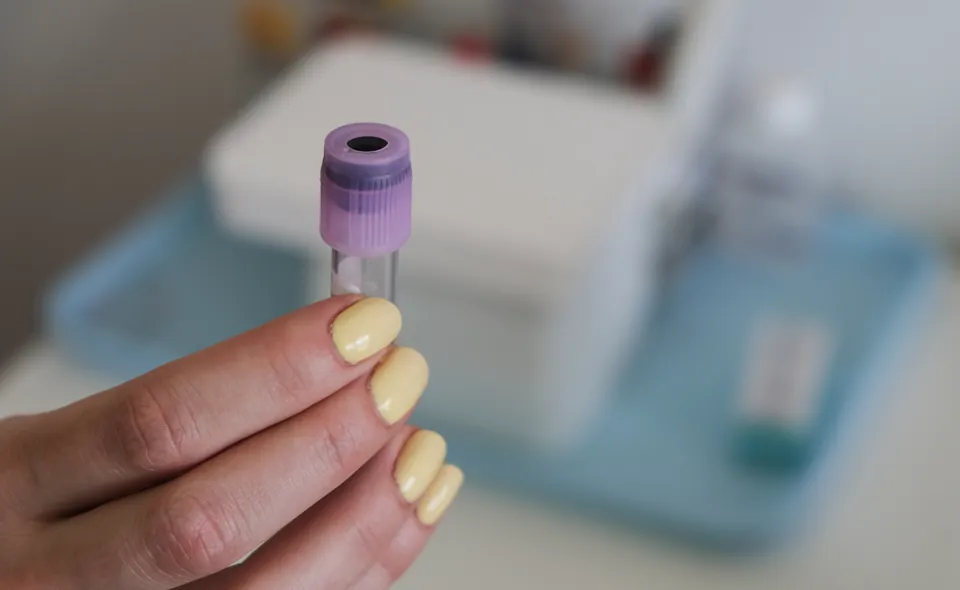
AMH and LH are assessed with a blood test and AFC with ultrasound. FSH and oestradiol are taken in the early part of the period. The doctor or the laboratory will tell you which test is done on which day and with what preparation. Telling the doctor beforehand about the medicines and supplements you use ensures the result is read correctly.
How are the results interpreted?
Reference ranges vary with the laboratory and the method used; for this reason comparing with the range of another laboratory can be misleading, and the result is interpreted by the doctor who examines you. The result is only one piece of data; it is assessed together with age, history, examination and imaging. A diagnosis is not made with a single result.
The limits of the tests: do they tell the chance of pregnancy?
AMH and AFC are good at predicting the response you will give to stimulation, that is, the number of eggs that can be obtained. Their relationship with egg quality, clinical pregnancy and live birth, however, is weak; they are not strong indicators of the chance of pregnancy on their own. In women who have not yet tried for pregnancy they do not predict current fertility, and in infertile women they do not predict unassisted pregnancy significantly better than expected for age. For this reason these tests are not a "fertility test", and the weight of age in determining reproductive success is far above that of these tests.
A very low AMH result is likewise not grounds on its own for refusing IVF treatment. Current guidelines recommend basing the diagnosis of low reserve on age rather than on the tests; if a test is to be done, AFC, AMH or FSH in the early part of the period is chosen according to local availability. A normal reserve result does not mean that pregnancy will be easy either.
How does the test result affect treatment?
The results are used mostly in planning the stimulation medicines: when your response is expected to be low or high, the choice of protocol and monitoring are built accordingly. Current approaches attach importance to detecting the risk of excessive response in ovarian stimulation beforehand. Your doctor decides which medicine plan will be applied.
Frequently Asked Questions
Is a high AMH a good sign?
Not always. A high AMH may suggest that your ovary will respond strongly to stimulation, and this is linked to the risk of ovarian hyperstimulation syndrome. AMH and AFC can be used to predict both a poor and an excessive response; for this reason a high value is not always read as positive. Your doctor interprets what the result means together with the other findings.
Can I have AMH measured while using the contraceptive pill?
While using hormonal contraception, AMH may come out low; in this case it needs to be interpreted carefully. Telling your doctor which method you use when planning the test prevents the result from being misinterpreted.
Does AFC come out the same in every centre?
The cycle-to-cycle variability of antral follicle counting is low, and its inter-observer reliability is high in experienced centres. Even so, the number depends on the person doing the ultrasound and on the machine; for this reason counts done in different centres should not be compared directly with one another.
Does an egg reserve test determine when to freeze eggs?
No. Reserve tests should not be used to encourage planned egg freezing. The decision is made together with your doctor according to your age, your reproductive plans and your personal circumstances.
If my periods are regular, do I need a reserve test?
No. If your periods are regular, according to current guidelines a reserve test is not necessary either to look for the cause of infertility or to predict spontaneous pregnancy in the coming months.
Do I have to be on a particular day of my period for the AMH test?
No. Because AMH is independent of gonadotropins, it is relatively consistent within a cycle and between cycles; it can be measured on any day of the cycle.
Can the FSH and oestradiol tests also be done on any day of the period?
No. Unlike AMH, FSH and oestradiol are taken in the early part of the period. Because an early rise in oestradiol can bring a high FSH down to normal and give misleading reassurance, the two are assessed together.
What is the LH test done in urine for?
LH is the pituitary hormone that triggers ovulation. The blood test is assessed together with FSH when an ovulation problem is suspected; the LH test measured in urine can be used to determine the time of ovulation.
Is a diagnosis made with a single test result?
No. The result is only one piece of data; it is assessed together with your age, your history, and your examination and imaging findings.
Do these tests show my chance of pregnancy clearly?
No. AMH and AFC predict well the number of eggs that can be obtained; however, their relationship with egg quality, clinical pregnancy and live birth is weak. For this reason the weight of age in determining reproductive success is far above that of these tests.
If my AMH or AFC result is very low, is IVF treatment refused?
No. A very low AMH result is likewise not grounds on its own for refusing IVF treatment.
Who decides which medicine plan is applied?
The results are used mostly in planning the stimulation medicines; when your response is expected to be low or high, the choice of protocol and monitoring are built accordingly. Your doctor decides which medicine plan will be applied.
Do I need to tell the doctor about the medicines and supplements I use before the test?
Yes. Telling the doctor beforehand about the medicines and supplements you use ensures the result is read correctly.
Get Your Free Consultation
Fill out the form below and our team will contact you

