


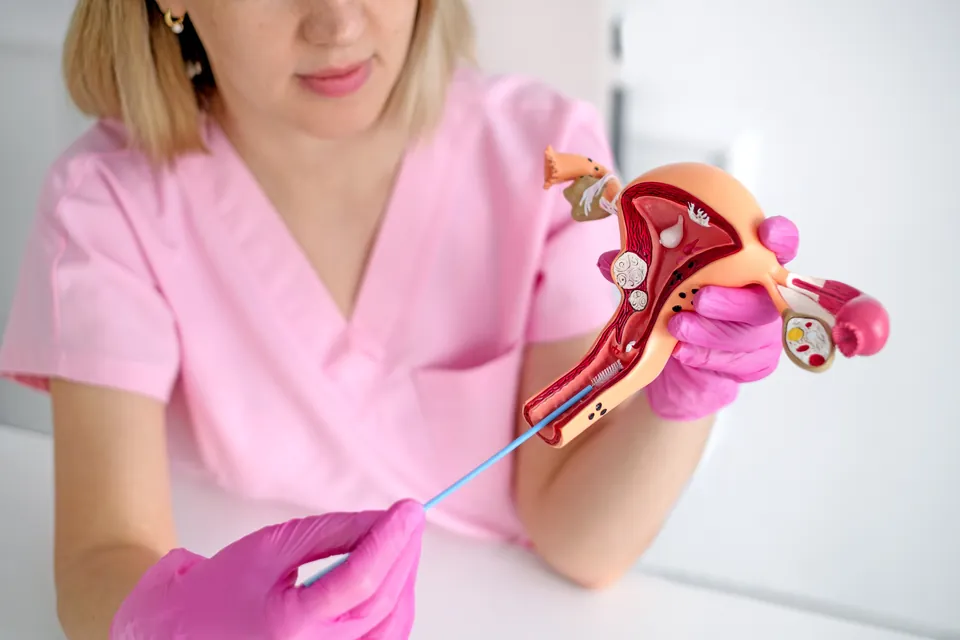
Uterine problems and IVF: how do polyps, fibroids, septum, adhesions and adenomyosis affect implantation? Is surgery automatic, and what is the evidence?
In the relationship between uterine problems and IVF, not every finding carries the same weight: some may affect the implantation of the embryo, but for most of them the evidence that surgery improves the outcome of IVF is limited. For this reason, finding something in the uterus does not automatically require surgery; the type and location of the finding, the complaints and any previous treatment results are considered together. The information below offers a general framework and does not replace a diagnosis or treatment recommendation specific to the individual.
Why is the uterus assessed before IVF?
In IVF, once the embryo has formed in the laboratory it is placed inside the uterus and tries to attach there. The shape and inner surface of the uterine cavity provide an important environment for this stage. For this reason, before treatment starts, it is checked whether there is a structural finding in the uterus that could prevent the embryo from implanting. Finding something does not mean that treatment cannot be done; most of the time it only affects how the plan is set up.
How is the uterine cavity assessed before IVF?
The first step for the uterus is generally transvaginal ultrasound. In the assessment of unexplained infertility, current guidelines state that no additional assessment is needed if the cavity is normal on ultrasound, and recommend three-dimensional ultrasound if possible. As for hysteroscopy as a screening before IVF, current recommendations do not recommend its routine use; they state that it can be considered in recurrent implantation failure. When there is a suspicious appearance on ultrasound, ultrasound done with saline, the uterine X-ray or hysteroscopy may be considered. Your doctor determines when each method will be chosen.
How do problems inside the uterus affect IVF?
The effect of problems inside the uterus on IVF varies with the type and location of the problem; the level of evidence also differs for each.
Polyp
A polyp, a small bulge on the inner surface of the uterus, can affect the area to which the embryo will attach. For this reason it is often considered before IVF; but it has not been shown that removing every polyp that is found improves outcomes. Complaints related to the polyp, the size and location of the polyp, and previous failures are points the doctor takes into account in deciding.
Fibroid
The effect of a fibroid depends mostly on its location. In fibroids that distort the uterine cavity, surgery is generally an option that is discussed. In fibroids that do not distort the cavity, on the other hand, the evidence that removing them improves the outcome of IVF is insufficient. For this reason not everyone with a fibroid is operated on; the doctor decides by looking at the location and size of the fibroid and at the complaints.
Septum and adhesions
A septum is a congenital structure that divides the uterine cavity, and adhesions form when the inner surface of the uterus sticks together. According to current guidelines, hysteroscopic incision can be considered as an option, decided together by the doctor and the patient, in people who have a septum and have had recurrent pregnancy loss; but the data on this are conflicting. The effect of adhesions on the outcome of IVF depends largely on their severity. If treatment is needed, it is generally done by hysteroscopy.
Adenomyosis
It is thought that adenomyosis can adversely affect pregnancy outcomes in IVF; but the data that treatment increases the likelihood of live birth are limited. The preparation to be applied before IVF is planned together with your doctor according to your age, your complaints and your treatment history.
A condition outside the uterus: hydrosalpinx
A collection of fluid in the tube (hydrosalpinx) can affect the environment inside the uterus even though it lies outside it. Removing the affected tube before IVF can increase the likelihood of pregnancy; your doctor decides whether it is needed.
Treatment first, or straight to IVF?
There is not a single answer to this question. If there is a finding that markedly distorts the uterine cavity, correcting it before the embryo transfer is discussed. If the finding does not distort the cavity or its effect is uncertain, surgery is not obligatory; an unnecessary intervention can bring its own risks. On the other hand, waiting a long time for surgery can lose time, particularly when age is advancing. For this reason the decision is made individually, not on a single criterion but according to age, previous treatment results and the location of the finding.
If a procedure has been done inside the uterus, when to move on to the transfer is determined by the doctor according to the completion of healing. Clotting can rarely be seen while using hormone medicines. Mild cramp and light spotting after the procedure are usual. Whether to freeze the embryos and leave the transfer for later in people in whom a finding has been detected is also an option discussed with the doctor.
How is the uterus assessed in recurrent implantation failure?
If pregnancy does not occur in repeated transfers despite good-quality embryos, the doctor may investigate the causes, and this investigation may also include reassessment of the uterine cavity. The aim is not to have many tests done in order to look for findings, but to carry out a limited and directed assessment with a reasonable justification.
What are the limits of the evidence, and why should definite statements not be used?
Part of the evidence on the relationship between findings inside the uterus and the outcome of IVF is limited and mixed. It is therefore hard to say that definite statements such as "this finding prevents pregnancy" or "this finding is not important" are supported by evidence. A uterus that looks free of problems is not a guarantee that the embryo will attach either.
Frequently Asked Questions
Does every finding in the uterus affect the outcome of IVF in the same way?
No. Some findings may affect the implantation of the embryo, but for most of them the evidence that surgery improves the outcome of IVF is limited. The type and location of the finding, the complaints and any previous treatment results are considered together.
Is hysteroscopy done for everyone before IVF?
No. The routine use of hysteroscopy as a screening before IVF is not recommended; it can be considered in recurrent implantation failure. The first step is generally transvaginal ultrasound; when there is a suspicious appearance on ultrasound, ultrasound done with saline, the uterine X-ray or hysteroscopy may be considered.
What is the difference between uterine ultrasound and hysteroscopy?
Ultrasound is the method that images the uterine cavity through the vagina and is generally turned to first. In hysteroscopy the inside of the uterus is watched directly with a thin camera; for this reason it is more invasive and, when needed, an intervention can also be made in the same procedure. Which is needed is determined by the appearance on ultrasound and the history.
If a polyp or fibroid is found in the uterus, is surgery obligatory?
No. It has not been shown that removing every polyp that is found improves outcomes; complaints related to the polyp, the size and location of the polyp and previous failures influence the decision. In a fibroid too, the effect depends mostly on its location: in fibroids that do not distort the uterine cavity, the evidence that removing them improves the outcome of IVF is insufficient.
If septum surgery is done, is the success of IVF guaranteed?
No. According to current guidelines, hysteroscopic incision can be considered as an option, decided together by the doctor and the patient, in people who have a septum and have had recurrent pregnancy loss; but the data on this are conflicting. The effect of adhesions also depends largely on their severity.
Can IVF be done if there is adenomyosis?
Yes, the diagnosis alone does not prevent treatment. What matters is what kind of preparation will be planned together with your age, your complaints and your previous treatment results. It is thought that adenomyosis can adversely affect pregnancy outcomes, but the data that treatment increases the likelihood of live birth are limited.
Why is hydrosalpinx (a collection of fluid in the tube) assessed before IVF?
Hydrosalpinx can affect the environment inside the uterus even though it lies outside it. Removing the affected tube before IVF can increase the likelihood of pregnancy; your doctor decides whether it is needed.
After a procedure inside the uterus, is the embryo transfer done straight away?
No. When to move on to the transfer is determined by the doctor according to the completion of healing. Whether to freeze the embryos and leave the transfer for later in people in whom a finding has been detected is also an option discussed with the doctor.
Are mild cramp or spotting normal after the procedure?
Yes, mild cramp and light spotting after the procedure are usual. Clotting can rarely be seen while using hormone medicines; such situations should be reported to your doctor.
If pregnancy does not occur despite good-quality embryos, is the uterus examined again?
Yes, the doctor may investigate the causes, and this investigation may also include reassessment of the uterine cavity. The aim is not to have many tests done in order to look for findings, but to carry out a limited and directed assessment with a reasonable justification.
Does finding no problem in the uterus mean pregnancy is certain?
No. Part of the evidence on the relationship between findings inside the uterus and the outcome of IVF is limited and mixed. A uterus that looks free of problems is not a guarantee that the embryo will attach either.
Which documents should I bring when I see the doctor?
Bringing the reports of any ultrasound, uterine X-ray or hysteroscopy done before, a summary of previous IVF attempts and embryo transfers, any operations you have had and the medicines you use makes the assessment easier.
Get Your Free Consultation
Fill out the form below and our team will contact you

