


What is ovulation induction and who is it for? Medicine groups, ultrasound monitoring, the risk of multiple pregnancy and OHSS, and next steps.
Ovulation induction is the use of medicines to bring about or regulate ovulation in people who ovulate irregularly or not at all. The aim is to support the development of one or a small number of eggs in the cycle in which you are trying for pregnancy. Your doctor determines the choice of medicine, the conditions of use and the monitoring according to you. The information below draws a general framework; it does not replace a diagnosis or treatment recommendation specific to you.
What is ovulation induction?
Ovulation is the release of a mature egg from the ovary in each cycle. If this is irregular or does not happen at all, it becomes harder for you to become pregnant. In ovulation induction, medicines are used that support the hormonal signal that starts ovulation. Treatment is planned according to the cause of your ovulation disorder.
Is ovulation induction the same as ovarian stimulation in IVF?
No. In ovulation induction the aim is the development of one or a small number of eggs; fertilisation takes place inside your body, through sexual intercourse or insemination. In IVF, on the other hand, the aim is to collect more than one egg for fertilisation in the laboratory, so stimulation is carried out with a different purpose and a different plan. Ovulation induction is not a lighter version of the stimulation in IVF.
Who is ovulation induction given to?
Treatment is considered when your ovulation is irregular or does not happen. Polycystic ovary syndrome (PCOS) is the most common example; there are also other causes, such as hypothalamic ones. Your doctor first assesses the cause of your ovulation problem.
If you do not have an ovulation problem, stimulation with medicines is not a support treatment given to everyone. If your tubes are blocked, the male factor is severe or your age is advanced, an ovulation medicine alone may not be enough; in these situations other methods come to the fore. In unexplained infertility too, current guidelines recommend waiting and monitoring for a time as the first step.
Which medicine groups are used?
Among oral medicines there are two main groups: medicines of the aromatase inhibitor group and clomiphene-like medicines. In ovulation disorder due to PCOS, a medicine of the aromatase inhibitor class is preferred more often than clomiphene or metformin; this recommendation is not definitive and the data it rests on are not considered strong. Your doctor decides which medicine suits you.
If no result is obtained with oral medicines, injection treatments called gonadotropins may be considered. Where no result is obtained from oral treatment, gonadotropins are preferred more often than laparoscopic ovarian surgery; this recommendation is also not definitive and the data are not considered strong. Because injections stimulate the ovary more strongly, monitoring is done more closely.
In some people, supporting medicines can also be added by your doctor's decision. Operations on the ovaries are also an option in selected situations. The dose and duration vary from person to person; you determine them only with your doctor.
Are there approaches other than standard stimulation?
Yes, in some situations different stimulation approaches can also be considered; your doctor decides which approach suits you.
Natural cycle IVF and low-dose (mini) stimulation are approaches closer to your body's own hormonal cycle, using no medicines or few. These methods can be considered as options if your egg reserve is low and the benefit expected from intensive medicine stimulation remains limited, if your risk of hyperstimulation syndrome (OHSS) is high, or if you wish to reduce the medicine load. Fewer eggs are generally obtained with these approaches.
Dual stimulation (DuoStim) is two consecutive stimulations and egg collections within the same menstrual cycle. It can be considered particularly in people with low egg reserve or where treatment is limited by time (for example, when fertility needs to be preserved before cancer treatment); the aim is to create more egg or embryo options in a short time. This approach can be applied differently from centre to centre, and long-term safety data are not as extensive as for standard stimulation.
IVM (in-vitro maturation) is the collection of eggs that have not yet matured from the ovary and maturing them in the laboratory. It has come up particularly in people with PCOS because it may reduce the risk of OHSS from intensive stimulation. However, IVM is used less than standard stimulation methods and the level of evidence differs; studies on this subject show that the risk of pregnancy loss after IVM is higher than with standard IVF.
How is monitoring carried out during treatment?
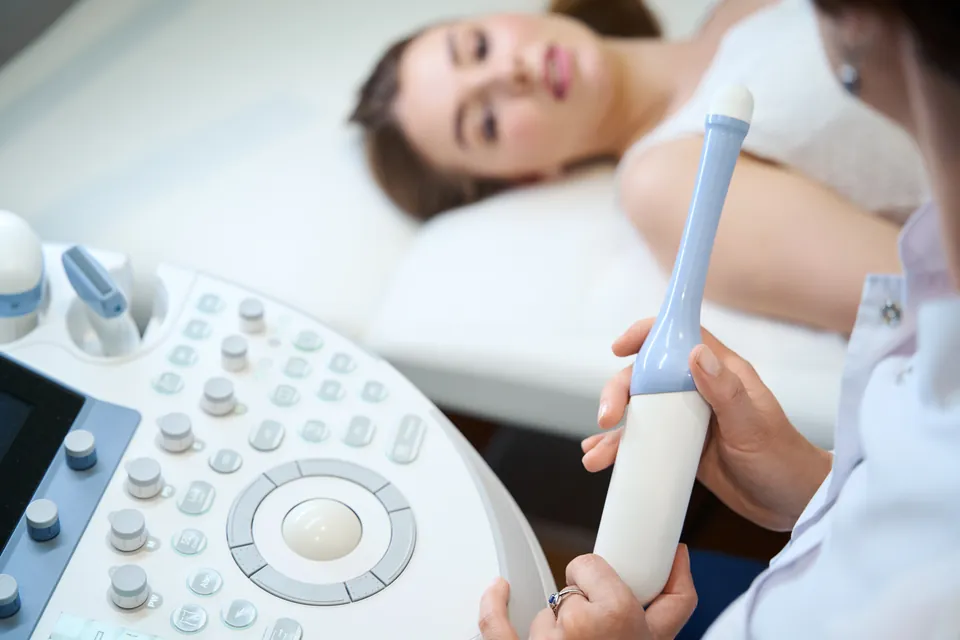
During treatment your egg development is mostly followed with vaginal ultrasound and, if needed, hormone tests. Whether ovulation has taken place is also understood from this monitoring. The timing of the cycle is planned; intercourse or insemination during your ovulation period is done according to this timing. Your doctor adjusts the frequency and duration of monitoring according to the medicine used and your response.
What are the risks and side effects of ovulation induction?
- Multiple pregnancy: With ovulation medicines, particularly injections, more than one egg may develop. In multiple pregnancies, preterm birth and the problems related to it are seen more often than in single pregnancies.
- Ovarian hyperstimulation syndrome (OHSS): It is more likely particularly with injection treatment and in PCOS. The severe form may need treatment in hospital.
- Medicine side effects: They vary with the medicine group. Tell your doctor about your complaints.
- Ectopic pregnancy: If a pregnancy forms, the possibility of ectopic pregnancy should not be forgotten.
- Clot formation: Clots in the leg veins can be seen in cases of overstimulation.
What happens if treatment does not give a result?
If no result is obtained, the treatment plan is reassessed. In PCOS, where oral medicine and then injections have been tried without result, IVF is preferred more often than waiting; this recommendation is also not definitive and the data it rests on are as yet very limited. How many cycles will be tried and when to move to another method you decide together with your doctor, according to your age, the cause and your response to the medicine.
IVF treatment is carried out within Ota Jinemed and Liv Hospital Ulus, with the laboratory and embryology teams of these hospitals.
Frequently Asked Questions
Is ovulation induction the same thing as ovarian stimulation in IVF?
No. In ovulation induction the aim is the development of one or a small number of eggs, and fertilisation takes place inside your body. In IVF, on the other hand, the aim is to collect more than one egg for fertilisation in the laboratory; for this reason the purpose and plan of the two applications are different.
Is this treatment recommended for everyone who does not have an ovulation problem?
No. Ovulation induction is considered if you have an ovulation disorder. If your tubes are blocked, the male factor is severe or your age is advanced, this treatment alone may not be enough; in these situations other methods are considered.
Which medicine is preferred in ovulation disorder due to PCOS?
Medicines of the aromatase inhibitor group are preferred more often than clomiphene or metformin. However, this recommendation is not definitive and the data it rests on are not considered strong; your doctor decides which medicine suits you.
What is done if no result is obtained with oral medicines?
Injection treatments called gonadotropins may be considered. Because injections stimulate the ovary more strongly, monitoring is done more closely; the dose and duration are determined with your doctor.
For whom can natural cycle or low-dose (mini) stimulation be an option?
These approaches can be considered if your egg reserve is low, your risk of OHSS is high or you wish to reduce the medicine load. Fewer eggs are generally obtained with these methods; your doctor decides whether they suit you.
What is dual stimulation (DuoStim), and in whom is it considered?
It is two consecutive stimulations and egg collections within the same menstrual cycle. It can be considered particularly in people with low egg reserve or where fertility needs to be preserved in a short time (for example, before cancer treatment). Long-term safety data are not as extensive as for standard stimulation.
What is IVM (maturing the egg in the laboratory)?
It is the collection of eggs that have not yet matured from the ovary and maturing them in the laboratory. It has come up particularly in people with PCOS because it may reduce the risk of OHSS, but it is used less than standard methods, and studies show that the risk of pregnancy loss after IVM is higher than with standard IVF.
Why is ultrasound monitoring necessary while using an ovulation medicine?
The response you give to the medicine differs greatly from person to person. Ultrasound shows how many eggs have developed; if many eggs have developed, the risk of multiple pregnancy and OHSS rises. Thanks to monitoring, your doctor can adjust the medicine plan, and, if necessary, you may give up trying for pregnancy in that cycle.
Does having a period mean I have ovulated?
Not necessarily. A regular period is seen together with ovulation in most people, but menstrual bleeding alone does not prove that you have ovulated. Ultrasound and, when needed, a blood test show that you have ovulated. If your period is late, tell your doctor, because pregnancy is also a possibility.
Does an ovulation medicine guarantee pregnancy?
No. Although the medicine supports your ovulation, becoming pregnant depends on many factors, such as the quality of the egg, the state of the sperm, whether the tubes are open, your age and the state of your uterus. Ovulation being achieved with medicine does not mean a pregnancy will occur.
What are the side effects of ovulation medicines?
Hot flushes, headache, nausea and mood changes may be seen. With some oral medicines, complaints such as blurred vision can also occur; if you notice a change in your vision, tell your doctor. The type and severity of the side effects vary with the medicine group.
Is there a risk of multiple pregnancy or OHSS in ovulation induction?
Yes. Because more than one egg may develop, particularly with injection treatment, the risk of multiple pregnancy may increase; OHSS is also more likely particularly with injection treatment and in PCOS. These risks are watched during monitoring and, if necessary, the treatment plan is changed.
If treatment gives no result, do we move to IVF?
In PCOS, where oral medicine and then injections have been tried without result, IVF is preferred more often than waiting; however, this is not a definite rule. How many cycles will be tried and when to move to another method are determined together with your doctor according to your age, the cause and your response to the medicine.
Get Your Free Consultation
Fill out the form below and our team will contact you

