


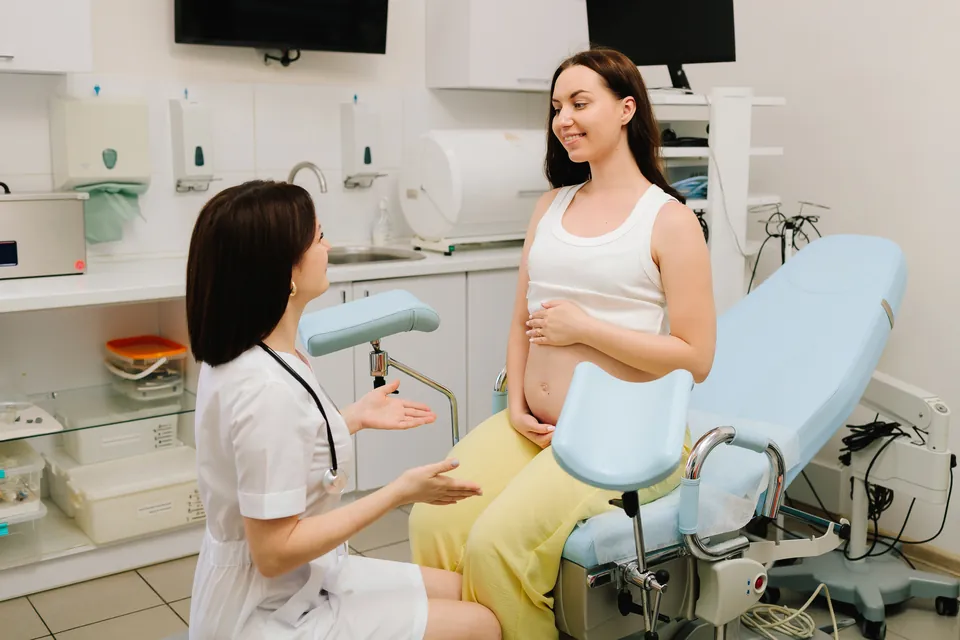
What is female infertility, what causes it and when should you see a doctor? Learn about the assessment process, treatment options and common questions.
Female infertility means looking for the cause in factors relating to the woman when pregnancy has not been achieved within a year or longer despite regular unprotected sexual intercourse. This is not a defect or a shortcoming to be blamed; it is a medical condition that can involve more than one area, such as ovulation, ovarian reserve, the tubes, the uterus and the cervix. According to current data, about one in six people experiences infertility in their lifetime. The information below draws you a general map; it does not replace a diagnosis or treatment recommendation specific to you.
What is female infertility?
Infertility is a condition of the reproductive system defined as failure to achieve a clinical pregnancy within a year or longer despite regular unprotected intercourse. You can also see a doctor before this period is over.
What is the difference between primary and secondary infertility?
If you have never been able to achieve a pregnancy, it is called primary; if you have had at least one pregnancy before, it is called secondary infertility. How your previous pregnancy ended (birth, miscarriage or ectopic pregnancy) does not change this distinction, but it is important information when looking for the cause.
When should you see a doctor?
Your age is an important factor in reproductive outcomes; as age advances the chance decreases, and time becomes more decisive in the choice of treatment. For this reason, if you are older, it is a good idea to start the assessment earlier. If your periods are irregular, if you are not having periods, or if you have previously had a pelvic infection, endometriosis or an operation on the uterus or ovaries, you can see a doctor without waiting for a year to pass. The time to see a doctor varies from person to person; if you are unsure, asking early is the safe side.
What are the causes of female infertility?
The causes are generally grouped in a few areas:
- Ovulation disorders: Polycystic ovary syndrome, high prolactin, thyroid diseases and hypothalamic irregularities can prevent the egg from forming regularly.
- Ovarian reserve: As age advances your ovarian reserve falls and the quality of your eggs changes; this can also be seen at earlier ages in early menopause or ovarian failure.
- Tubes and pelvis: Blocked or damaged fallopian tubes, pelvic infections, previous operations or adhesions related to endometriosis can make it harder for the egg and sperm to meet.
- Uterus and cervix: Structural problems such as fibroids, polyps, intrauterine adhesions and a congenital septum, and factors relating to the cervix, can affect implantation and the continuation of the pregnancy.
- Endometriosis: In some women it plays a part in infertility; the details become clear with the doctor's assessment.
- General factors: Your weight (low or high), smoking and your general state of health can also affect fertility.
The share of each factor varies from person to person.
How is the assessment done?
The assessment considers not you alone but the couple together. The male factor is also assessed from the outset; infertility is not attributed to the woman alone.
What happens at the first consultation and examination?
Your doctor asks about your menstrual pattern, your previous pregnancies, the infections and operations you have had, the medicines you take and your chronic illnesses. The structure of your uterus and ovaries is looked at with a gynaecological examination and, if necessary, ultrasound.
How is ovulation assessed?
Whether you ovulate is investigated with hormone measurements linked to your menstrual cycle and with ultrasound. If there is irregularity, blood tests assessing the hormone system that governs ovulation may be done.
How is ovarian reserve assessed?
There are blood and ultrasound tests that give an idea of the egg stock remaining in your ovaries. Your age is also taken into account in the assessment; your doctor decides which test will be done. The results of these tests do not by themselves tell your chance of pregnancy; they give information for treatment planning.
Will my partner also be assessed?
Yes. A semen analysis and, when necessary, additional investigation are done in the male partner. Whatever the finding in you, excluding the male factor is part of the planning. A problem can be found on both sides; in that case treatment is planned together.
How are the tubes and uterus imaged?
Whether your tubes are open and the state of your uterine cavity are assessed with suitable imaging methods. Which method is chosen depends on your history and the first findings.
How does age affect infertility?
You are born with a certain number of eggs, and this number falls with age. As age advances not only the number of eggs but also their quality changes; this makes it harder for a pregnancy to form and to continue. The effect of age varies from person to person; the older you are, the earlier the assessment is started. Ovarian reserve tests do not take the place of your age either; they only help planning.
What are the treatment options?
Treatment is planned according to the cause, your age, the duration of the infertility and your previous treatments. There is not a single order for every couple. In a general framework the options are as follows: lifestyle adjustments, ovulation support with medicines, surgery for some structural problems, insemination, in which sperm is placed in the uterus, and IVF treatment, in which fertilisation is done in the laboratory.
Current guidelines show that the treatment path changes with the cause and age; for example, a mild picture of tubal disease and a severe one, or a young age and an advanced age, may require different approaches. In general, for ovulation disorders, supporting ovulation with medicines is considered first. In structural problems of the uterus, surgery can be considered in some situations, but is not needed for every finding. If your tubes are severely damaged or no result has been obtained from the other methods, IVF is considered more often. Lifestyle adjustments accompany all of these options.
Which of these options will be considered, in which order and when, is decided by your doctor, assessing all your test results as a whole. The routine use of most of the add-on procedures claimed to help IVF is not recommended in current assessments; it is a good idea to ask your doctor for the evidence behind a practice.
What happens when the assessment is complete?
When your tests are complete, your doctor interprets the findings together: whether your ovulation is regular, the state of your reserve for your age, the structure of your tubes and uterus and the male factor are brought together. In some couples a single cause stands out, in others more than one factor is present together. The treatment recommendation comes out of this whole. It is sensible to ask why each test and each treatment is recommended, what the alternatives are and what the possible risks are.
Do lifestyle changes remove infertility?
No, not always. Keeping your weight in the target range, stopping smoking and keeping your chronic illnesses under control support your general health. But a lifestyle change alone does not remove every cause and does not take the place of medical assessment.
How is the emotional burden of infertility managed?
Because infertility is a period of waiting and uncertainty lasting months, anxiety, sadness and tension between couples are common. It is usual for you to experience these feelings. Keeping open communication with your partner and getting support from relatives you trust and, when necessary, from mental health professionals can help. If a heavy distress or feeling of hopelessness continues, it is a good idea to see a mental health professional.
Are there risks in the assessment and treatment?
Yes. The methods used during assessment and treatment have their own risks; imaging and operations also carry risks specific to the procedure. The main possibilities are as follows:
- Multiple pregnancy: There is a possibility of it with ovulation stimulation using medicines.
- Clotting (thrombosis): It can be seen, although rarely, while using hormone medicines.
- Ectopic pregnancy: It is a possibility when a pregnancy forms in people with tubal disease and a history of pelvic infection.
Frequently Asked Questions
Does infertility mean I have a defect?
No. Infertility is not a defect or a shortcoming to be blamed; it is a medical condition that can involve more than one area, such as ovulation, ovarian reserve, the tubes, the uterus and the cervix.
Does an infertility problem always come from the woman?
No. The assessment considers not you alone but the couple together. The male factor is also assessed from the outset; infertility is not attributed to the woman alone. Whatever the finding in you, excluding the male factor with a semen analysis and, when necessary, additional investigation in the male partner is part of the planning.
Can I see a doctor before trying for a year?
Yes. If your periods are irregular, if you are not having periods, or if you have previously had a pelvic infection, endometriosis or an operation on the uterus or ovaries, you can see a doctor without waiting for a year to pass. If you are older, it is also a good idea to start the assessment earlier. If you are unsure, asking early is the safe side.
If my periods are regular, is my ovulation normal too?
A regular period often suggests that you are ovulating, but it does not show this for certain. Whether you have ovulated can be confirmed by the progesterone hormone measured in the second half of your menstrual cycle and by ultrasound. Your doctor decides the timing of this assessment.
How is it understood that the tubes are blocked?
Tubal blockage often gives no symptoms and cannot be detected by examination; it needs imaging. For this purpose hysterosalpingography, known as the uterine X-ray, or the tubal patency examination done under ultrasound (HyCoSy) can be used. Which method is chosen is determined according to you.
Does a collection of fluid in the tubes (hydrosalpinx) affect IVF?
Current guidelines recommend surgical removal or closure of the tube before IVF if there is hydrosalpinx. Your doctor makes this decision according to your situation.
If there is a septum in the uterus, is surgery essential?
No. If you have not had recurrent pregnancy loss, current guidelines do not recommend hysteroscopic surgery for a uterine septum. The decision is made together with your doctor according to your history and findings.
Do ovarian reserve tests show for certain whether I can become pregnant?
No. The results of these tests do not by themselves tell your chance of pregnancy; they give information for treatment planning. They do not take the place of your age either; they only help planning.
Does treatment proceed in the same order for everyone?
No. Treatment is planned according to the cause, your age, the duration of the infertility and your previous treatments. There is not a single order for every couple. Which option will be considered, in which order and when, is decided by your doctor, assessing all your test results as a whole.
If I correct my lifestyle (weight, smoking and so on), is the infertility problem completely solved?
No. Keeping your weight in the target range, stopping smoking and keeping your chronic illnesses under control support your general health; but a lifestyle change alone does not remove every cause and does not take the place of medical assessment.
Is there a risk of multiple pregnancy (twins/triplets) in ovulation treatment with medicines?
Yes. Multiple pregnancy is a possibility with ovulation stimulation using medicines.
Is it normal to feel anxiety or sadness because of infertility?
Yes. Because infertility is a period of waiting and uncertainty lasting months, anxiety, sadness and tension between couples are common. It is usual for you to experience these feelings; keeping open communication with your partner and, when necessary, getting support from mental health professionals can help.
Get Your Free Consultation
Fill out the form below and our team will contact you

