


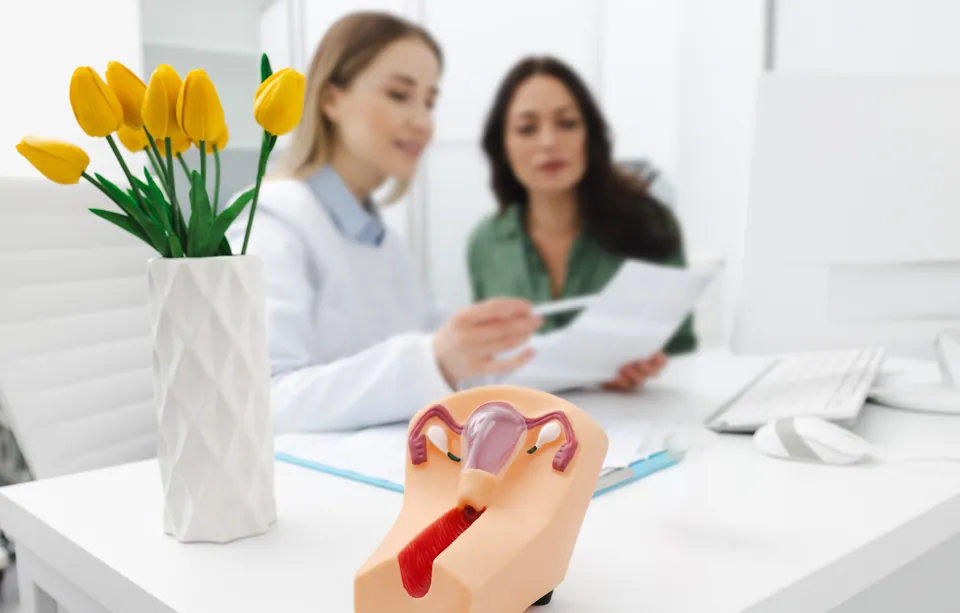
Learn what a gynaecological check-up involves, when screening and pelvic examinations are considered, how to prepare and what to ask your doctor.
A gynaecological examination is a consultation and examination that can be planned according to age and risk, even without symptoms. An internal examination or cervical smear is not needed at every visit. Its scope depends on the person's history, symptoms and previous screening. The following information is general and does not replace an individual assessment.
Why is a gynaecological examination performed?
A consultation about symptoms aims to understand a particular problem. A preventive visit reviews general reproductive health, discusses screening and vaccination needs, and allows time for questions. Current medical guidance describes this kind of preventive visit as covering screening, assessment, counselling and vaccinations according to age and risk.
Does an annual check-up mean that every test is performed?
No. An annual check-up does not mean that everyone receives the same list of tests. The examinations and tests needed depend on your history. It is therefore unrealistic to expect that everything has been checked; every test has limitations.
How often should you have a gynaecological examination?
Frequency varies between individuals. Age, contraception, pregnancy plans, previous screening results, long-term conditions and family history affect the decision. An annual consultation provides a reasonable framework for many people, but does not mean every test is performed each year. If symptoms develop, there is no need to wait for a scheduled appointment.
How are the consultation and medical history taken?
Much of the visit is a conversation. Questions cover period patterns and the date of the last period, medicines and supplements, previous illnesses and operations, family history, contraception and pregnancy plans. Sexual health questions may also form part of the discussion.
Are general and breast examinations performed at every visit?
If needed, general measurements such as blood pressure, height and weight are taken. Whether and how a breast examination is performed depends on age, history and the doctor's assessment.
When is a pelvic examination performed?
A pelvic examination, using a speculum and a bimanual examination with the hands, is not a routine compulsory step for every woman without symptoms. For someone without symptoms, the decision is shared between the person and doctor. An examination may be considered for abnormal bleeding, discharge, pain or a screening-related reason.
When is ultrasound added?
Ultrasound is not performed at every visit; it is requested according to symptoms and examination findings. The doctor decides which method is appropriate.
How is cervical cancer screening performed?
Cervical cancer screening uses a smear test, an HPV test or both. Starting age, intervals and test type vary by country and individual. Türkiye has a national screening programme run by the Ministry of Health. For current age ranges and arrangements, consult your family doctor or Ministry of Health sources. People who have received the HPV vaccine are also advised to continue screening.
When does breast screening start?
Breast screening generally uses mammography from a particular age. Starting age and intervals vary by country and risk factors such as family history. A breast lump, skin changes or nipple discharge should be assessed without waiting for the next screening date.
Is there a routine screening test for ovarian cancer?
No. Current medical guidance does not recommend transvaginal ultrasound and CA-125 testing to screen women without symptoms for ovarian cancer. There is no evidence that these methods reduce deaths; they may also produce false-positive results leading to unnecessary investigations or surgery. An inherited cancer syndrome or strong family history requires a different assessment; discussing your family history with your doctor is recommended.
Can you discuss contraception, vaccinations and pregnancy plans during the examination?
Yes. The visit also allows time to discuss contraception, prevention of sexually transmitted infections and, if needed, a review of testing and vaccination status. Tell your doctor if you are planning a pregnancy; some tests, medicines and supplements may need adjustment. Details of supplements and preparation before pregnancy are covered in preconception counselling.
How can you prepare for the examination?
- You can attend during your period, but ask when booking if bleeding is heavy or a smear is planned.
- Bring the date of your last period, details of medicines and any previous test results.
- Write down questions beforehand.
- If you have never had sexual intercourse, say so at the start of the consultation so that the method can be chosen accordingly. This does not prevent an examination.
- Consent and privacy are within your control; you can ask for the examination to stop if you feel uncomfortable.
How are privacy and consent protected?
Before the examination, you should be told what will happen, why it is needed and whether there are alternatives. You also have the right to ask about having a person close to you accompany the examination. Sexual orientation, marital status and sexual history are discussed to the extent needed for an appropriate assessment; you have the right not to be judged.
Are check-ups needed before and after menopause?
Yes. Periodic assessment is also appropriate during perimenopause and after menopause. The focus is on age-related changes, screening and symptom management. A normal smear or HPV result does not remove this need.
Frequently Asked Questions
Do I need to see a gynaecologist if I have no symptoms?
A preventive consultation offers an opportunity to review screening and discuss vaccinations and contraception even without symptoms. How often to attend varies between individuals.
Is a smear taken at every visit?
No. Smear and HPV tests are planned at particular intervals and according to age. They are not needed at every appointment; tell the doctor when your last test was performed and what it showed.
Is an internal examination painful?
Many people describe discomfort or pressure. It is important to say if you feel pain. Tension or fear can be discussed beforehand, and the examination can be slowed or stopped.
Are blood tests performed at a gynaecological check-up?
Blood tests depend on the history, symptoms and risk; the same list does not apply to everyone. You can ask why a particular test has been requested.
When should I seek advice if I am planning a pregnancy?
A consultation before you start trying can be helpful when considering pregnancy. Medicines, vaccinations, long-term conditions and supplements can then be reviewed in advance.
Is a pelvic (internal) examination essential at every visit?
No. If you have no symptoms, you and your doctor decide together whether this examination is needed. It may be considered for abnormal bleeding, discharge, pain or a screening-related reason.
I have had the HPV vaccine. Should I still continue cervical screening?
Yes. Continuing the screening programme is recommended even if you have received the HPV vaccine. The vaccine reduces the risk associated with the HPV types it covers, but does not replace cervical screening.
Should I have regular ultrasound and CA-125 tests for ovarian cancer?
No. Current medical guidance does not recommend these tests for women without symptoms. There is no evidence that they reduce deaths, and false-positive results may lead to unnecessary investigations or surgery. An inherited cancer syndrome or strong family history should be assessed separately with your doctor.
I have never had sexual intercourse. Does this prevent a gynaecological examination?
No. Mention this at the start of the consultation so that the examination method can be chosen accordingly. Never having had sexual intercourse does not prevent an examination.
Can I attend my appointment during my period?
Yes. You can attend during your period, but ask when booking if bleeding is heavy or a smear is planned.
Does a normal smear or HPV result after menopause make check-ups unnecessary?
No. A normal smear or HPV result does not remove the need for periodic assessment during perimenopause and after menopause, when the focus is on age-related changes and symptom management.
Get Your Free Consultation
Fill out the form below and our team will contact you

