


What is laparoscopic tubal surgery? Salpingectomy, tubal occlusion and tube-sparing surgery options for hydrosalpinx, plus risks and recovery.
Laparoscopic tubal surgery performs procedures on the fallopian tubes—removal, blockage, opening or release of surrounding adhesions—through small abdominal incisions. Suitability depends on the tubes' condition, your symptoms and pregnancy plans. It is most often considered for fluid accumulation in a tube, known as hydrosalpinx, before IVF. This provides a general framework and does not replace your individual assessment.
What is laparoscopic tubal surgery?
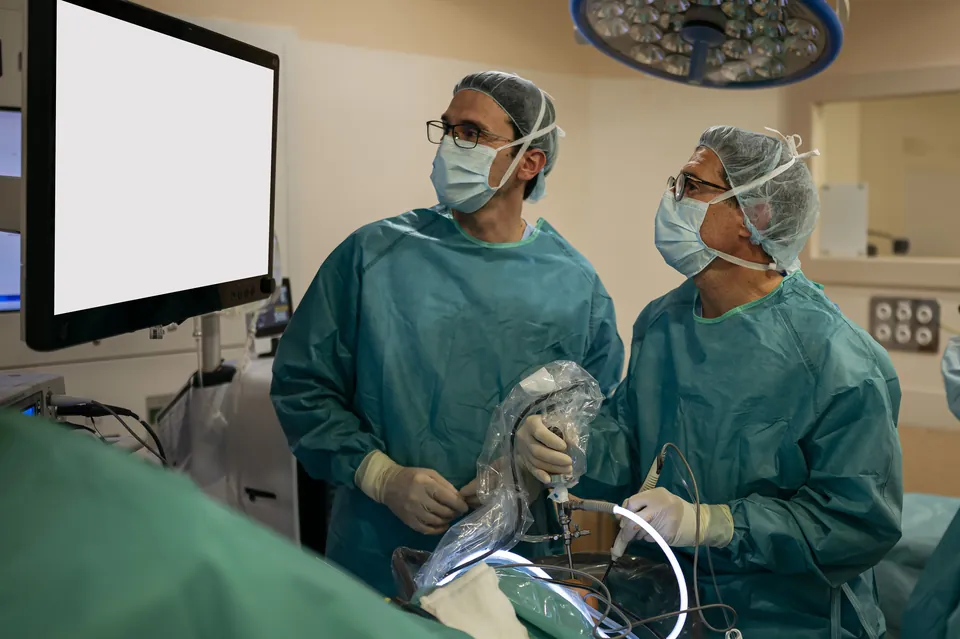
In laparoscopy, several small incisions are made in the abdominal wall; a camera and fine surgical instruments are placed through these incisions, and the abdominal cavity is expanded with gas. Although the condition of the tubes has usually already been assessed with imaging, laparoscopy allows the tubes and surrounding area to be looked at directly.
How do salpingectomy, tubal occlusion, salpingostomy and adhesiolysis differ?
- Salpingectomy: Removal of the tube. It can be performed on one tube or both.
- Tubal occlusion: The tube is left in place; the part near the uterus is closed, preventing fluid in the tube from flowing into the uterus.
- Salpingostomy and fimbrioplasty: Reopening or repairing the blocked end of the tube; the tube is preserved.
- Adhesiolysis: Separating adhesions around the tube and ovary.
In which situations is surgery considered?
Why is hydrosalpinx important before IVF?
A hydrosalpinx (fluid-filled tube) may adversely affect IVF outcomes. Guidelines on this recommend laparoscopic salpingectomy or tubal occlusion before IVF for people with hydrosalpinx. Compared with groups who did not have surgery, evidence that salpingectomy increases clinical pregnancy chances is moderately reliable; evidence for the same-direction effect of tubal occlusion is more limited. Evidence comparing the two procedures is much less reliable, and no significant difference between them has been found. Surgery does not mean pregnancy will definitely occur; your doctor decides which procedure suits you.
Can pain, infection or tubal damage require surgery?
Surgery can also be considered because of tube-related pain, recurrent infection, or severe damage to the tube. If there are pregnancy plans, tube-sparing procedures are only considered in selected, mild disease; the outcome varies according to the condition of the tube and accompanying factors, and success is limited in severe damage. The condition of the tube and surrounding area is assessed with imaging methods.
What is assessed before surgery?
Before the operation, an examination, ultrasound, and imaging results showing the condition of the tubes are reviewed together. Blood tests and an anaesthesia assessment are carried out; regularly used medicines, allergies and previous abdominal operations are reported to the doctor. If there are IVF plans, the timing of the operation is coordinated with the team running the treatment process. Instructions on fasting and stopping medicines are given by the surgical team.
How is the operation performed?
The type of anaesthesia is determined by the surgical and anaesthesia team. The camera and instruments are placed through small incisions; the tube and surrounding adhesions are assessed. In salpingectomy, the tube is separated from the points where it attaches to the ovary and uterus and removed, and can be sent for pathology. In tubal occlusion, the part of the tube near the uterus is closed. In tube-sparing procedures, adhesions are released and an attempt is made to open the end of the tube. The scope of the procedures to be carried out can vary according to findings during the operation and is discussed in advance at the consent consultation. The operation is performed by Assoc. Prof. Dr. Nurettin Türktekin at Memorial Şişli Hospital.
How does surgery affect ovarian reserve and pregnancy?
The tube and ovary are close together; whether removing a tube affects ovarian blood flow and reserve is a common question. Studies on this have not produced consistent results; further research is particularly needed when both tubes are removed. If you plan pregnancy, discuss reserve assessment and expectations with your doctor beforehand. Ectopic pregnancy risk may be increased after tube-preserving procedures, so early ultrasound confirmation of pregnancy location is important if pregnancy occurs.
What are the risks and complications?
The main risks are:
- Risks related to anaesthesia
- Bleeding
- Infection
- Injury during entry into the abdomen and to neighbouring structures such as the bowel, bladder, or a blood vessel
- Formation of adhesions inside the abdomen
- Conversion to open surgery
- The possibility of the ovary's blood flow and reserve being affected (the evidence is uncertain)
- Risk of ectopic pregnancy, if the tube is preserved
- The operation not resulting in pregnancy
- Formation of a blood clot in the leg veins
The frequency of these risks varies according to the condition of the tube, the extent of adhesions, and the scope of the procedure. It is helpful to discuss which of these apply to you with your doctor at the pre-operative consultation.
What can you expect during recovery, and when can IVF begin?
Abdominal bloating, incision pain and shoulder-tip pain may occur afterwards. Light spotting, mild cramps and temporary gas-related shoulder-tip pain are common and considered normal during this time. Hospital stay and when to return to work, daily life and sex depend on the extent of surgery; the operating team gives instructions. Pathology results are reviewed at follow-up. When IVF can start is decided with the team managing your treatment, according to recovery and ovarian assessment.
Frequently Asked Questions
If the tube is removed, can pregnancy still occur naturally?
If both tubes are removed, natural pregnancy is not expected, because the egg cannot reach the uterus through the tube; in this situation, IVF treatment is used for pregnancy, and this decision is discussed separately. If one tube is preserved, the chance of pregnancy depends on whether the preserved tube is open and healthy, and on other causes of infertility.
In one-sided hydrosalpinx, is only the tube on that side removed?
In one-sided hydrosalpinx, a procedure directed at the affected tube is usually considered. The condition of the opposite tube, its imaging findings, and pregnancy plans determine the decision; for this reason, the choice is made individually together with the doctor.
If there is no hydrosalpinx, is the tube removed for mild tubal disease?
Recommendations for salpingectomy before IVF apply to hydrosalpinx and are not automatically extended to every tubal disease. In mild tubal disease without hydrosalpinx, the decision is made according to the condition of the tube, symptoms, and pregnancy plans.
Which is preferred: salpingectomy or tubal occlusion?
Evidence comparing these procedures is limited, and no significant difference has been demonstrated. The choice is made together according to the tubes' condition, your doctor's assessment and personal preferences.
Does surgery definitely result in pregnancy?
No. Surgery does not mean pregnancy will definitely occur. Salpingectomy or tubal occlusion for hydrosalpinx aims to improve IVF outcomes; it does not guarantee pregnancy.
Is tube-preserving surgery (salpingostomy/fimbrioplasty) always successful?
No. Results depend on the tubes' condition and accompanying factors; success is limited with severe damage. Tube-preserving procedures are therefore used only in selected cases of mild disease.
What assessments take place before surgery?
Examination, ultrasound and imaging of the tubes are reviewed together; blood tests and anaesthetic assessment are performed. Tell your doctor about medicines, allergies and previous abdominal operations.
Does removing a tube definitely affect ovarian reserve?
Studies have not produced consistent results; whether there is an effect remains uncertain at the evidence level. Further research is particularly needed when both tubes are removed.
Is there an ectopic pregnancy risk if the tube is preserved?
Yes, ectopic pregnancy risk may be increased after tube-preserving procedures (tubal occlusion, salpingostomy, fimbrioplasty). If pregnancy occurs, early ultrasound confirmation of its location is therefore important.
Which symptoms are considered normal after surgery?
Abdominal bloating, incision pain, shoulder-tip pain, light spotting and mild cramps are common and considered normal during this time. Shoulder-tip pain is usually caused by gas used during surgery and is temporary.
Who performs the operation, and where?
The operation is performed by Assoc. Prof. Dr. Nurettin Türktekin at Memorial Şişli Hospital.
When can IVF begin?
When IVF can begin is decided with the team managing treatment, according to your recovery and ovarian assessment.
Get Your Free Consultation
Fill out the form below and our team will contact you

