


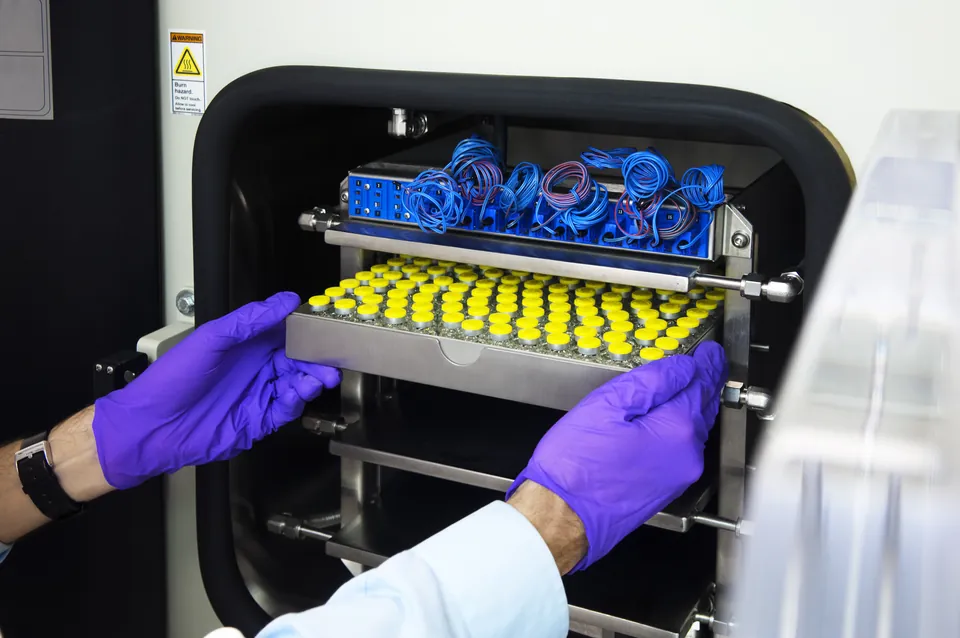
How is an embryo thawed, what is vitrification, and may a thawed embryo not survive? The evidence for the method, the storage framework and urgent signs.
Embryo thawing is warming a frozen embryo in the laboratory before the transfer, taking it out of the storage conditions and assessing its state. Vitrification is the freezing method that cools the embryo very rapidly and turns it into a solid without forming ice. You cannot know beforehand that every thawed embryo will survive; this likelihood varies from embryo to embryo. Your doctor decides, according to your treatment plan, when the thawing will be done and how your uterus will be prepared. Below we describe what the method is, the thawing steps, what the evidence shows and does not show, and the general framework for storage. This information does not replace a diagnosis or treatment recommendation specific to the individual.
What is vitrification, and how does it differ from slow freezing?
There are two basic ways of freezing an embryo: slow freezing and vitrification. In slow freezing the temperature is lowered gradually. In vitrification, on the other hand, the embryo is cooled very rapidly and turns into a glass-like solid without ice crystals forming. The details of the laboratory protocols, the carriers used and the protective substances vary with the centre.
For which outcomes has the benefit of vitrification been shown?
A review on this subject compared slow freezing with vitrification in freezing eggs and embryos. For embryos, a significant difference in favour of vitrification was found in the survival rate after thawing (the reliability of the evidence being moderate), while a borderline difference was reported for clinical pregnancy per cycle. The reliability of the evidence on clinical outcomes is low, and these findings must be interpreted with care.
Which steps are followed during embryo thawing?
The thawing procedure begins with the embryo being taken out of the environment in which it was frozen and warmed. Then the substances that protected the embryo during freezing are removed, and whether the embryo has withstood thawing is assessed under the microscope. The details and duration of the steps may vary with the laboratory's protocol.
How are the thawing and transfer day planned?
The thawing is timed to the planned transfer time. Preparing your uterus with a natural or medicated cycle, the transfer day and the period afterwards come within the scope of the frozen embryo transfer page; your doctor tells you the timing.
May a thawed embryo not survive?
Yes, even if vitrification is applied, there may be losses during thawing. It is not possible to say that vitrification does not harm the embryo at all or that it removes the risk of loss. Which embryo will withstand thawing cannot be known beforehand and varies from person to person. If a thawed embryo is not found suitable for transfer, the next step is re-planned together with your doctor. This can be an emotionally difficult experience; do not hesitate to ask for support.
According to the current expert view on this subject, the rate of embryo deterioration during thawing is lower than in past assessments; however, this information relates to laboratory quality and does not mean a definite assurance for your embryo.
Are the results of frozen embryo transfer different from fresh transfer?
According to a review, when freezing embryos and transferring them in a later cycle is compared with fresh transfer, it is likely that there is either no difference in live birth or a very small one. We give the details of this comparison on the frozen embryo transfer page. Factors such as your age, embryo quality and the conditions of your uterus also affect the result. Current guidelines on this subject recommend that frozen-thawed blastocysts be transferred as a single embryo regardless of quality.
Where can you learn the storage and consent conditions?
In Turkey, the freezing and storage of embryos depends on the Ministry of Health's Regulation on Assisted Reproductive Treatment Practices and on the Informed Consent Form you have signed. The regulation provides that surplus embryos be frozen and stored with the consent of both spouses. Because the storage period, renewal conditions and other provisions may change, you should confirm the current situation with your doctor or the centre.
What can you ask your doctor about thawing and storage?
- By which method and at which stage were my embryos frozen?
- How will the state of the embryo after thawing be reported to me?
- How does the plan change if a thawed embryo is not found suitable for transfer?
- What is the current information about my storage period, my renewal conditions and my consent form?
- Are my embryos stored separately?
Frequently Asked Questions
Are embryos stored one by one?
Current guidelines on this subject recommend, as good practice, placing one embryo on a carrier device in order to ensure traceability and to make single embryo transfer easier. Centres' practice may vary on this; it is sensible to ask how your embryos are stored.
How is the storage permission renewed?
According to the first published text of the regulation, if storage exceeds one year, the couple is expected to request the storage of the embryo each year with a signed petition. However, because the legislation can be updated, you should confirm the periods, the way of applying and what will happen if no request is made with the centre and the current text.
Can I move a frozen embryo to another centre?
The regulation provides that frozen material can be moved to another assisted reproduction treatment centre with a written application and a record. You need to talk with both your current centre and the centre the embryos will go to about how the application is made; you should confirm the current provisions and the process with the centre.
Do I need to prepare for the thawing procedure?
Thawing is a step applied to the embryo in the laboratory; it requires no separate preparation for you.
Are vitrification and embryo thawing the same procedure?
No. Vitrification is a method of freezing by very rapid cooling; thawing is the warming of the stored embryo and the assessment of its state.
Can every thawed embryo be transferred?
No. Whether the embryo has withstood thawing is assessed. If it is not found suitable for transfer, the next step is re-planned with your doctor.
Does vitrification completely prevent embryo loss?
No. Even if vitrification is applied, there may be losses during thawing. Which embryo will survive cannot be known for certain beforehand.
Does the benefit of vitrification in survival rate also make the pregnancy outcome certain?
No. The reliability of the finding in favour of vitrification for survival after thawing is moderate; the reliability of the evidence on clinical outcomes is low. They do not measure the same outcome.
Is the thawing time determined independently of the transfer?
No. The thawing procedure is timed to the planned transfer time. Your doctor tells you the uterine preparation and the schedule.
Does frozen transfer necessarily give a better result than fresh transfer?
No. According to the review, it is likely that there is no difference, or a very small one, in live birth. Your age, embryo quality and the conditions of your uterus also affect the result.
Is it recommended that more embryos be transferred according to the quality of a thawed blastocyst?
Guidelines recommend that frozen-thawed blastocysts be transferred as a single embryo regardless of quality. You should talk with your doctor about the plan to be applied.
Should I confirm the current storage and renewal conditions?
Yes. Because the storage period, renewal conditions and other provisions may change, you should get information from the centre and from the current legislation. You can also talk about the conditions of the consent form you have signed.
Get Your Free Consultation
Fill out the form below and our team will contact you

