


What is laparoscopic myomectomy? Learn about suitability, preparation, fibroid removal, surgical risks, recovery and planning a pregnancy afterwards.
Laparoscopic myomectomy is a surgical method using small abdominal incisions to remove fibroids while preserving your uterus. Not every fibroid can be removed this way; suitability depends on their number, size and location. It is considered an alternative to hysterectomy (removal of the uterus) for women with symptomatic fibroids who want to preserve their uterus or retain a chance of pregnancy. This is general information and does not replace an assessment of your circumstances.
What is laparoscopic myomectomy?
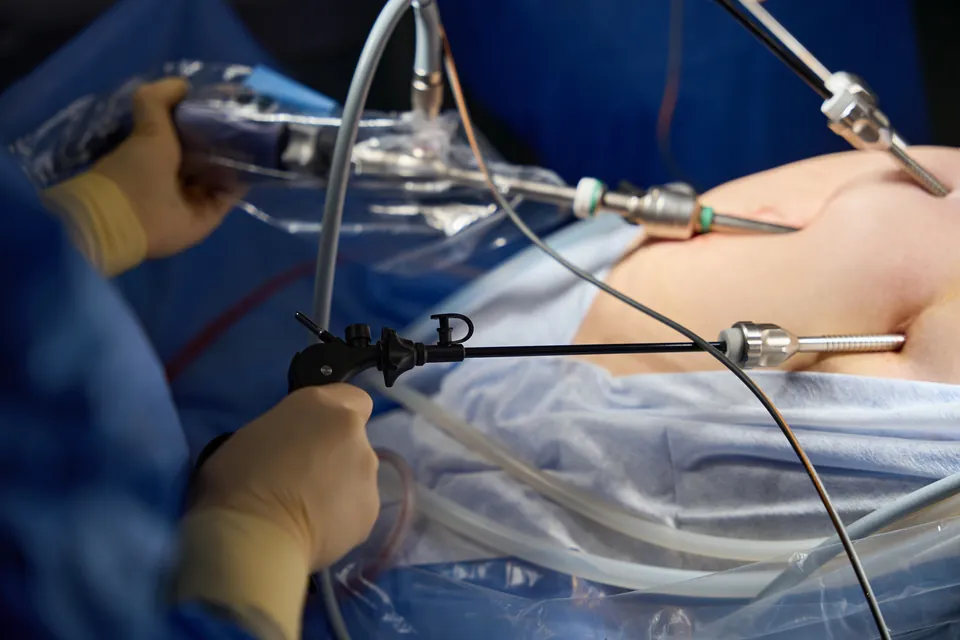
Myomectomy is the general term for removing fibroids from the uterine wall while preserving the uterus. Abdominal myomectomy may be laparoscopic or open (laparotomy). A robot-assisted method, an adaptation of laparoscopy, is another option. In laparoscopy, several small incisions are made in the abdominal wall; a camera and fine surgical instruments are inserted through them.
What is the difference between myomectomy and hysterectomy?
Myomectomy removes only fibroids, leaving the uterus in place. Hysterectomy removes the uterus itself. The choice depends on symptom severity, pregnancy wishes, fibroid characteristics and your preference. For fibroids, their symptoms and all treatment options, see the Fibroid Treatment page.
Who might be suitable for laparoscopic myomectomy?
Laparoscopy has been found safe and effective in selected cases: a small number of medium-sized fibroids on the outer surface or in the uterine wall. Myomectomy is a prominent option for women wishing to preserve their uterus. However, not every fibroid affects fertility; whether surgery improves pregnancy chances is debated even in selected groups. The decision therefore depends on symptoms and personal circumstances rather than fibroid presence alone. The Fibroids and IVF page also offers guidance on pregnancy plans and IVF.
For which fibroids might laparoscopy be difficult or less suitable?
As fibroid number and size increase, the procedure becomes technically harder. Its role for large or numerous fibroids is debated; a specific size limit therefore varies between people and is decided with your surgeon. Fibroids growing into the uterine cavity are usually treated differently, by hysteroscopy; see the Hysteroscopic Fibroid Surgery page.
What assessments take place before surgery?
Ultrasound and, if needed, magnetic resonance imaging (MRI) may be used before surgery to establish the number, size and location of fibroids. As fibroids can cause heavy periods, anaemia is also assessed and, where necessary, treated before surgery.
What is done to reduce bleeding during surgery?
Several approaches have been described to reduce surgical bleeding: using a medicine called a GnRH agonist for a period beforehand, medicines that reduce bleeding during surgery and techniques involving uterine vessels. Evidence of their effects is described as moderate. Your surgical team decides which approach suits your circumstances.
How is the operation performed?
Your surgical team decides the anaesthesia type. A camera and instruments are inserted through small abdominal incisions. The fibroid is removed through an incision in the uterine wall, which is then stitched in layers. For deep fibroids, stitching quality matters for uterine wall strength in a future pregnancy. The number of incisions and use of robotic assistance depend on your circumstances and the team's approach; robot-assisted surgery is also an abdominal option. The operation is performed by Assoc. Prof. Dr. Nurettin Türktekin at Memorial Şişli Hospital.
How is the fibroid removed from the abdomen, and what is morcellation?
If a fibroid is too large to remove intact, dividing it into smaller pieces, called morcellation, may be considered. A safety warning has noted that power morcellation could spread an unsuspected uterine sarcoma within the abdomen and advised against its general use in most patients. The possibility of sarcoma is therefore assessed before surgery. If morcellation is needed, it may be performed inside a containment bag, although a bag has not been proven to prevent tissue spread completely. Another option is to remove the fibroid without morcellation through a small additional incision or through the vagina. This is an important issue to discuss with the doctor before surgery.
How does laparoscopy compare with open surgery?
Research has shown less postoperative pain and fever and a shorter hospital stay with laparoscopy than with open myomectomy. The same studies did not demonstrate a difference between the methods in fibroid recurrence or conversion to open surgery; blood loss findings could not be pooled because of inconsistency. Some results rely on low-quality evidence and the studies are old. There is therefore no general ranking of superiority; the choice depends on fibroid characteristics and your surgeon's assessment.
| Option | Brief summary | Details |
|---|---|---|
| Laparoscopic myomectomy | Small abdominal incisions, preserving the uterus | This method |
| Open myomectomy (laparotomy) | A single, larger abdominal incision | Open Fibroid Surgery page |
| Hysteroscopic myomectomy | For fibroids extending into the uterine cavity, without an incision | Hysteroscopic Fibroid Surgery page |
| Medicines and other interventions | To ease symptoms or shrink fibroids | Fibroid Treatment page |
What are the risks of laparoscopic myomectomy?
As with any operation, laparoscopic myomectomy carries risks. The main risks include:
- Bleeding and, rarely, a need for blood transfusion
- Infection and fever
- Adhesions forming inside the abdomen
- Injury to nearby structures such as the bowel, bladder, urinary tract or blood vessels
- Conversion to open surgery if the operation cannot be completed laparoscopically
- Blood clots in the leg veins and risks related to anaesthesia
- Fibroids returning
- Possible spread of an unsuspected sarcoma in relation to morcellation, as discussed above
How often these risks occur varies with the individual, the fibroids and the surgical technique. Discussing your own risks with the doctor before surgery is the most appropriate approach.
When can you try to conceive after surgery?
A period of waiting is recommended after surgery to allow the uterine repair to heal. The interval varies according to how deeply the fibroid was situated and the extent of the repair. The doctor will advise on an appropriate interval after the operation.
How is the mode of birth decided after myomectomy?
Uterine rupture during pregnancy after myomectomy is rare. Observational studies have not reported a significant increase after laparoscopic compared with open surgery. However, these data are of low quality, so the risk cannot be considered zero. The mode of birth is individualised: some women may attempt vaginal birth, while caesarean birth may be preferred for others. Inducing labour in a scarred uterus can increase the risk of rupture, so it is important to tell the obstetrician about the operation during antenatal care.
What is recovery like?
Pain and discomfort vary between people; your team explains postoperative pain management. Hospital stay and when to return to work, daily activities, sport and sex depend on the extent of surgery and your circumstances; the operating team gives instructions. Follow-up examination and review of pathology results are part of recovery.
Can fibroids return?
Myomectomy removes existing fibroids; it does not prevent new ones from developing. Research has not demonstrated a difference in recurrence between surgical approaches. New fibroids can develop regardless of the method used, so regular follow-up is important.
Frequently Asked Questions
Is the uterus removed during laparoscopic myomectomy?
No. Myomectomy removes only the fibroids and preserves the uterus. Removing the uterus is a separate operation called hysterectomy.
Can every fibroid be removed laparoscopically?
No. The number, size and location of fibroids affect suitability. The role of laparoscopy for large or numerous fibroids is debated; open surgery or another method may be more appropriate. The decision is based on imaging and examination findings.
Is laparoscopic myomectomy used for fibroids growing into the uterine cavity?
Usually not. These fibroids are mostly treated by hysteroscopy, entering from inside the uterus. The appropriate method depends on the fibroid's location and imaging findings.
Is anaemia assessed before surgery?
Yes. Fibroids can cause heavy periods, so anaemia is assessed beforehand and treated before surgery if needed.
Are medicines or special techniques used to reduce surgical bleeding?
Your team may consider approaches such as GnRH agonist use for a period beforehand, medicines to reduce bleeding during surgery or uterine vessel techniques according to your circumstances. Evidence of their effects is moderate.
Why is stitching quality important with deeply embedded fibroids?
Because stitching quality in the uterine wall may affect its strength in a future pregnancy. Particular attention is therefore paid to stitching technique for deep fibroids.
What is morcellation, and is it safe?
Morcellation involves dividing a fibroid into small pieces inside the abdomen so that it can be removed. Its safety depends on the fibroid's characteristics and the method used; further details appear in the morcellation section above. The appropriate approach should be discussed with the doctor before surgery.
Does laparoscopy prevent fibroids returning compared with open surgery?
No. The surgical approach does not prevent new fibroids from developing. See the “Can fibroids return?” section for more detail.
Is robot-assisted myomectomy better than laparoscopy?
No, evidence supporting this is insufficient. Robot-assisted surgery is one of the abdominal options; the choice depends on the surgical team's assessment.
Can I try for pregnancy immediately after surgery?
No. Waiting for the uterine stitches to heal is recommended. The interval varies with fibroid depth and the extent of stitching; your doctor advises the appropriate time.
Is vaginal birth possible after the operation?
This is an individual decision. Some women may attempt vaginal birth, while caesarean birth may be preferred for others. The decision is made with the obstetrician according to the fibroid's location, the depth of the repair and the course of the pregnancy.
Is labour induction safe after myomectomy?
Labour induction with a scarred uterus may increase uterine rupture risk. It is therefore important to tell your obstetrician about your surgical history during pregnancy follow-up and plan the birth together.
When can I return to work or daily life after surgery?
This depends on the extent of surgery and your circumstances. The operating team advises on hospital stay and when to return to work, daily activities, sport and sex.
Get Your Free Consultation
Fill out the form below and our team will contact you

