


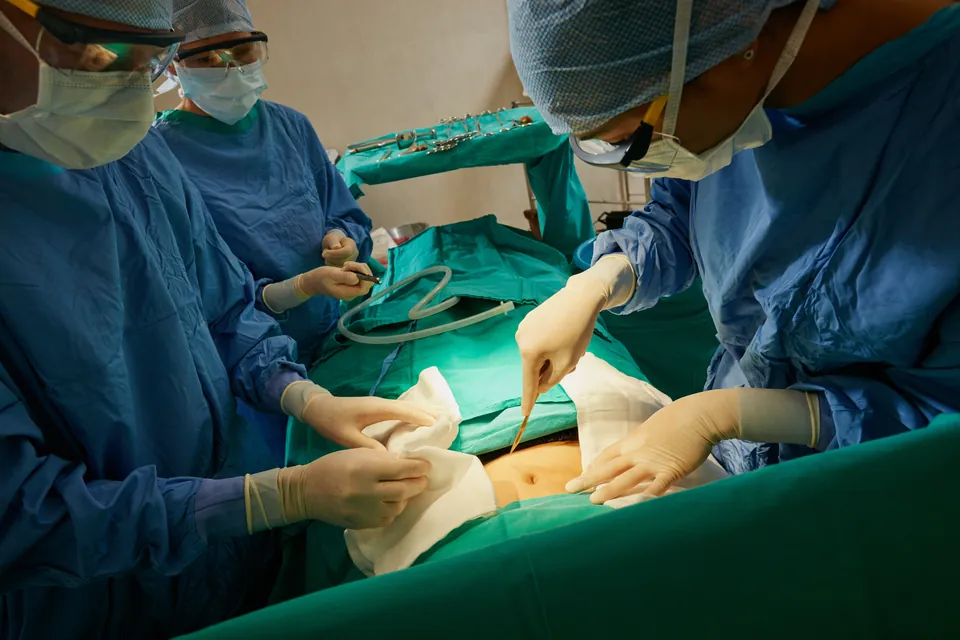
What is vaginal hysterectomy (vaginal removal of the uterus) and who may it suit? General information on the operation, risks, the ovaries and recovery.
Vaginal hysterectomy is an operation in which your uterus is removed through the vagina, without an incision in the abdomen. It is not suitable for everyone; suitability is determined according to the characteristics of your uterus and vagina, any accompanying disease and your previous operations. Once the uterus is removed, both menstrual bleeding and the possibility of pregnancy come to an end. For this reason, the decision takes into account the severity of your complaints, whether other treatments can be tried and your own preference together. The information below offers a general framework; it does not replace the individual assessment made for you.
What is vaginal hysterectomy?
Hysterectomy is the removal of the uterus. In the vaginal method no incision is made in the abdominal wall; your uterus is reached through the vagina, separated from the ligaments and blood vessels around it, and taken out through the vagina. The removed uterus is sent to pathology.
In which situations is vaginal hysterectomy considered?
The vaginal route can be considered when the uterus needs to be removed for benign reasons, for example long-lasting bleeding, fibroids or adenomyosis. Vaginal hysterectomy is also often mentioned in the context of uterine prolapse. If it is done because of prolapse, the upper end of the vagina needs to be supported in addition to removing the uterus; removing the uterus alone is not enough. Removing the uterus is not the only option; there are also approaches that preserve the uterus, and this is discussed with your doctor.
Who is vaginal hysterectomy suitable for?
The method of hysterectomy is not chosen in the same way for everyone; it is determined not by a single criterion but by looking together at factors such as the characteristics of you and your disease, the surgeon's experience and the facilities of the hospital. In benign disease, priority is given to routes with a small incision or none at all; the vaginal route is counted among the first of these. Whether the vaginal route suits you depends on the following:
- The size and mobility of your uterus
- The state of access to the vagina
- The likelihood of adhesions related to your previous abdominal and pelvic operations
- Accompanying situations such as suspected cancer
- The experience of the surgeon who will perform the operation
If these characteristics are not suitable for the vaginal route, the laparoscopic or open route may be considered. Your doctor determines suitability by looking at examination and imaging findings.
What is prepared before the operation?
In preparation, the vaginal examination and ultrasound are important, because whether the vaginal route suits you is largely understood from them; other imaging is also requested if needed. Your doctor decides which examinations of the cervix and the lining of the uterus will be done. Your blood values, pregnancy test and anaesthetic consultation are completed; you need to tell your doctor about the medicines you use, your allergies and the operations you have had. The surgical team tells you when to stop eating and drinking and which medicines to pause. Measures to prevent clot formation in the leg veins after the operation are planned according to your level of risk.
How is the operation performed?
The type of anaesthetic is decided by the surgical and anaesthetic team. The operation begins with an incision in the vaginal wall around the cervix; the ligaments and blood vessels that hold the uterus are separated in turn, bleeding is controlled and the uterus is taken out through the vagina. At the end, the upper end of the vagina is closed with stitches. In operations performed because of uterine prolapse, procedures that support the upper end of the vagina can be added in the same session; their scope varies with you and is discussed before the operation. If it is not possible to proceed by the vaginal route, the operation may need to be converted to the laparoscopic or open route. The operation is performed by Assoc. Prof. Dr. Nurettin Türktekin at Memorial Şişli Hospital.
How does vaginal hysterectomy differ from the other methods?
When it is technically possible, the vaginal route is one of the approaches preferred over the open route; compared with open surgery, it has been found to be associated with a faster return to daily life, fewer wound infections and a shorter hospital stay. Compared with the laparoscopic route, no marked difference in the main outcomes has been shown. These findings rest on low to moderately reliable data; a general ranking of superiority between the methods cannot be made, and the choice is determined according to you.
What happens to the ovaries and tubes, and is there an effect on menopause?
Whether your ovaries are removed is a decision separate from removing the uterus. Whether the ovaries can be removed through the vagina, and whether this is needed, varies from person to person; your doctor assesses this. If you have not reached menopause and your ovaries are removed, menopausal symptoms start right after the operation. If your ovaries are left in place, you do not have periods because you have no uterus, but hormone production can continue; it has been reported that the age at which menopause begins may move slightly earlier. Removing the fallopian tubes as well during a hysterectomy performed for benign reasons can be considered with the aim of reducing the risk of ovarian cancer. These matters are addressed at the consultation with your doctor.
What are the risks and complications?
The main risks related to vaginal hysterectomy are as follows:
- Risks related to the anaesthetic
- Bleeding and the need for a blood transfusion
- Infection (upper end of the vagina, pelvis, urinary tract)
- Injury to the bladder, ureter or bowel
- A collection of blood at the upper end of the vagina, or separation of the stitch line
- Temporary difficulty passing urine, or leakage of urine
- Pain during sexual intercourse
- Shortening or narrowing of the vagina
- Recurrence of prolapse (particularly in operations performed because of prolapse)
- The planned vaginal route being impossible to complete and another route being used
- Clot formation in the leg veins
- The end of fertility
- Surgical menopause if the ovaries are removed
- Rarely, an unexpected pathology result
The risks are not at the same level for everyone; situations such as the suitability of the vaginal route and accompanying prolapse affect this level. Discuss those specific to your situation with your doctor before the operation.
How does the recovery process go?
After the operation, light vaginal spotting or brown discharge, mild cramp in the lower abdomen, a feeling of temporary difficulty passing urine and tiredness are among the usual symptoms. Pain and recovery time vary from person to person; having no abdominal incision does not mean there will be no pain or that recovery will be fast. The team that performs the operation will give you the instructions on your length of hospital stay, when you can return to daily life, sport and heavy lifting, and your follow-up schedule. At the follow-up examination your pathology result is shared.
Frequently Asked Questions
Will I have periods or be able to become pregnant once the uterus is removed?
No. Once the uterus is removed, both menstrual bleeding and the possibility of pregnancy come to an end completely.
Is it essential to remove the uterus in uterine prolapse?
No, not always. There are also prolapse operations that preserve the uterus, and in selected people results similar to hysterectomy have been reported; however, long-term data are limited and some of the comparisons are observational. Hysterectomy may be needed if there is suspected cancer, abnormal bleeding or marked disease of the uterus. Your doctor decides which suits you by looking at the examination.
What happens if it is not possible to proceed by the vaginal route?
If it is not possible to proceed by the vaginal route, the operation may be converted to the laparoscopic or open route during surgery. This is one of the possibilities explained to you at the pre-operative consultation.
Which symptoms are considered usual after the operation?
Light vaginal spotting or brown discharge, mild cramp in the lower abdomen, a feeling of temporary difficulty passing urine and tiredness are among the usual symptoms. Having no abdominal incision does not mean there will be no pain.
Will my ovaries also be removed?
Whether your ovaries are removed is a decision separate from removing your uterus; your doctor assesses it together with you. If you have not reached menopause and your ovaries are removed, menopausal symptoms start right after the operation.
Can the ovaries be removed through the vagina?
In some people it is possible to reach the ovaries through the vagina, and in others it is difficult. Because whether the ovaries need to be removed is a separate decision, accessibility alone is not decisive. It is recommended that you discuss your preference about the ovaries and tubes with your doctor before the operation.
When will menopause happen if my ovaries are not removed?
If your ovaries are left in place, you do not have periods because you have no uterus, but hormone production can continue. It has been reported that the age at which menopause begins may move slightly earlier.
Does prolapse come back after the operation?
Nothing definite can be said. In long-term follow-up, recurrence of prolapse has been found to be related more to prolapse having been the reason for the operation than to which method was used; this finding rests on limited data. If you notice signs of recurrence (a feeling of fullness in the vagina or of something bulging down), it is a good idea to tell your doctor without waiting for the follow-up examination.
How is sexual life affected after the uterus is removed?
Because in the vaginal route the operation is performed at the upper end of the vagina, when you can return to sexual intercourse depends on the healing of the stitches in that area; the surgical team will tell you. You should share complaints such as pain, dryness or a feeling of vaginal shortening with your doctor at the follow-up examination.
Is vaginal hysterectomy more advantageous than open surgery?
When it is technically possible, the vaginal route is one of the approaches preferred over the open route; compared with open surgery, it is associated with a faster return to daily life, fewer wound infections and a shorter hospital stay. Compared with the laparoscopic route, no marked difference has been shown; these findings rest on low to moderately reliable data.
Is smear screening continued after the uterus is removed?
Whether the cervix was removed, and whether a high-grade change was found in the cervix in the past, are decisive. Your doctor will tell you whether screening will continue by looking at your records; until then, do not stop the screening programme on your own decision.
Get Your Free Consultation
Fill out the form below and our team will contact you

