


What is laparoscopic hysterectomy (keyhole womb removal), and when is it needed? Information on the ovaries, menopause, risks and recovery process.
Laparoscopic hysterectomy removes the uterus through small abdominal incisions. Once the uterus is removed, the possibility of becoming pregnant and carrying a pregnancy ends. The decision is therefore made together, considering symptom severity, other treatment options and personal preferences. Removing the tubes and ovaries is a separate decision. This provides a general framework and does not replace your individual assessment.
What is laparoscopic hysterectomy?
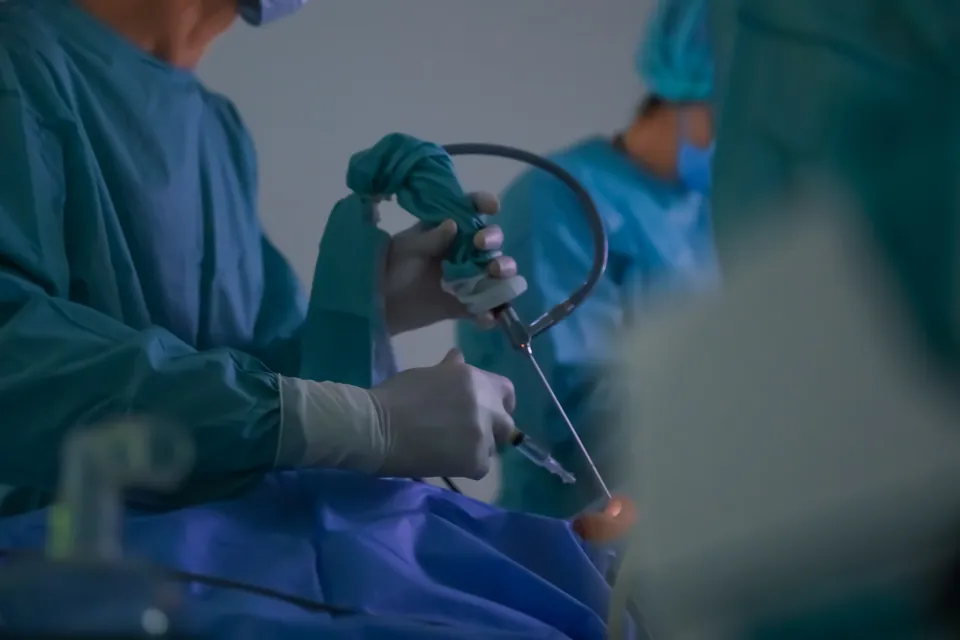
Hysterectomy is the removal of the uterus. In the laparoscopic method, several small incisions are made in the abdominal wall; a camera and fine surgical instruments are placed through these incisions, the uterus is freed inside the abdomen, and it is usually taken out through the vagina or through a small incision. The uterus is sent for pathology after the operation.
What is the difference between total and subtotal hysterectomy?
In a total hysterectomy, the cervix is removed along with the body of the uterus; in a subtotal hysterectomy, the cervix is left in place. The fallopian tubes and ovaries can be removed along with the uterus or preserved. These choices are made according to the condition, age, and personal risks and preferences, and are discussed at the pre-operative consent consultation.
When is hysterectomy considered, and are there alternatives?
Hysterectomy for benign disease may be considered for abnormal uterine bleeding, fibroids, adenomyosis, endometriosis, pelvic pain, uterine prolapse and atypical hyperplasia. Hysterectomy is generally not considered first-line for heavy menstrual bleeding; medical treatments and uterus-preserving interventions are assessed first. Planning differs if cancer is suspected; the method and extent of surgery are determined separately. Discussing alternatives with your doctor is important when deciding on hysterectomy.
Which method is chosen: laparoscopic, vaginal or open surgery?
The uterus may be removed laparoscopically through the abdomen, vaginally or through a larger abdominal incision (open surgery). The route is chosen according to the characteristics of the uterus and vagina, any accompanying condition, planned additional procedures, the surgeon's training and experience, available hospital resources and your preference. In benign disease, minimally invasive routes are preferred where possible; among these, the vaginal route takes priority, and if it is unsuitable, laparoscopy may be preferred to open surgery. Laparoscopic hysterectomy has been reported to allow a faster return to daily activities than open surgery, but the likelihood of ureteric injury is probably slightly higher; these findings are not yet certain and are based on evidence of limited reliability. There is therefore no overall ranking of superiority; the choice depends on you and the surgical team's assessment.
What preparation takes place before surgery?
Before the operation, an examination, ultrasound and, if needed, further imaging are carried out. Any tests needed relating to the cervix and the uterine lining are determined by the doctor. Blood tests, an anaemia assessment and an anaesthesia assessment are carried out; regularly used medicines, allergies and previous abdominal operations are reported to the doctor. Instructions on fasting, stopping medicines, and bowel preparation if needed are given by the surgical team.
How is the operation performed?
The type of anaesthesia is determined by the surgical and anaesthesia team. The structures connecting the uterus to the abdominal wall, the tubes, the ovaries and the vagina are separated, bleeding is controlled, and the uterus is removed. The upper end of the vagina is closed with sutures. If the uterus needs to be removed in pieces, the method used for this is important and is a point that should be addressed before the operation. If difficulty arises, conversion to open surgery is possible. The operation is performed by Assoc. Prof. Dr. Nurettin Türktekin at Memorial Şişli Hospital.
Are the ovaries preserved, and how is menopause affected?
Whether the ovaries are removed or preserved is a decision independent of the hysterectomy itself. If the ovaries are removed in the premenopausal period, surgical menopause begins immediately. If the ovaries are preserved, menstrual bleeding will not occur because there is no uterus; however, the ovaries' hormone production can continue. Removing the ovaries can reduce the risk of ovarian cancer; on the other hand, there are also health effects associated with early surgical menopause. For this reason, the fate of the ovaries is determined through consultation with the doctor, taking personal risks into account.
What are the risks and complications of surgery?
Laparoscopic hysterectomy is a major operation. The main risks are:
- Risks related to anaesthesia
- Bleeding, and rarely the need for a blood transfusion
- Infection
- Injury to the bladder, ureter, bowel or a blood vessel
- Separation or infection at the suture line at the top of the vagina (the vaginal cuff)
- Formation of adhesions inside the abdomen
- Temporary problems with bowel function
- Conversion to open surgery
- Formation of a blood clot in the leg veins
- The end of fertility
- Surgical menopause, if the ovaries are removed
- Rarely, an unexpected pathology result
The frequency of these risks varies according to the individual, the condition, and the scope of the operation. It is helpful to discuss which of these apply to you with your doctor at the pre-operative consultation.
What are recovery and life after surgery like?
Abdominal bloating, incision pain, shoulder-tip pain and vaginal discharge may occur afterwards. Light spotting, mild cramps and temporary gas-related shoulder-tip pain are common and considered normal during this time. Hospital stay and when to return to work, daily life, sport and sex depend on you and the extent of surgery; the operating team gives instructions. You can ask your doctor about sexual life and hormonal changes at follow-up, when pathology results are also shared.
Frequently Asked Questions
Is a smear test needed after the uterus is removed?
This depends on whether the cervix was removed and whether a high-grade cervical lesion was found in the past. If the cervix was not removed, continuing screening is planned by the doctor. If the cervix was removed, the doctor determines the need for follow-up based on pre- and post-operative findings; it is recommended that you do not stop screening on your own.
What is the purpose of removing the tubes along with the uterus?
For a person at average risk, removal of the fallopian tubes during hysterectomy for a benign reason may be considered to reduce ovarian cancer risk. This does not eliminate the risk entirely, and a significant effect on ovarian function has not been demonstrated. It is recommended that this decision should not change the surgical route; it is discussed during consent.
Is hysterectomy the first treatment for heavy periods?
No. Hysterectomy is generally not considered first-line for heavy periods; medicines and procedures preserving the uterus are assessed first. It is considered when these options are insufficient or another reason is present.
Is the cervix always removed during hysterectomy?
No. This depends on the choice of total or subtotal hysterectomy. Total hysterectomy removes the cervix with the uterine body; subtotal hysterectomy leaves the cervix in place. Suitability depends on your condition, age, personal risks and preferences.
Are the ovaries automatically removed with hysterectomy?
No. Removing or preserving ovaries is independent of hysterectomy. It is decided separately in consultation with your doctor, considering personal risks.
Is laparoscopy safer than open surgery in every respect?
This cannot be said with certainty. Faster return to daily life has been reported with laparoscopic hysterectomy than open surgery, but ureter injury may be slightly more likely. These findings rely on evidence of limited reliability, so an overall ranking of superiority is not possible.
Can the operation be converted to open surgery?
Yes. If difficulties arise, conversion to open surgery is possible; it is a known risk of laparoscopic hysterectomy.
Does fertility return after surgery?
No. Once the uterus is removed, the possibility of becoming pregnant and carrying a pregnancy ends. Loss of fertility is an expected outcome of laparoscopic hysterectomy.
Are bloating and shoulder-tip pain normal after surgery?
Yes. Abdominal bloating, incision pain, shoulder-tip pain and vaginal discharge may occur. Light spotting, mild cramps and temporary gas-related shoulder-tip pain are common and considered normal during this time.
How are sexual life and hormones affected after removal of the uterus?
This largely depends on whether the ovaries are removed. If preserved, hormone production may continue; if removed before menopause, surgical menopause begins. When to resume sex depends on you and the extent of surgery and is decided by the operating team. You can discuss sexual life and hormonal changes with your doctor at follow-up.
Are pathology results shared at follow-up?
Yes. The uterus is sent for pathology after surgery and results are shared at follow-up.
Get Your Free Consultation
Fill out the form below and our team will contact you

