


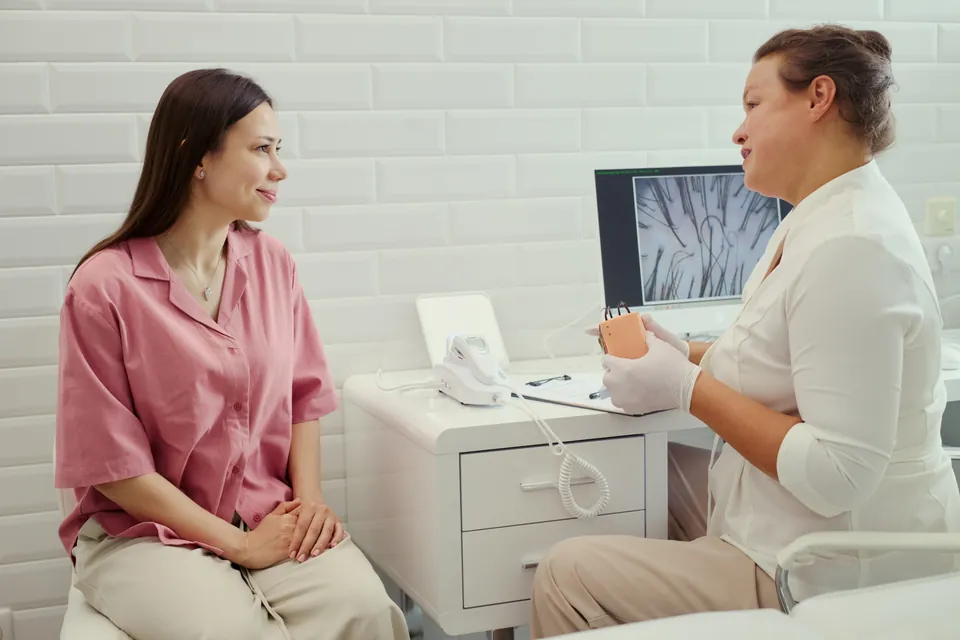
Learn about bleeding between periods, spotting and bleeding after sex, possible causes, examination and tests, and when to see a doctor about them.
Intermenstrual bleeding is uterine bleeding or spotting outside periods; postcoital bleeding is vaginal bleeding immediately after intercourse. Most cases have benign causes, but even one episode after intercourse, or new, prolonged or recurrent intermenstrual bleeding, needs examination. This information is general and does not replace individual assessment.
What do intermenstrual bleeding, spotting and postcoital bleeding mean?
- Intermenstrual bleeding: bleeding between periods, sometimes only a small stain in underwear, called spotting.
- Spotting: bleeding too light to need a pad or tampon; colour may vary from red to brown.
- Postcoital (contact) bleeding: bleeding after or during intercourse, generally from the cervix or vagina.
In medicine, these conditions are considered under abnormal uterine bleeding. The frequency, duration, regularity and amount of bleeding are assessed. Periods themselves becoming longer, more frequent or very heavy form a different group of symptoms and are considered separately.
What hormonal and contraceptive causes can lead to bleeding between periods?
Spotting and intermenstrual bleeding are common side effects of hormonal pills, injections, implants and coils, particularly in the first months. Hormonal changes around ovulation can also cause light spotting. However, the same symptom may conceal other causes, so new or prolonged bleeding needs assessment. Seek assessment for new, increasing or prolonged bleeding, bleeding after intercourse or pain while using a method. Do not stop it yourself; your doctor decides whether a change is needed.
What cervical or vaginal causes can lead to bleeding after intercourse?
Benign cervical tissue changes called ectopy, cervicitis, infections including sexually transmitted infections, polyps and vaginal irritation may cause postcoital bleeding. Rarely, cervical cancer or other serious causes present this way. Bleeding should therefore not be dismissed, but is not in itself a reason for alarm; it is usually benign. It does not result from your behaviour or hygiene.
Can bleeding between periods have a uterine cause?
Yes. Endometrial polyps, fibroids, thickening of the uterine lining (hyperplasia) and rarely malignant changes may cause it. Hormonal fluctuations during perimenopause can also change bleeding patterns.
Why is possible pregnancy assessed first in intermenstrual bleeding?
If you are of reproductive age with abnormal bleeding, pregnancy is the first cause to exclude. Bleeding during pregnancy may signal threatened miscarriage or an emergency such as ectopic pregnancy; take a pregnancy test and seek medical advice if pregnancy is suspected.
Can there be other causes of bleeding between periods?
Yes. Clotting disorders, some medicines, thyroid disease and other systemic conditions may affect bleeding patterns.
When should you seek advice for bleeding between periods or after intercourse?
An examination is recommended in the following situations:
- Bleeding after intercourse: examination is recommended even once, and more promptly if it recurs.
- New, prolonged or increasing bleeding between periods.
- Persistent blood-stained or unpleasant-smelling discharge.
- Bleeding when cervical screening (Pap/HPV) has not been done, is overdue or was previously abnormal.
- New or prolonged bleeding while using hormonal contraception.
- Any bleeding or spotting after menopause, which needs assessment without delay.
Bleeding with fever and pelvic pain may indicate pelvic infection.
What examinations and tests are used during assessment?
Assessment begins with a detailed history of bleeding, periods, contraceptive methods and medicines. It is generally followed by:
- Gynaecological examination: careful speculum examination of the cervix and vagina.
- Pregnancy test: excluding pregnancy if you are of reproductive age.
- Smear/HPV testing: cervical cell assessment if screening has not been done or is overdue.
- Infection tests: investigation for infections such as chlamydia or gonorrhoea if needed.
- Ultrasound: imaging the uterus and ovaries.
- Blood tests: investigating anaemia, thyroid or clotting problems.
- Biopsy: colposcopy for a suspicious-looking cervix or sampling of the uterine lining, as decided by your doctor according to age and risk factors.
A smear only screens cervical cells; a normal result does not exclude all bleeding causes. A normal smear or HPV result does not make assessment of postcoital bleeding unnecessary.
How is treatment decided?
There is no single treatment. Changing a medicine may be considered for hormonal spotting; infection needs suitable treatment, and structural causes such as polyps may require a procedure. Monitoring may be planned if no structural or hormonal cause is identified. Finding the cause comes first; self-medication may conceal it.
When should you avoid delaying an appointment?
- Arrange an appointment without delay: for bleeding after menopause; bleeding after intercourse, even once; persistent blood-stained or unpleasant-smelling discharge; or bleeding when screening has not been done.
Assessment is recommended rather than assuming bleeding will settle by itself.
Frequently Asked Questions
What should I do if bleeding after sex has happened only once?
Examination is recommended even once. Do not wait, particularly if cervical screening has not been done, is overdue or was previously abnormal. Recurrent bleeding should be assessed more promptly. A benign cause is usually found; assessment also aims to exclude rarer serious causes early.
Do I still need an examination if my smear or HPV result is normal?
Yes. Screening only assesses cervical cells and may not show polyps, infection or uterine causes. A normal result does not make assessment of bleeding after intercourse unnecessary.
Is intermenstrual bleeding normal when using hormonal contraception?
Yes, it is common, especially in the first months. However, new, increasing or prolonged bleeding, bleeding after intercourse or pain needs assessment. Do not stop the method yourself.
Does bleeding after intercourse always indicate serious disease?
No. It is usually due to benign cervical ectopy, cervicitis, infection, a polyp or vaginal irritation. Serious causes such as cervical cancer occur rarely; assessment matters, but the symptom alone should not be considered alarming.
Is bleeding between periods always hormonal?
No. Uterine causes include endometrial polyps, fibroids and a thickened lining; systemic causes include clotting disorders, some medicines and thyroid disease.
Is bleeding after menopause assessed differently?
Yes. Any bleeding or spotting after menopause needs assessment without delay, even if light.
What might bleeding with fever and pelvic pain mean?
It may indicate pelvic infection; assessment should not be delayed.
Can I take medicines myself until the cause is found?
No. Self-medication before the cause is identified may conceal it. Establishing the cause comes first.
I have never had Pap or HPV screening. How does this affect bleeding after intercourse?
Never having been screened, being overdue or having a previous abnormal result makes assessment particularly important; do not wait.
Is a biopsy taken in every bleeding assessment?
No. It is performed only for a suspicious-looking cervix or when uterine lining sampling is needed, according to your doctor's decision based on age and risk factors.
What should I note before an examination?
Tell your doctor when bleeding started, its amount, period dates, its relationship to intercourse, contraception and medicines, and any accompanying pain or discharge.
When should a pregnancy test be taken if there is bleeding?
If you are of reproductive age and pregnancy is possible, a pregnancy test is one of the first steps when investigating bleeding.
Get Your Free Consultation
Fill out the form below and our team will contact you

