


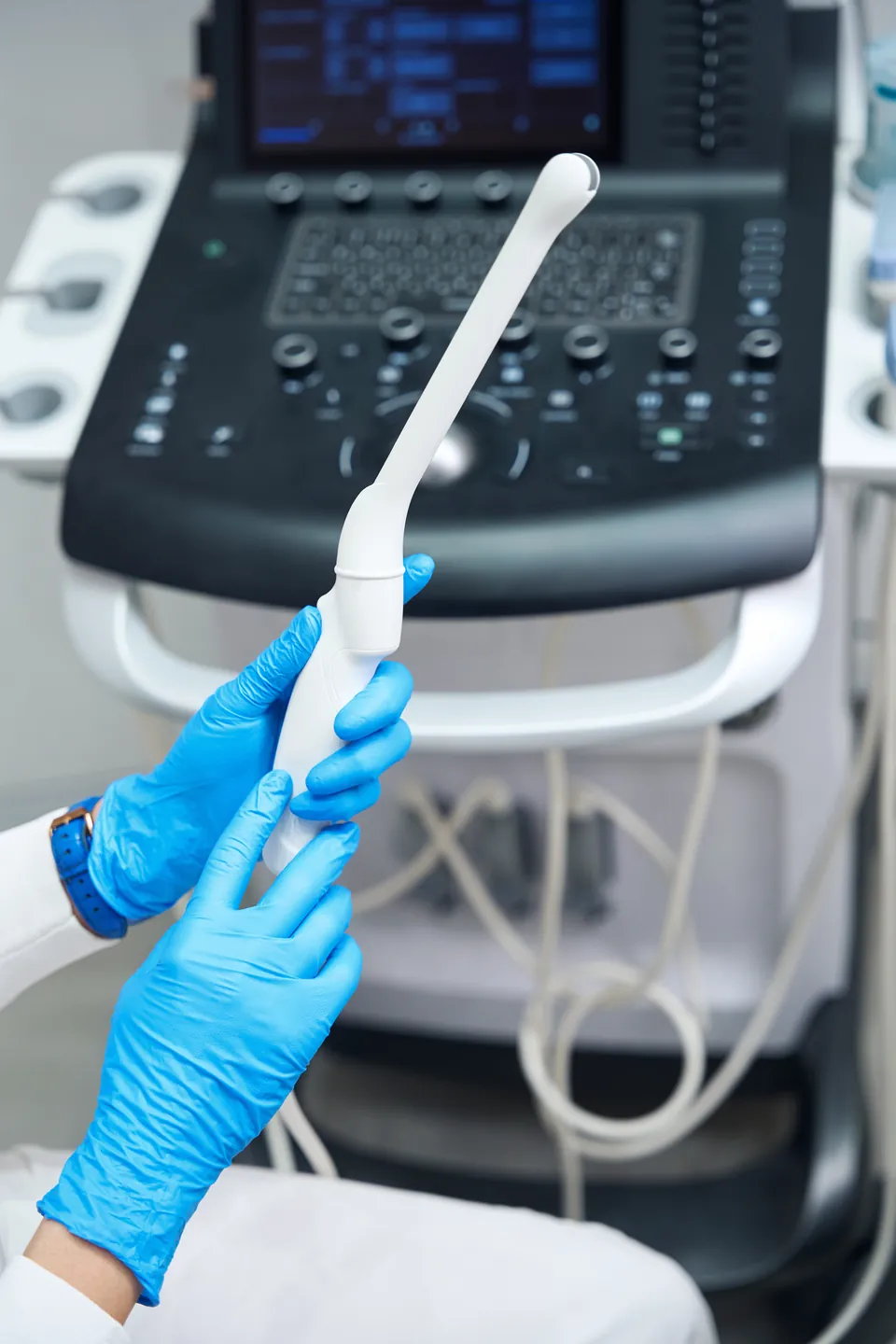
Learn when gynaecological and transvaginal ultrasound are used, how to prepare, what happens during the examination and how results are assessed.
Gynaecological ultrasound uses sound waves to image the organs in your pelvis. Transvaginal ultrasound uses a thin probe placed in the vagina; gynaecological ultrasound is a broader term that also includes imaging through the abdomen. Your doctor decides when and how ultrasound is needed according to your examination findings. This information is general and does not replace an individual assessment.
What is gynaecological ultrasound, and what is assessed?
Gynaecological ultrasound assesses your pelvic organs using images produced by sound waves. It works differently from X-rays and CT scans, which use ionising radiation. Your uterus, its lining (endometrium), ovaries and surrounding areas are imaged; their size, structure and possible cystic or solid formations can be assessed. The scope of the examination is defined by current medical practice standards.
Does ultrasound show everything, and what are its limitations?
No. Ultrasound does not show everything and may not establish a definitive diagnosis alone. Further imaging, laboratory tests or tissue examination may be needed. A finding on ultrasound does not mean treatment is necessary; it is interpreted alongside your examination and symptoms.
How do abdominal and transvaginal ultrasound differ, and which is chosen?
For abdominal (transabdominal) ultrasound, the probe is placed on your abdominal wall; image quality may be affected by preparation and your build. Your doctor or imaging unit will explain any preparation needed; following those instructions is sufficient. Transvaginal ultrasound uses a thin, long probe placed in the vagina with a protective cover. Being closer to the pelvic organs may improve detail in some assessments, but does not mean it should always be preferred. The method depends on your symptoms, examination findings, circumstances and sexual history. The approaches may sometimes be used together to complement each other. Your doctor makes the decision and explains the method beforehand.
When is ultrasound requested?
Ultrasound may complement an examination for irregular periods, abnormal bleeding, pelvic pain, a suspected mass felt during examination or pregnancy assessment. The need is individual; ultrasound is not required for every symptom.
Should I have ultrasound for ovarian cancer screening if I have no symptoms?
No. Current medical guidance does not recommend transvaginal ultrasound and CA-125 testing to screen women without symptoms for ovarian cancer. There is no evidence that these tests reduce deaths; false-positive results may also lead to unnecessary investigations or surgery. An inherited cancer syndrome requires a different assessment, and a family history should be discussed with your doctor. Routine annual ultrasound should therefore not be regarded as a guarantee.
How should you prepare for transvaginal ultrasound?
Preparation depends on the method, symptoms and the appointment centre's instructions. When booking, ask whether any special preparation is needed and whether the examination can be performed during your period. Mention your last period date, possible pregnancy and allergies such as latex beforehand.
What happens during the examination, and how is your privacy protected?
You may be asked to remove some clothing and will be covered. The procedure is explained beforehand. A covered probe and gel are used for transvaginal ultrasound. Many people describe mild pressure or discomfort; tell the clinician if you feel pain and ask for the examination to stop. You have rights to consent and privacy. Use of a protective probe cover and cleaning afterwards are general practice. Discuss before the appointment whether you would like someone to accompany you.
How is ultrasound performed if you have never had sexual intercourse?
If you have never had sexual intercourse, the method is chosen with your doctor, taking account of your preference and consent; abdominal ultrasound is one example. Any change of method is explained beforehand. Assessing hymenal integrity is not the purpose of ultrasound or a gynaecological examination; such requests generally have no medical purpose. Share any concerns openly with your doctor before the procedure.
Is ultrasound safe?
Diagnostic ultrasound uses sound waves and does not involve ionising radiation. Although no confirmed adverse effects have been reported, the risk of biological effects is not considered zero, so it is recommended that ultrasound be used only to the extent and for the duration needed. Tell the team about latex allergy before the examination.
How are results interpreted, and what happens next?
The ultrasound report is assessed alongside your examination and symptoms, rather than alone. Finding a cyst, fibroid or polyp does not automatically mean treatment is needed. A repeat examination after a short interval, further imaging or other tests may be requested. Ask your doctor to explain the wording in the report.
Frequently Asked Questions
Is a vaginal ultrasound painful?
Many people describe mild discomfort or pressure rather than pain. Tension or fear can be discussed beforehand, and the examination can proceed slowly. You can ask for it to stop if you feel pain.
How do abdominal and vaginal ultrasound differ, and which is chosen?
Both show your pelvic organs, but the position of the probe and image detail differ. Your doctor decides according to your symptoms, examination findings and circumstances. Both may be used together if needed.
Can I have an ultrasound during my period?
This depends on the purpose and approach. Mention your period when booking and ask whether the examination can proceed.
Does gynaecological ultrasound use radiation like X-rays or CT scans?
No. Ultrasound uses sound waves and does not involve the ionising radiation used in X-rays or CT scans.
Can ultrasound diagnose cancer?
Ultrasound may show a suspicious finding, but diagnosis often requires further investigation. Its use for screening people without symptoms is not recommended.
Should I have annual ultrasound for ovarian cancer screening without symptoms?
No. Transvaginal ultrasound and CA-125 testing are not recommended for this purpose in women without symptoms. There is no evidence that they reduce deaths, and false positives may lead to unnecessary investigations or surgery.
Does a family history of inherited cancer change the assessment?
Yes. An inherited cancer syndrome is assessed differently; discuss your family history with your doctor.
Does finding a cyst, fibroid or polyp mean I need surgery?
No, not automatically. Findings are assessed with your examination and symptoms; a repeat examination after a short interval or further tests may be requested.
I have never had sexual intercourse. Is ultrasound used to check my hymen?
No. Assessing hymenal integrity is not the purpose of ultrasound or a gynaecological examination; such requests generally have no medical purpose. If you have never had sexual intercourse, the method is chosen with your doctor, considering your preference and consent.
What should I do if I have a latex allergy?
Tell healthcare staff about a latex allergy before the procedure. Ask the centre about latex-free material options.
Can I ask to have someone accompany me during the procedure?
Yes. Discuss before the appointment whether you would like someone to accompany you.
Can I interpret the ultrasound report myself?
The report is assessed alongside your examination and symptoms, rather than alone. Ask your doctor to explain its wording.
Get Your Free Consultation
Fill out the form below and our team will contact you

