


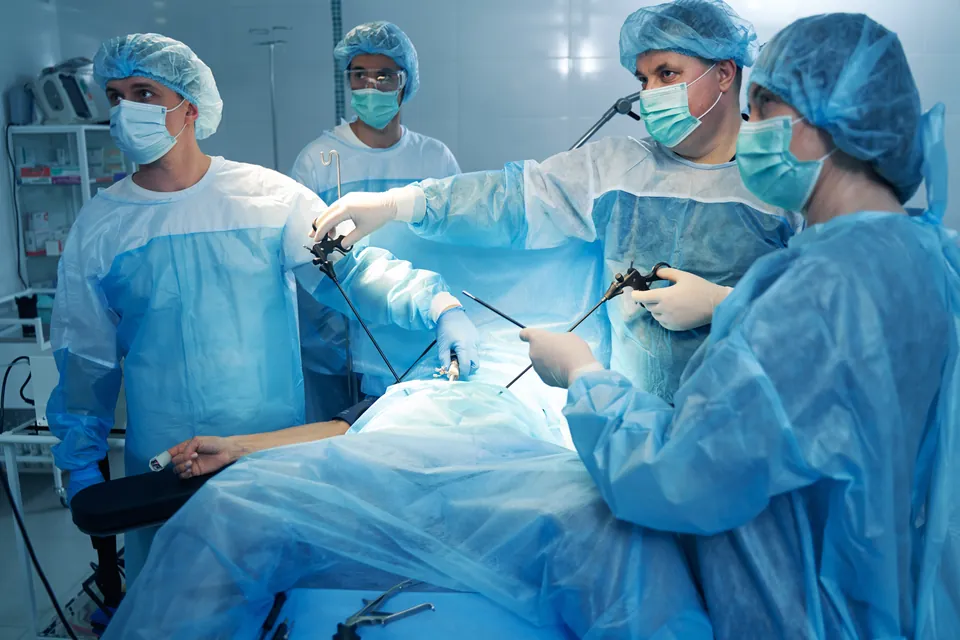
What is diagnostic laparoscopy, when is it recommended, and how is it done? Preparation, anaesthesia, risks and recovery, including shoulder-tip pain.
Diagnostic laparoscopy is a keyhole surgical examination in which the organs inside the abdomen and pelvis are viewed directly with a thin camera placed through small incisions in the abdominal wall, with the aim of finding the cause of symptoms. It is usually performed under general anaesthesia and is not the first examination used; it is recommended in selected situations after history-taking, examination and imaging. The information below provides a general framework and does not replace an individual assessment.
What is diagnostic laparoscopy?
Gas is introduced into the abdomen to create space to see the organs; a camera and, if needed, fine instruments are inserted through small incisions. The aim is to find the cause of symptoms. This diagnostic procedure is not expected to change symptoms by itself. However, limited treatment may be appropriate if a cause is found; this must be discussed beforehand.
How does it differ from imaging methods?
Ultrasound and MRI image organs from outside; laparoscopy directly shows surfaces and adhesions and allows tissue sampling if needed. Normal imaging does not mean there is no problem. However, not every pain requires laparoscopy.
Is laparoscopy considered for unexplained pelvic pain?
For persistent pelvic pain unexplained after history, examination and imaging, laparoscopy may reveal the cause. It is not necessary for every pelvic pain; the decision is made with your doctor.
Is laparoscopy needed in fertility assessment?
If conception is difficult, the fallopian tubes and pelvic structures are assessed by laparoscopy in selected cases. The procedure alone cannot be said to improve fertility; it is a diagnostic procedure.
Is laparoscopy recommended for suspected endometriosis, cysts or adhesions?
If imaging or examination raises suspicion of endometriosis, an ovarian cyst, adhesions or a mass, laparoscopy may be recommended to clarify the diagnosis. Depending on the findings, treatment may be planned as a separate operation.
What preparation takes place before surgery, and how is anaesthesia given?
Before the operation, a blood test, a pregnancy test and, if needed, further imaging may be carried out. Regularly used medicines, allergies, previous abdominal operations and weight status are reported to the doctor, because these factors can increase the risk of injury during entry. Anaesthesia is usually general anaesthesia; its type, and instructions on fasting and stopping medicines, are determined by the doctor and the anaesthesia team. Day-case or inpatient planning varies according to the individual.
How is the procedure performed?
Gas is introduced into the abdomen and a camera and, if needed, fine instruments are inserted through small incisions. The abdominal and pelvic organs are examined systematically; tissue samples are taken if needed. The surgical team decides the entry method and details. At the end, gas is released and incisions are closed. The operation is performed by Assoc. Prof. Dr. Nurettin Türktekin at Memorial Şişli Hospital.
How is consent obtained for additional procedures in the same session?
If a cause is found during the operation (such as adhesions, endometriosis or a cyst), whether an additional procedure will be carried out should be discussed in advance during the consent process. Interventions such as biopsy, cyst aspiration, adhesiolysis or treatment of endometriosis may need to be specified separately on the consent form.
What are the risks and complications?
Although diagnostic laparoscopy may seem minor, it is a surgical procedure and involves general anaesthesia. Possible problems are:
- Injury to the bowel, a blood vessel or the bladder during entry (most often occurring at the initial entry stage, and sometimes not noticed during the operation, only becoming apparent afterwards through symptoms)
- Bleeding
- Infection
- Problems at the incision site
- Risks related to anaesthesia
- Formation of a blood clot in the leg veins
- Laparoscopy not being completed, requiring conversion to open surgery
Obesity, very low weight, previous abdominal surgery, peritonitis or inflammatory bowel disease may increase entry injury risk; these factors are discussed beforehand. Serious complications are rare, but risk is never zero.
What is recovery like?
Abdominal bloating, incision pain, mild nausea and shoulder-tip pain may occur afterwards. Shoulder-tip pain is common because the gas introduced into the abdomen irritates the diaphragm; it is temporary and expected to settle as the gas disperses. Pain severity varies between people. The operating team advises on incision care and when to return to daily life, work, sex and sport. If a biopsy is taken, results are shared at follow-up.
Frequently Asked Questions
Is laparoscopy performed through the abdomen, and does it need a large incision?
No. The procedure uses a thin camera inserted through small incisions in the abdominal wall; a large incision is not needed.
Is laparoscopy the first investigation used?
No. It is usually performed under general anaesthesia and is not the first investigation; it is recommended in selected cases after history, examination and imaging.
Do I need laparoscopy if my imaging results are normal?
Normal imaging does not mean there is no problem, but not every pain requires laparoscopy. Your doctor assesses the decision alongside your history and examination findings.
If a problem is found, is it treated in the same session?
If a cause such as adhesions, endometriosis or a cyst is found, limited treatment in the same session may be appropriate. This is discussed beforehand during consent, including possibilities such as biopsy, cyst aspiration, adhesion release or endometriosis treatment.
What information should I give my doctor before surgery?
Tell your doctor about regular medicines, allergies, previous abdominal operations and your weight; these factors may increase entry injury risk.
Who performs the operation, and where?
The operation is performed by Assoc. Prof. Dr. Nurettin Türktekin at Memorial Şişli Hospital.
Is shoulder-tip pain normal?
Yes, it is common. Gas introduced into the abdomen can irritate the diaphragm and cause shoulder-tip pain; it is temporary and expected to settle as the gas disperses.
Who has a higher risk of injury during entry?
Obesity, very low weight, previous abdominal surgery, peritonitis or inflammatory bowel disease may increase entry injury risk; these factors are discussed with your doctor before surgery.
Can laparoscopy be converted to open surgery?
Yes. Conversion to open surgery when laparoscopy cannot be completed is one of the possible complications.
Where are the incisions made, and will there be a scar?
The number and location of the incisions vary according to the aim of the operation; they are usually small and on the abdominal wall. Scarring varies from person to person; it cannot be said that no scar will remain.
How long does the procedure take, and is a hospital stay needed?
The duration varies according to what is found and any additional procedures carried out. Day-case or inpatient planning depends on the individual and the centre's practice; you can ask the doctor about this at the pre-operative consultation.
When is laparoscopy considered in the assessment of difficulty conceiving?
It is considered in selected people when the situation cannot be explained by basic investigations. This is a diagnostic procedure; it has not been shown to increase the chance of pregnancy on its own. If a cause is found and treated, that is a separate matter for assessment.
Get Your Free Consultation
Fill out the form below and our team will contact you

