


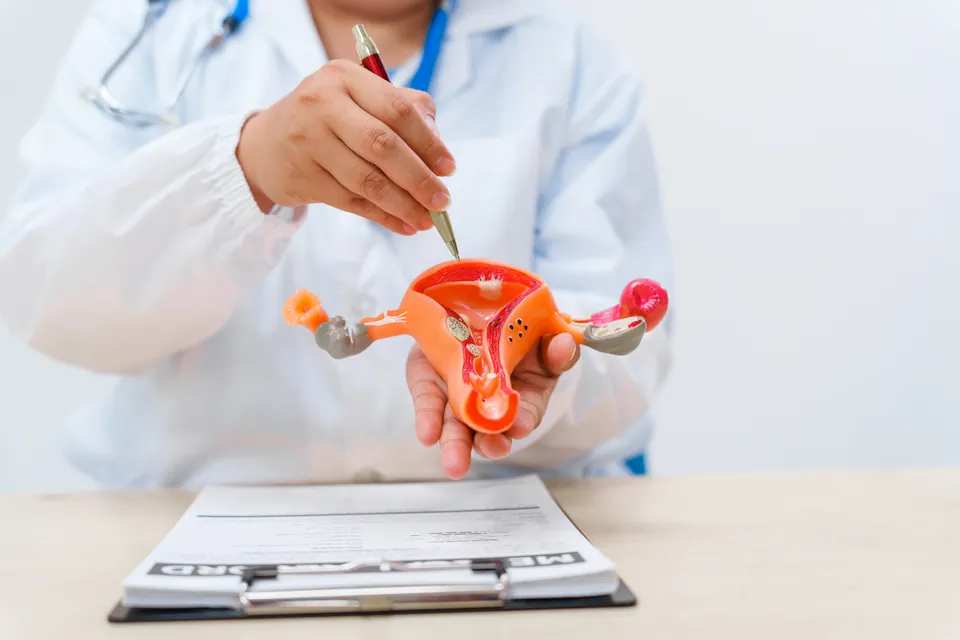
What is hysteroscopic myomectomy, which fibroids is it used for, and is there an incision? Anaesthesia, risks, recovery and pregnancy planning.
Hysteroscopic myomectomy is a minimally invasive operation in which fibroids growing into the uterine cavity are removed with a thin camera and instruments advanced through the vagina and cervix, without any incision in the abdominal wall. Only fibroids that extend into the uterine cavity (submucosal fibroids) can be suitable for this route; other types of fibroid require different methods. The information below provides a general framework and does not replace an individual treatment recommendation.
What is hysteroscopic myomectomy?
Fibroids are benign tumours arising from uterine muscle. Those growing into the uterine cavity can cause heavy periods and difficulty conceiving. In hysteroscopic myomectomy, the fibroid is cut away or removed in pieces under direct vision from inside the uterus; the uterine wall is not opened from outside. For submucosal fibroids, this method aims to relieve bleeding and correct the structure of the uterine cavity.
How does it differ from abdominal fibroid surgery?
In laparoscopic or open abdominal fibroid surgery, incisions are made in the abdominal wall and the fibroid is removed from the outer uterine surface or wall. Hysteroscopy suits only fibroids extending into the cavity. Fibroids that do not extend into it may need abdominal surgery. There is no overall ranking of the methods; the fibroid's location determines the choice.
Which fibroids is it considered for?
Because fibroids extending into the uterine cavity can cause bleeding and difficulty conceiving, this method is considered primarily for this group. Suitability depends on how far the fibroid extends into the cavity, its depth in the uterine wall and the number of fibroids. Deeply embedded fibroids may be difficult to remove completely in one session; a second session may be considered for some people. Your doctor uses classification details and size thresholds when planning the procedure.
What assessments take place before surgery?
Before surgery, the fibroid's location and relationship to the uterine cavity are assessed using ultrasound and, if needed, magnetic resonance imaging (MRI) or diagnostic hysteroscopy. Anaemia from heavy bleeding is also assessed and treated beforehand if necessary. Pregnancy plans are discussed in advance, as the plan varies according to whether the aim is to relieve bleeding or correct the uterine cavity for pregnancy. Your doctor decides whether medicines are needed before surgery.
How does the operation proceed?
The anaesthesia method is planned in advance according to the location and size of the fibroid. The camera is advanced through the cervix into the cavity; the cavity is kept open and the fibroid is seen and sliced or cut for removal. The removed tissue is sent for pathology. The team determines the time of discharge home after the operation. The operation is performed by Assoc. Prof. Dr. Nurettin Türktekin at Memorial Şişli Hospital.
What are the risks and limitations?
The absence of an incision in the abdominal wall does not remove the possibility of complications. The main problems specific to fibroid surgery are:
- Perforation of the uterine wall if the fibroid is deeply positioned in the uterine wall
- Bleeding and infection
- Fluid passing into the body (fluid overload); this increases as the procedure is prolonged and the blood vessels of the uterine muscle are reached
- Intrauterine adhesions at the site where the fibroid was removed
- Problems related to anaesthesia
- The fibroid not being fully removed in the first session, requiring a second procedure
The fibroid's size, number and proximity to the wall affect these possibilities; you can ask your doctor what to expect in your case before surgery.
What is recovery like after surgery?
Light spotting and mild cramps are expected in the days afterwards and decrease over time. Heavy bleeding or severe pain is unusual. Healing of the uterine cavity is checked by ultrasound or hysteroscopy if needed; follow the team's instructions about returning to daily life.
When can you start trying for pregnancy?
The fibroid's depth and the extent of involvement of the uterine wall determine when you can start trying; your doctor tells you. Fibroid removal has not been shown to increase pregnancy chances; its benefit is assessed with your doctor in selected cases.
What happens to other fibroids in the uterus?
Hysteroscopy removes only the fibroid extending into the cavity; other fibroids in the uterine wall remain and are assessed separately if they cause symptoms. If your periods become irregular again, you can contact your doctor without waiting for follow-up.
Frequently Asked Questions
Is an abdominal incision made in hysteroscopic fibroid surgery?
No. The procedure is performed through the vagina and cervix, without an abdominal incision.
Can every fibroid be removed hysteroscopically?
No. Only fibroids extending into the uterine cavity (submucosal fibroids) may be suitable. Other fibroids may need abdominal surgery.
What happens if the fibroid cannot be removed completely in one session?
Fibroids deep in the uterine wall may be difficult to remove completely in one session; a second session may be considered for some people.
What imaging is used before surgery?
The fibroid's location and relationship to the uterine cavity are assessed using ultrasound and, if needed, magnetic resonance imaging (MRI) or diagnostic hysteroscopy.
Who performs the operation, and where?
The operation is performed by Assoc. Prof. Dr. Nurettin Türktekin at Memorial Şişli Hospital.
What happens to the removed fibroid tissue?
Removed tissue is sent for pathology.
Are other fibroids in the uterine wall removed during this operation too?
No. Hysteroscopy removes only the fibroid extending into the uterine cavity; other fibroids in the wall remain and are assessed separately if they cause symptoms.
Does fibroid removal definitely increase pregnancy chances?
No. Fibroid removal has not been shown to increase pregnancy chances; its benefit is assessed with your doctor in selected cases.
Does menstrual bleeding decrease after the operation?
When a fibroid causes bleeding, removing the part extending into the cavity aims to relieve it. However, bleeding may have other causes, so the same outcome should not be expected for everyone; your menstrual pattern is assessed at follow-up.
How long do discharge and spotting last after the operation?
Mild discharge and spotting are expected and decrease over time. Their duration varies between people.
If I want to become pregnant, what should I report before the operation?
Clearly tell the doctor about your pregnancy plans at the pre-operative consultation; the aim of the operation and the approach taken are shaped accordingly. The doctor will tell you when to start trying, after the operation.
Why is anaemia assessed before the operation?
Heavy menstrual bleeding can lead to a drop in blood values over time. Knowing this before the operation allows treatment to be planned if needed, and allows you to go into the procedure better prepared.
Get Your Free Consultation
Fill out the form below and our team will contact you

