


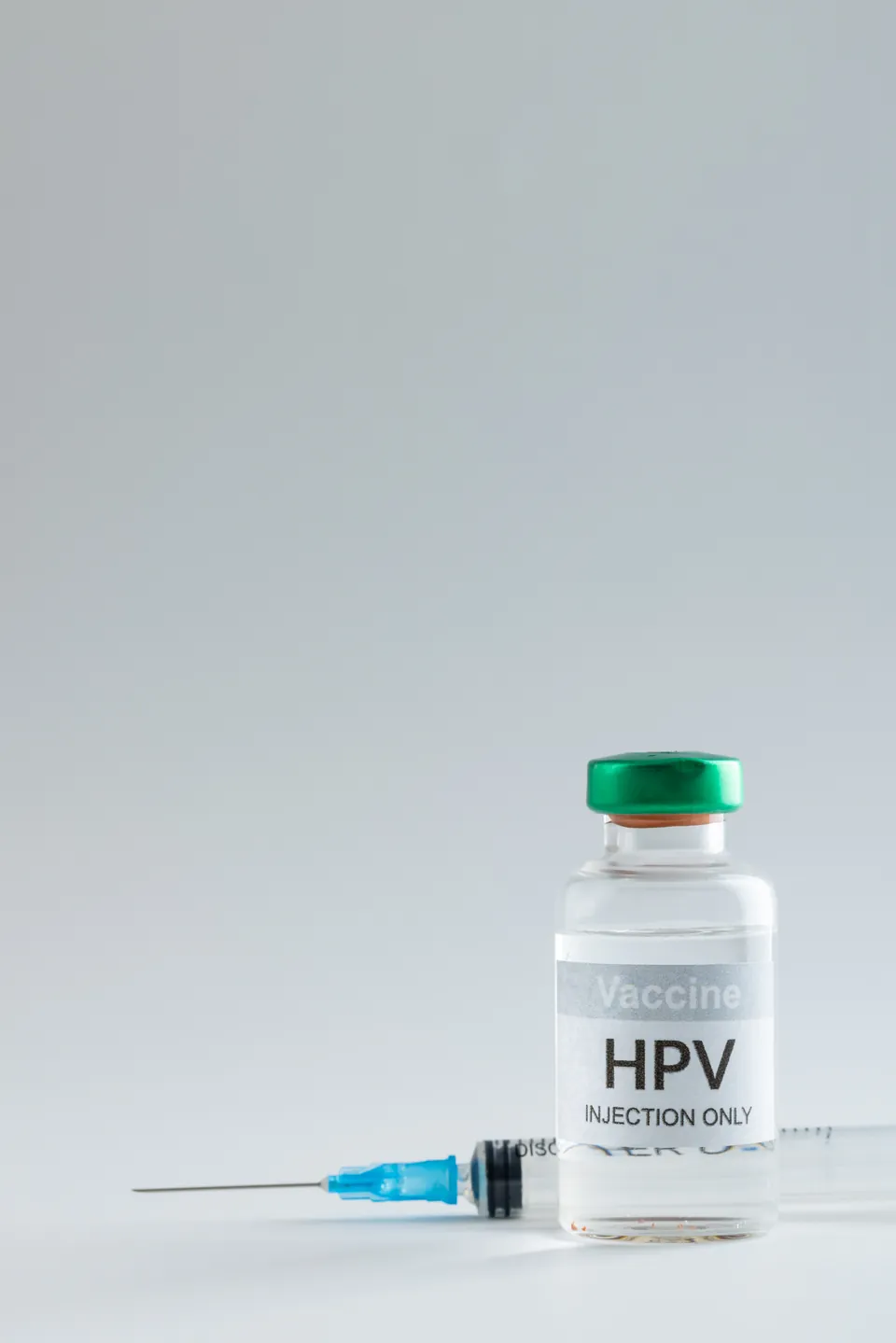
Learn who may benefit from HPV vaccination, how dose schedules are chosen, possible side effects and why cervical screening continues after vaccination.
HPV vaccination protects against certain types of human papillomavirus (HPV) that can cause cancers, including cervical cancer. It provides the greatest benefit before exposure to the virus, meaning before sexual intercourse, but can also be considered at older ages with a doctor. Vaccination reduces risk without eliminating it; screening after vaccination is discussed separately below. The following information is general and does not replace an individual assessment.
What is HPV vaccination, and what does it protect against?
HPV is a family of viruses commonly transmitted through sexual contact. Many infections resolve without symptoms, while some persist and cause cervical cell changes that may eventually lead to cancer. Vaccination helps the body develop an immune response against the types associated with this risk.
The number of types covered depends on the vaccine. The appropriate vaccine is selected using medical advice and current information from official organisations. Vaccination does not treat an existing infection or lesion; its purpose is protection against future infections.
When is HPV vaccination given to children and adolescents?
Recommendations differ between countries and organisations; no single age limit applies to everyone. Current medical guidance identifies girls before sexual intercourse as the primary target group, with routine vaccination recommended during childhood and adolescence. The immune response is strong at this age, so vaccination before sexual intercourse is considered the most beneficial timing. For adolescents, the decision is made with a parent and doctor.
Can young adults who have become sexually active receive HPV vaccination?
Yes. Vaccination can also be considered with a doctor after sexual activity begins. For previously unvaccinated young adults, it may protect against types not yet encountered. Discussing vaccination helps determine the appropriate vaccine and schedule.
How is HPV vaccination decided at an older age?
Current guidance suggests vaccination at older ages is not routine but involves shared decision-making. Benefits, possible risks and limitations are discussed with a doctor according to sexual history, the possibility of a new partner and previous exposure to virus types. Vaccination should also be considered with a doctor for adults and high-risk groups. Benefits at older ages may be more limited than at younger ages, so decisions are individual; neither “vaccination is no longer possible” nor “everyone should have it” applies universally.
How many doses are needed?
The number and spacing of doses depend on age when vaccination starts, the vaccine and national practice. Current evidence on reduced-dose schedules suggests that schedules with fewer doses may also be used. Dose numbers are generally based on starting age; starting younger may require fewer doses.
For current schedules and licensing information in Türkiye, consult publications from the Ministry of Health and the Turkish Medicines and Medical Devices Agency. Schedules vary between individuals; your doctor explains the appropriate schedule for your age and circumstances.
Who should postpone vaccination or consult a doctor?
- Pregnancy: current guidance is to postpone vaccination until after pregnancy. Tell your doctor if you discover that you are pregnant after vaccination.
- Breastfeeding and pregnancy plans: discuss timing with your doctor if you are breastfeeding or planning pregnancy soon.
- Allergy history: tell the doctor beforehand about a previous allergic reaction to a vaccine or its ingredients; the doctor assesses suitability.
- Acute illness: ask about timing if you have a fever or an acute illness.
- Immunosuppression: the vaccination schedule and subsequent follow-up are planned individually by the doctor.
What are the side effects of HPV vaccination?
Vaccine safety is monitored before and after introduction. The most common effects are mild: pain, redness or swelling at the injection site, mild tiredness, a short-lived headache or mild fever. These symptoms usually resolve within a few days.
Can people with positive HPV tests or previous treatment be vaccinated?
If your HPV test is positive or you have been treated for a cervical lesion or wart, vaccination is considered individually. It does not clear an existing infection, but may protect against types not previously encountered. A positive result is therefore not automatically a reason to rule out vaccination. Discussing this with the doctor managing your follow-up and treatment is recommended. The meaning and follow-up of a positive result are a separate topic.
Is screening still needed after vaccination?
Yes. Vaccination reduces cervical cancer risk without eliminating it, because it does not cover every high-risk type or affect infections acquired before vaccination. Current medical guidance states that vaccinated people should continue screening in the same way as unvaccinated people. Vaccination is not a reason to skip screening. The test and timing depend on age and the national programme.
Is HPV vaccination included in Türkiye's national programme?
Current Ministry of Health announcements provide information about whether HPV vaccination is included in Türkiye's national programme and about charges. Consult official Ministry announcements and healthcare facilities providing vaccination for the current situation. Ask your own doctor or family doctor about available vaccines and schedules.
Frequently Asked Questions
Does HPV vaccination mean I cannot develop cervical cancer?
No. Vaccination markedly reduces risk but does not cover every type, so does not remove risk completely.
Can I have the HPV vaccine if I have had sexual intercourse?
Yes. A history of intercourse alone does not prevent vaccination. Its benefit is protection against types not previously encountered. Your doctor decides whether it is appropriate according to your age and history.
Is HPV vaccination given during pregnancy?
No. Current medical guidance advises postponing vaccination during pregnancy. Tell your doctor if you discover you are pregnant during the vaccination course. Discuss timing if you are planning a pregnancy.
What should I tell the doctor before vaccination?
Mention any previous allergic reaction to a vaccine, pregnancy or pregnancy plans, breastfeeding or an illness with fever. The doctor assesses suitability and timing.
Does HPV vaccination treat an existing HPV infection?
No. It does not treat an existing infection or lesion; it aims to protect against future infections.
I have not been vaccinated and am sexually active. Could vaccination help?
Yes. Vaccination may protect previously unvaccinated young adults against types not yet encountered. Your doctor determines the appropriate vaccine and schedule.
Could vaccination still help at an older age?
To some extent; benefit may be more limited than at a younger age. The decision is individual and assessed with your doctor according to sexual history.
Can I have HPV vaccination while breastfeeding?
Discuss timing with your doctor if you are breastfeeding or planning a pregnancy soon.
How long do HPV vaccine side effects last?
The commonest effects are mild: pain, redness or swelling at the injection site, mild tiredness, a brief headache or mild fever. They generally settle by themselves within a few days.
My HPV test is positive. Can I still be vaccinated?
A positive result is not automatically a barrier; suitability is assessed individually. Vaccination does not clear an existing infection, but may protect against types not yet encountered.
Who decides about vaccination for adolescents?
The decision is made with a parent and doctor.
Get Your Free Consultation
Fill out the form below and our team will contact you

