


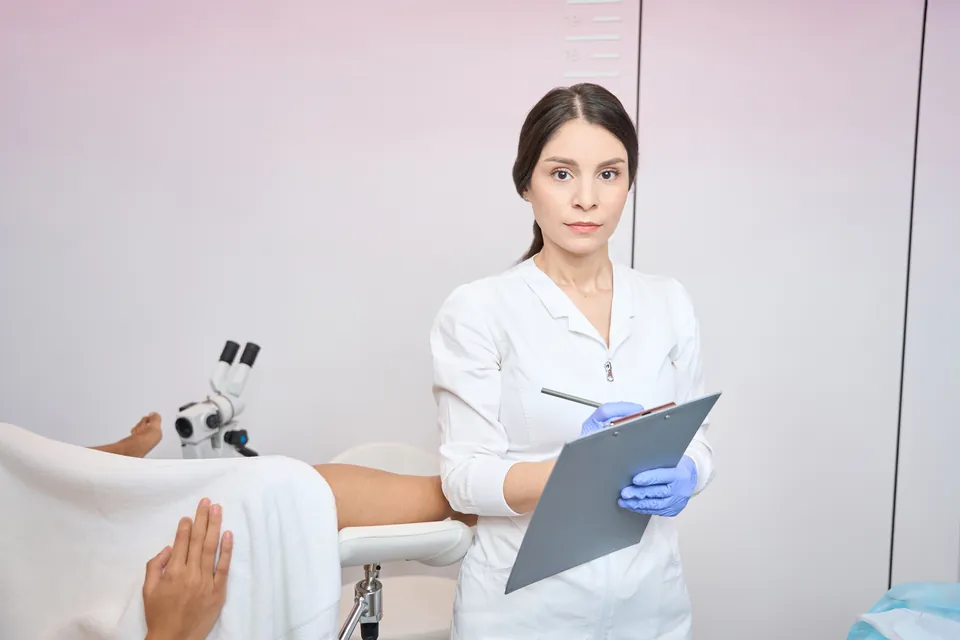
Learn about vulvodynia and vulval conditions, possible causes of persistent pain and burning, diagnosis, treatment options and when to seek care.
Vulvodynia is persistent burning, stinging, aching or pain in the vulva (external genital area) without an identifiable cause. Not all vulval pain is vulvodynia: infections, skin conditions, hormonal changes and, rarely, suspicious tissue changes may cause similar symptoms. The first step is therefore to investigate the cause. This information is general, not individual diagnostic or treatment advice.
What is vulvodynia?
The vulva includes the outer and inner labia, clitoris and vaginal entrance (vestibule). Current medical guidance considers vulval pain in two main groups: pain due to an identifiable disease, and vulvodynia, which is persistent pain without an identified cause.
Could your vulval pain have a specific cause?
Yes. Infection, inflammatory skin conditions, hormonal changes, nerve damage or tissue changes may cause vulval pain. When a cause is identified, treatment targets it directly.
Is vulvodynia only psychological?
No. Vulvodynia is considered when persistent pain has no explanation despite a detailed history and examination. It is not imaginary or only psychological; it is a physical pain syndrome. Persistent pain may affect psychological wellbeing and relationships, but these effects may be consequences rather than the cause.
How do generalised and localised vulvodynia (vestibulodynia) differ?
Two forms are described according to the location of pain. In generalised vulvodynia, pain is felt over a large part of the vulva. In the localised form, pain is concentrated in a particular area, usually the vaginal entrance (vestibule); this is also called vestibulodynia. Pain sometimes occurs only with a trigger such as touch, a tampon, sex, cycling or sitting; it may also occur spontaneously. It may be constant or come and go.
What symptoms occur with vulvodynia?
Symptoms vary between individuals. The most commonly described are:
- Vulval burning, stinging, aching or tenderness
- Pain at the vaginal entrance during or after sex
- Discomfort when inserting a tampon, during a gynaecological examination, with tight clothing or when sitting
- Itching, redness or changes in skin appearance (these findings may suggest another vulval condition)
Does pain during intercourse always mean vulvodynia?
No. It can also relate to vaginismus, vaginal dryness or infection, and conditions may coexist. Involuntary muscle contraction during penetration is prominent in vaginismus; in vulvodynia, pain originates in vulval tissue itself.
Which diseases can cause vulval pain?
Infections such as thrush may cause itching and burning. With recurrent burning, repeated antifungal treatment without culture or examination findings can become an unhelpful cycle. The cause is therefore investigated before treatment.
Inflammatory skin conditions affecting the vulva include lichen sclerosus, lichen planus and contact dermatitis:
- Lichen sclerosus: May be associated with persistent itching, pain and whitish skin. Regular follow-up is needed.
- Lichen planus: May cause vulval pain, burning and redness.
- Contact dermatitis: Causes redness and burning related to irritants such as soap, sanitary pads, perfume or certain creams.
Can hormonal changes cause vulval pain?
Yes. When oestrogen falls, such as during menopause or other low-oestrogen states, vulvovaginal tissue may thin and dry, causing burning and painful intercourse. This is assessed separately before diagnosing vulvodynia.
When should a vulval patch, sore or colour change be assessed?
A new, growing, bleeding or non-healing sore, raised area, ulcer, colour change or mole-like lesion may require assessment for vulval neoplasia (precancerous changes or cancer). Many of these findings may be harmless, but the distinction can only be made through examination and, if needed, biopsy. Seek assessment rather than waiting and watching.
How is vulvodynia diagnosed?
Diagnosis relies on a detailed history and examination. The doctor asks about when pain began, its location, its triggers, previous treatments and its effect on your sex life. The vulval skin is examined. Different areas are touched gently with a cotton swab to identify painful points and map the pain.
When are culture or biopsy needed?
A discharge sample may be taken if infection is suspected. A small tissue sample (biopsy) may be needed for persistent or suspicious skin changes, or changes that do not respond to treatment. The doctor decides which investigations are necessary; these procedures are not performed in every patient.
How is vulvodynia treated?
Treatment is individualised and often involves several disciplines. A gynaecologist, pelvic floor physiotherapist, psychologist or sex therapist, and a pain specialist if needed may be involved. It is uncertain which approach alone is most suitable; rapid improvement is rare. Explaining the diagnosis and setting realistic goals together are the first steps in treatment.
What should you consider in vulval care?
Care measures, such as stopping irritating soaps, perfumes and chemicals and choosing soft, breathable underwear, are used with medical advice. Which measures suit a person varies.
How are medicines used?
Locally applied creams and ointments and certain medicines for nerve pain may be used. The doctor selects the medicine, dose and duration for the individual. Local agents can cause irritation, and nerve-pain medicines can cause side effects such as drowsiness or dizziness, so these medicines are used with medical follow-up.
How can pelvic floor physiotherapy help?
Some people with vulval pain have tension in their pelvic floor muscles. A physiotherapist may help reduce this tension through muscle relaxation, breathing and appropriate exercises.
Why is psychosexual support recommended?
Pain may affect relationships, sex life and mental health. Psychosexual support is a complementary part of treatment; it does not mean that the pain has a psychological origin.
When is surgery considered?
A doctor may consider surgery in selected, limited situations when other approaches have not achieved sufficient results. Deciding whom it suits requires detailed assessment.
How can vulvodynia affect daily life and relationships?
Living with vulvodynia can be draining. Describing your symptoms, communicating openly with a partner and not carrying the burden alone are important. Advice about sex is individual: you do not have to push yourself to have sex when it hurts, and appropriate steps are decided with your doctor. The effects of pregnancy and birth on vulvodynia vary between individuals. People planning a pregnancy can discuss this with their doctor.
Which specialist should you consult?
The first step is usually a gynaecologist. If needed, a dermatologist, pelvic floor physiotherapist, psychologist or sex therapist, and a pain specialist may become involved.
Frequently Asked Questions
My tests were normal. Why does it still burn?
Vulval pain can persist even when cultures and routine tests find no infection. In vulvodynia, pain arises from sensitivity of the tissue and nerves, so a normal test does not mean that the symptom is not real.
Does vulvodynia go away?
Its course varies between individuals. Symptoms ease over time in some people and fluctuate in others. Rapid improvement is rare. Treatment usually aims to ease pain and reduce its effect on daily life; a definite timeframe or outcome cannot be predicted.
Does vulvodynia affect pregnancy or fertility?
The effects of pregnancy and birth on vulvodynia vary between individuals. People who are planning a pregnancy or are pregnant should review their condition and treatments with their doctor.
What should you do if intercourse is painful?
You do not have to push yourself to have sex when it hurts. Investigating the cause and deciding on suitable steps with your doctor are recommended. Open communication with a partner may help.
Can I use antifungal cream myself when I have burning or itching?
Repeated antifungal use for recurrent burning without culture or examination findings can become an unhelpful cycle. Investigate the cause before treatment and consult your doctor before using a cream.
I have noticed a white vulval patch. Is it cancer?
Not every white patch is cancer; it may relate to a skin condition such as lichen sclerosus. However, persistent itching or skin changes should be examined.
Is vulvodynia treated with just one method?
No. Treatment is individualised and usually multidisciplinary, potentially involving a gynaecologist, pelvic floor physiotherapist, psychologist or sex therapist and, if needed, a pain specialist. The most suitable approach on its own remains uncertain.
Does every patient have surgery?
No. Surgery is considered in selected, limited circumstances when other approaches have not provided sufficient benefit. Suitability requires detailed assessment.
What is the cotton-swab test, and why is it performed?
Different vulval areas are touched gently with a cotton swab to locate pain. This forms part of diagnosis alongside a detailed history.
Are vulvodynia and vaginismus the same?
No. Involuntary muscle contraction during penetration is prominent in vaginismus; vulvodynia originates in vulval tissue itself. They may coexist.
Get Your Free Consultation
Fill out the form below and our team will contact you

