


Which operations does laparoscopic fertility-sparing surgery cover? The effect on ovarian reserve, risks, recovery and planning for pregnancy.
Laparoscopic fertility-preserving surgery is a general term for operations through small abdominal incisions that preserve the uterus, ovaries and tubes as far as possible. It is not one operation; it includes procedures for cysts, endometriosis, fibroids, adhesions and tubal problems. These operations do not guarantee pregnancy; the aim is to avoid unnecessary damage to reproductive organs while treating disease. This provides a general framework and does not replace your individual assessment.
What does fertility-sparing laparoscopic surgery mean?
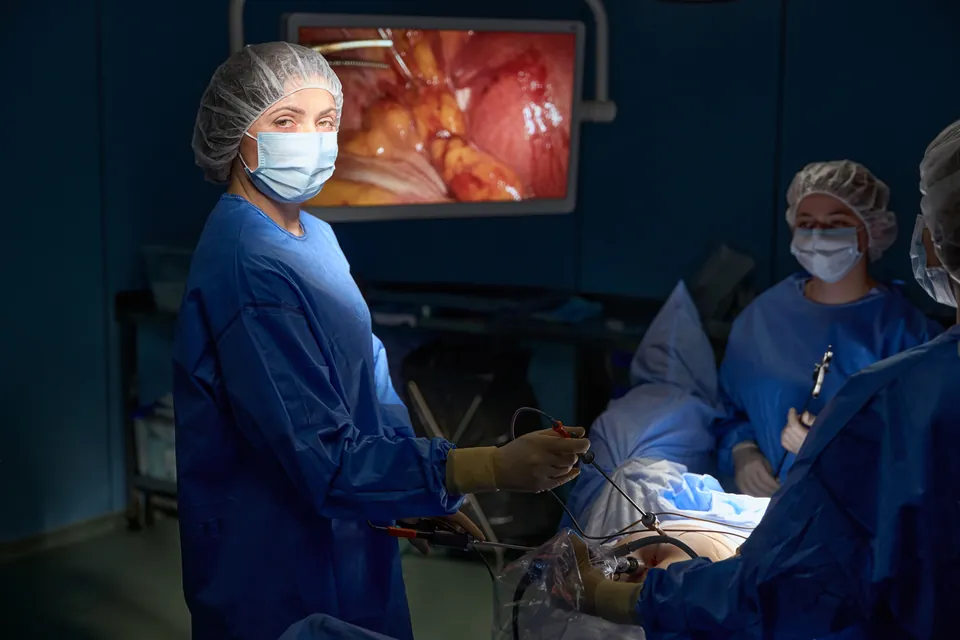
This term is used to describe, together, laparoscopic procedures carried out with the aim of preserving fertility. In laparoscopy, several small incisions are made in the abdominal wall, gas is introduced into the abdomen, and the operation is carried out with the help of a camera and fine instruments placed through the incisions. The aim of preserving fertility is a principle that guides every stage of the operation: while the diseased tissue is removed, the aim is to preserve healthy ovarian tissue, the tubes and the uterine wall as much as possible. Which procedure is carried out is determined according to the disease, age and pregnancy plans.
In which situations is it considered?
Ovarian cysts, endometriosis, fibroids, tubal blockage or fluid accumulation, pelvic adhesions, ovarian torsion, and polycystic ovary syndrome (PCOS) are the main situations in which these operations are considered. Surgery is not mandatory in every situation; monitoring, medical treatment, and assisted reproduction methods are also among the options.
Which procedure might be considered for each condition?
| Situation | Laparoscopic approach that may be considered |
|---|---|
| Ovarian cyst | Removal of the cyst by separating it from the ovary, preserving the ovary |
| Endometriosis | Clearing endometriosis deposits and, if needed, an endometrioma |
| Fibroid | Removal of fibroids while preserving the uterus |
| Adhesions | Releasing adhesions that attach organs to one another |
| Tubal problem | Repair of the tube, or management of a fluid-filled blocked tube (hydrosalpinx), including removal of the tube in some situations |
| Ovarian torsion | Freeing the twisted ovary or tube and attempting to preserve it |
| PCOS | In selected situations, a limited intervention directed at the ovarian surface (laparoscopic ovarian drilling) |
The technique, risks and recovery of each procedure differ from one another; the details of the operation recommended for the individual should be discussed with the doctor.
Surgery, or other options?
Surgery may not be the first option. For example, surgical removal of an endometrioma before assisted reproduction (IVF) treatment solely to increase the chance of live birth is not recommended as a routine practice, because current data do not show such a benefit, and surgery can harm ovarian reserve. When surgery is considered necessary, removal of the cyst wall is recommended to reduce recurrence of pain; even then, the risk of reduced ovarian reserve is taken into account, and age, pain, previous operations, other causes of infertility, and reserve are assessed together in the decision. Because the benefit and possible harm of surgery vary from person to person, no general rule of "surgery first" or "surgery should never be done" can be established.
What is discussed before the operation?
At the pre-operative consultation, the condition of ovarian reserve, the timing of pregnancy plans, age, the extent of the disease, and the goal of the operation are considered together. Additional procedures that may be carried out according to findings during the operation, the possibility that the tube or ovary may need to be removed if necessary, and the effect of these on pregnancy plans should be discussed in advance at the consent consultation.
How does surgery affect ovarian reserve?
Ovarian reserve describes the general status of the pool of egg cells in the ovaries. Surgically stripping an ovarian cyst can reduce reserve, because some healthy ovarian tissue may be affected along with the cyst. In studies, reserve indicators (AMH level and the number of small follicles counted on ultrasound) have been found to be lower after cyst surgery compared with control groups; this reduction is marked for an endometrioma, while no marked change has been reported for a dermoid cyst. The reduction may be greater in bilateral disease and with larger cysts. Differences between studies are very large and most are observational; for this reason, it is not possible to give a definite number or percentage. It has also been reported that reserve indicators can partially recover over time. There is evidence that choosing methods that limit tissue damage when controlling bleeding may be important for reserve; the operating doctor decides which method is suitable.
How is the operation performed?
The operation is usually performed under general anaesthesia; the type of anaesthesia is determined by the surgical and anaesthesia team. A camera and instruments are placed through incisions in the abdominal wall, the pelvic organs are examined, and the planned procedure is carried out. In keeping with the principle of tissue preservation, the diseased area is carefully separated from healthy tissue, bleeding is stopped in a controlled manner, and sutures are used where needed. If an unexpected finding arises during the operation, or if it is not possible to continue with laparoscopy, a change of method may be needed; this possibility is discussed at the consent consultation. The operation is performed by Assoc. Prof. Dr. Nurettin Türktekin at Memorial Şişli Hospital.
What are the risks and limitations of surgery?
Like any surgical intervention, these operations carry risks:
- Risks related to anaesthesia
- Bleeding
- Infection
- Injury to neighbouring structures such as the bowel, bladder, urinary tract or a blood vessel
- Conversion to open surgery
- Formation of new adhesions inside the abdomen
- Reduction in ovarian reserve
- Recurrence of the disease
- The planned procedure proving insufficient
- The need to remove the tube or ovary in some situations
- Formation of a blood clot in the leg veins (rare)
The frequency of these risks varies according to the individual, the disease, and the scope of the procedure. The laparoscopic approach does not mean that adhesions will not form. The outcome for pregnancy is not determined by the operation alone; the disease, age and ovarian reserve are also determining factors.
What happens during recovery?
Abdominal bloating, incision pain and gas-related shoulder-tip pain may occur afterwards. Light spotting, mild cramps and temporary gas-related shoulder-tip pain are considered normal during this time. The operating team gives instructions about incision care and when to return to daily life, work and sport.
When can I try for pregnancy?
The suitable timing for pregnancy varies according to the procedure carried out and the state of the disease. In operations where sutures are placed in the uterine wall, a period of waiting for healing may be requested; after cyst, tubal or endometriosis surgery, age and ovarian reserve also affect the timing. When pregnancy can be tried for is communicated by the operating doctor, based on the findings.
Frequently Asked Questions
Does this surgery guarantee pregnancy?
No. These operations do not guarantee pregnancy; the aim is to avoid unnecessary damage to reproductive organs while treating disease. Surgery alone does not determine pregnancy outcomes; the disease, your age and ovarian reserve also matter.
Should an endometriosis cyst always be removed surgically?
No. Routine removal of an endometriosis cyst before assisted reproduction (IVF) solely to increase live birth chances is not recommended; current evidence does not show this benefit and surgery may damage ovarian reserve.
Can ovarian cyst surgery reduce reserve?
It can. Separating the cyst from the ovary may affect some healthy ovarian tissue too. The reduction is more marked with endometriosis cysts and may be greater with bilateral disease and large cysts.
Is reduced reserve also seen with dermoid cysts?
Studies have not reported such a change after dermoid cyst surgery; reduced reserve has been associated more with endometriosis cysts.
Who is laparoscopic ovarian drilling recommended for in PCOS?
According to guidelines on this subject, this intervention is considered a second-line option in people who do not ovulate, have not responded to a medicine called clomiphene, and have no other cause of infertility. Its effect varies from person to person and its durability cannot be guaranteed; some reports based on limited evidence have mentioned the possibility that ovarian function may be affected as the extent of the intervention on the ovarian surface increases. Because the level of evidence is limited, the decision is made while also discussing medicine options.
Can the ovary or tube need to be removed during the operation?
It may be needed in some situations; for example, if the tube is severely damaged or filled with fluid, removal of the tube can be considered. In the case of ovarian torsion, the priority approach during the operation is to preserve the ovary as much as possible; even if the twisted tissue looks poor, the ovary is removed only when unavoidable. This approach is particularly supported in adolescents; caution is needed when applying it to adults. A possible decision to remove the organ, and its effect on pregnancy plans, should be discussed before the operation.
Does laparoscopy eliminate adhesion risk?
No. Laparoscopy does not mean adhesions cannot develop; new abdominal adhesions are a known risk of these operations.
Which tests are requested for ovarian reserve?
Reserve assessment mostly uses a blood AMH measurement and an antral follicle count on ultrasound. The results alone are not sufficient for making a decision; they are interpreted together with age, the type of disease, and pregnancy plans. Measurements taken before, and if needed after, the operation can help monitor change.
What is done before IVF if the tube is blocked?
For a fluid-filled blocked tube (hydrosalpinx), removal of the tube or occlusion of the tube can be considered as one of the options before IVF. The choice is made according to feasibility, the state of adhesions, and the hospital's facilities; the data on this are not yet definitive. When the tube is removed, findings on the effect on ovarian reserve are not consistent.
When can I start trying for pregnancy after surgery?
There is no fixed interval suitable for everyone. After operations involving uterine wall stitches, you may be asked to wait for healing; after cyst, tube or endometriosis surgery, age and ovarian reserve also affect timing. The operating doctor advises when you can try, based on the findings.
Get Your Free Consultation
Fill out the form below and our team will contact you

