


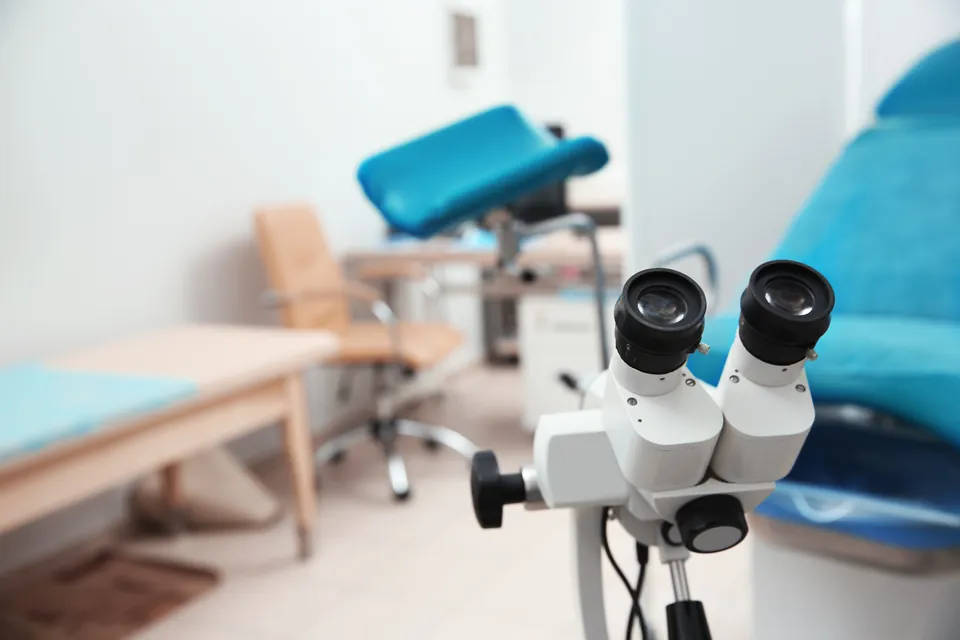
Understand colposcopy, cervical biopsy and cervical polyps, including preparation, discomfort, results, aftercare and when to arrange a follow-up.
Colposcopy is a diagnostic procedure that examines your cervix in detail under magnification after an abnormal screening result. A small tissue sample (cervical biopsy) may be taken if needed. It is an investigation to understand a finding, not a treatment. It is usually performed on an examination couch and takes a short time. This information explains its purpose and steps, biopsy and endocervical curettage, aftercare and cervical polyps in general; it does not replace individual diagnosis or treatment advice.
What is colposcopy, and why is it recommended?
Colposcopy uses an illuminated magnifying lens to inspect the cervical surface in greater detail than the naked eye can see. It aims to locate the change detected by a smear or HPV test and take a sample if an area looks suspicious.
Under current risk-based management approaches, colposcopy is one option considered after an abnormal result. Not every abnormal result therefore requires colposcopy directly. The type of result, previous findings and general circumstances are considered together.
Screening tests and result categories are separate topics; the focus here is the stage after screening.
Who may be advised to have colposcopy?
It is generally recommended after an abnormal smear or HPV result, a suspicious appearance of the cervix on examination or another reason identified by your doctor. Referral does not mean you have cancer; it is a step to clarify the cervical change. This is a general outline; practice varies between centres and patients. In Türkiye, referral follows the Ministry of Health programme and your doctor's assessment, with details determined by your doctor.
How should you prepare for colposcopy?
Before the appointment, your doctor asks about periods, medicines and possible pregnancy. Be sure to mention medicines that increase bleeding tendency. Follow your doctor's or centre's instructions about preparation, intercourse, vaginal medicines or douching; details may vary between practices.
What happens during colposcopy?
A speculum is inserted in the examination position to make the cervix visible. A special solution is applied to highlight abnormal areas. The colposcope stays outside your body. Your doctor examines the image and plans a biopsy if an area looks suspicious. The procedure is usually brief, but details and duration vary individually.
When is a cervical biopsy taken?
A small piece of tissue is taken from a suspicious area seen during colposcopy. Pathology examination helps identify the type and grade of cervical cell change, including precancerous lesions called CIN. Having a biopsy does not mean cancer; it is an investigation used to identify or rule it out.
What is endocervical curettage, and is it performed at every colposcopy?
No. Endocervical curettage samples the inner cervical canal, which cannot be seen directly. It is not performed at every colposcopy; the decision depends on screening results, colposcopic appearance and your doctor's assessment. It is generally not performed during pregnancy.
What might you feel during biopsy and curettage?
You may feel pressure, as with speculum insertion. Biopsy may cause brief, cramp-like discomfort, and endocervical sampling may cause a tightening sensation in the lower abdomen. Intensity varies; the procedure cannot be promised to cause no discomfort. Measures to reduce discomfort, such as local applications, depend on the doctor and centre; ask beforehand.
What should you pay attention to afterwards?
Mild bleeding, brownish or dark discharge and mild cramps are common after biopsy and lessen with time. Your doctor explains how long to take care with activities, intercourse, tampons and bathing according to the procedure; follow those instructions. Possible risks include bleeding, infection and, rarely, cervical narrowing; their frequency varies individually and by practice.
How is the biopsy result interpreted, and what happens next?
The result follows pathology examination; ask during the procedure how long it will take and how you will receive it. This is a general outline; practice varies between centres and patients, with details determined by your doctor in Türkiye. Results are generally assessed as follows:
- No significant precancerous lesion may be found; the doctor then recommends follow-up at an appropriate interval.
- Cell changes may be found; monitoring alone or treatment is planned according to their grade.
- A result requiring treatment may lead to procedures such as LEEP or cone biopsy, whose details are covered separately.
The result can be interpreted only alongside the clinical picture and previous results; drawing a conclusion from one word alone may be misleading.
What is a cervical polyp, and can it cause symptoms?
A cervical polyp is a usually small, finger-like tissue growth arising from the cervical surface or canal. Cervical polyps are mostly benign. Many cause no symptoms and are found incidentally during routine examination; some cause spotting after intercourse or between periods, or discharge.
How is a cervical polyp assessed and removed?
A polyp may be seen during a speculum examination. Symptomatic polyps or those your doctor considers necessary are often removed with a simple procedure; tissue may be sent for pathology. The setting and method depend on its size and your circumstances, and practice varies.
Is a cervical polyp different from an endometrial polyp?
Yes. Cervical and endometrial polyps are different structures. An endometrial polyp develops from the uterine lining and needs separate assessment; this section concerns cervical polyps only.
Can colposcopy be performed during pregnancy?
Yes, it may be needed after an abnormal screening result during pregnancy. Timing, whether to take a biopsy and avoiding endocervical curettage are decided individually by your doctor. Be sure to mention pregnancy or possible pregnancy beforehand.
Frequently Asked Questions
Is anaesthesia needed for colposcopy?
General anaesthesia is usually unnecessary, and the procedure is generally performed on an examination couch. Biopsy may cause discomfort. Discuss ways to reduce this with the doctor beforehand.
Does the colposcope enter the vagina?
No. It remains outside your body; the doctor examines the image through an illuminated magnifying lens from outside.
Can colposcopy be performed during a period?
Heavy menstrual bleeding can make the view difficult, so an appointment outside the period is usually planned. The doctor determines the date; contact the centre if it coincides with your period.
Is endocervical curettage performed at every colposcopy?
No. It depends on screening results, colposcopic appearance and the doctor's assessment; it is generally not performed during pregnancy.
Does referral for colposcopy mean I have cancer?
No. Referral is a step to clarify the cervical change, not a diagnosis on its own.
Does a biopsy spread cancer?
This is a common concern. A biopsy aims to establish a diagnosis; discuss concerns with the doctor before the procedure.
Can a biopsy affect my ability to become pregnant?
Discuss this with the doctor because it depends on the individual, the extent of the procedure and any treatment needed. Share pregnancy plans at the appointment; the choice of procedure may affect this discussion.
Can colposcopy be performed during pregnancy?
Yes, it may be needed. Timing, biopsy and avoiding endocervical curettage are individual decisions for your doctor; mention pregnancy or possible pregnancy beforehand.
Is a cervical polyp always removed?
No. Symptomatic polyps or those your doctor considers necessary are often removed with a simple procedure; not every polyp is managed in the same way.
How will I receive the result after polyp removal?
If tissue is sent for pathology, ask when and how the result will be communicated. The doctor interprets it alongside the clinical situation.
Which doctor should I see for a suspected polyp?
You can see a gynaecologist for assessment. If a polyp is found, the doctor decides whether and how to remove it.
Get Your Free Consultation
Fill out the form below and our team will contact you

